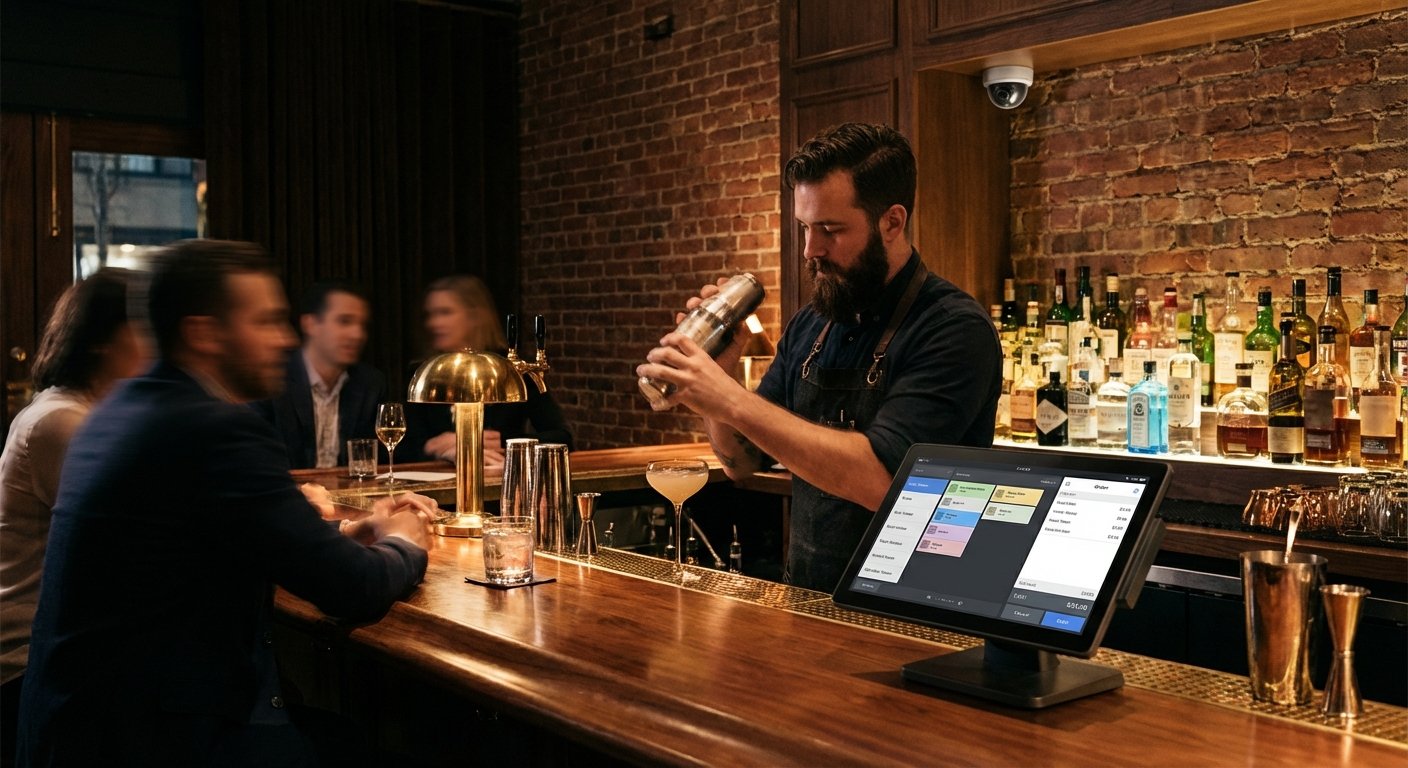
Bartender Theft Detection: Common Tactics and How to Catch It
Bartender theft costs the US bar industry $6.2 billion annually. Learn the most common tactics—and the pour cost analysis method to catch them.
Bartender Theft Detection: Common Tactics and How to Catch It
Bartender theft is the most financially damaging form of restaurant employee theft. Bartenders have unmatched opportunity: they handle cash, control the pour, ring their own sales, and work with inventory that's liquid and easy to manipulate. The US bar industry is estimated to lose $6.2 billion annually to bartender theft.
Most of this isn't dramatic—it's systematic small thefts that accumulate over months. Free drinks for friends, under-rings, short pours that pocket the difference. Here's how it happens and how to catch it.
The Most Common Bartender Theft Tactics
Pouring without ringing. The most common tactic: a bartender makes a drink, collects cash, pockets it, and doesn't ring the sale. The POS shows no transaction, but your pour cost variance shows a gap.
Under-ringing. Ringing a well cocktail as a beer ($4 vs. $10) and keeping the difference. Especially common with cash-paying customers who don't check their receipt.
Short pouring. Pouring 1 oz of premium liquor instead of 1.5 oz, charging for a full pour. The bartender uses the saved 0.5 oz to give free drinks to friends or regulars expecting large cash tips in return.
Void abuse. Entering a sale, collecting cash, then voiding the transaction after the customer leaves and keeping the cash.
Bringing in their own liquor. Rare but documented—a bartender brings in their own bottle, sells it from behind the bar, and keeps all proceeds.
Free drinks for cash tips. Giving away drinks to regulars or friends in exchange for large cash tips. The cost comes from you; the tip goes to the bartender.
Bottle swapping. Refilling premium brand bottles with cheaper liquor. The customer pays for Ketel One and gets something else; the premium product goes home.
Warning Signs Without Inventory Data
One bartender with dramatically higher cash tips than peers. If one bartender consistently earns $150/night when others earn $60–80 on the same shift, investigate why.
Unusually loyal regulars. If customers specifically request one bartender and seem to drink more when that person is on, pay attention.
Cash register discrepancies. Your cash should balance to POS sales. Consistent shortfalls of $30–50 per shift are a clear signal.
High comps and voids. Pull bartender-level void and comp reports from your POS. One bartender with a 15% void rate versus peers at 2–3% has a problem.
The Pour Cost Analysis Method
Pour cost is the most powerful tool for detecting bartender theft. Calculate it weekly:
Pour cost % = (Bar purchases + beginning inventory − ending inventory) ÷ Bar revenue
Your theoretical pour cost (based on standard recipes and sales mix) should be 18–24% for a typical bar program.
If your theoretical is 21% and actual is 29%, you have an 8-point variance. At $20,000 in monthly bar revenue, that's $1,600/month in unexplained spirits loss.
Go deeper:
- Calculate pour cost by spirit category (if tequila is 35% but vodka is 20%, the problem is in your tequila)
- Correlate with shifts: calculate pour cost on different bartenders' shifts
- If one bartender's shifts consistently produce 10+ point higher pour cost, that's your problem
Control Systems That Prevent Theft
Require jiggers, not free pours. Measured pours give you theoretical vs. actual data. Free pours give everyone plausible deniability.
Use measured pour spouts. 1.5 oz measured pour spouts ($2–5 each) make over-pouring and short-pouring harder without slowing service.
Print a receipt for every customer. A receipt that exists makes post-payment voids much harder to execute without a manager's approval.
Manager-only voids. No bartender should void a transaction above $5 without a manager's badge swipe or approval code. This eliminates the most common theft vector immediately.
Camera behind the register, facing the bartender. Even if no one monitors it in real time, its presence alone reduces theft by 40–60% according to hospitality research. When variance appears, you have footage to review.
Frequently Asked Questions
How do I know if my variance is theft or waste?
Waste tends to be spread across many items and fluctuates with volume. Theft concentrates in specific, portable, high-value spirits and appears consistently regardless of season.
What's a normal pour cost variance?
A well-controlled bar should have a variance of under 2% between theoretical and actual pour cost. Consistent variance above 3–4% warrants investigation.
Should I fire a bartender based on pour cost data alone?
No. Pour cost data is the starting point for investigation, not proof of theft. Use it to identify who to watch more closely, then gather additional evidence (camera footage, cash counts, witness accounts) before taking action.
Ready to take control of your food costs? Try CostLab free for 14 days →
Track Food Cost on Every Dish — Automatically
CostLab.AI calculates food cost percentage in real time. Update one ingredient price and see the impact across your entire menu instantly.
Start Free Trial →