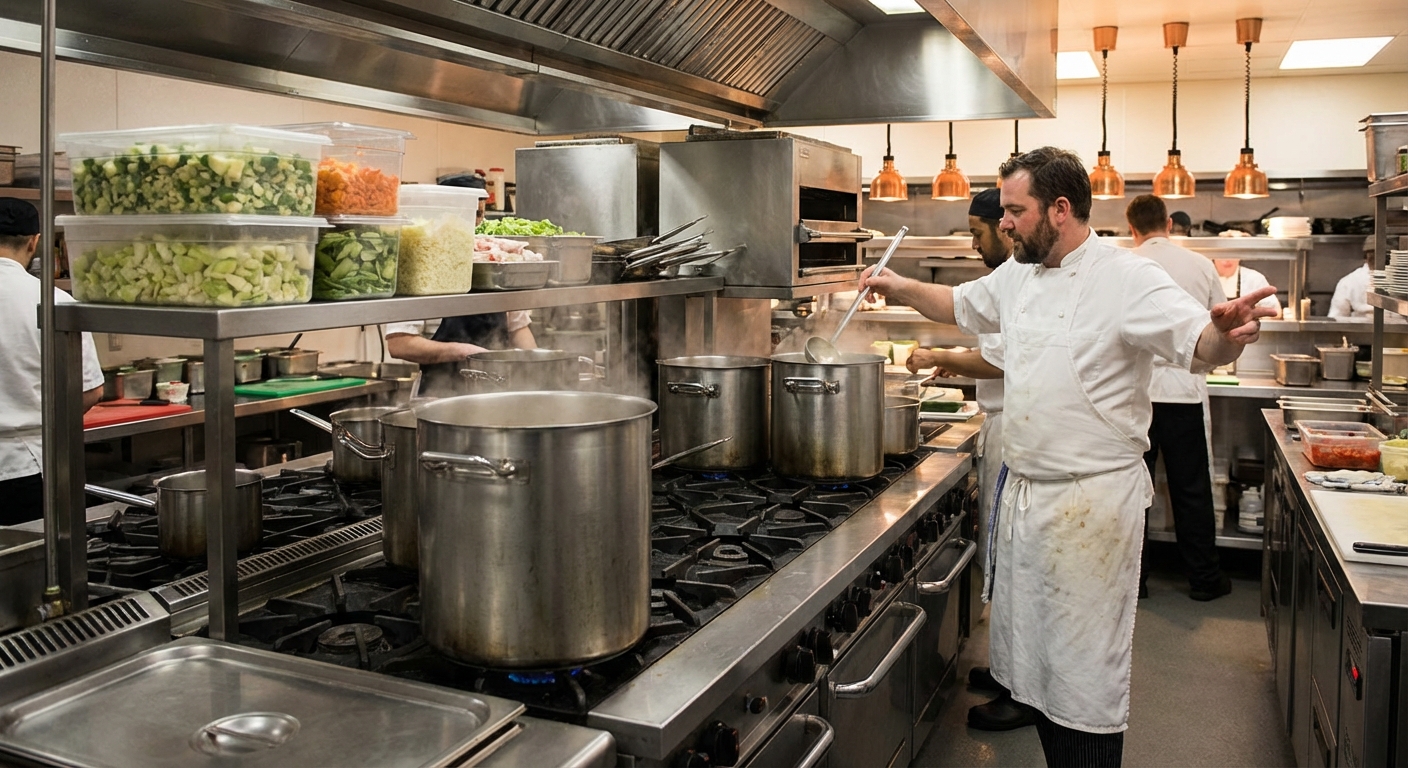
Batch Cooking for Restaurants: Prep Less, Waste Less, Profit More
Batch cooking for restaurants reduces labor cost, cuts waste, and improves consistency. Here's how to build a real batch cooking program.
Batch Cooking for Restaurants: Prep Less, Waste Less, Profit More
Batch cooking for restaurants is one of the fastest ways to cut labor cost and reduce food waste simultaneously. Every restaurant that makes its own sauces, stocks, or marinades is already batch cooking — they just haven't made it a system.
That gap between "we batch cook sometimes" and "we have a batch cooking program" is where labor, waste, and margin disappear.
The Economics Are Hard to Argue With
Let's use marinara sauce as an example. Your kitchen uses marinara in pasta, pizza, eggplant parm, chicken parmesan, and a lunch special. If those recipes get made independently:
- Cook A makes a small batch for lunch pasta: 45 minutes active time
- Cook B makes a separate batch for dinner pizza: 45 minutes
- Cook C makes another for the weekend special: 45 minutes
Total: 2.25 hours of labor across multiple partial batches. Plus inconsistent flavor, multiple sets of pots to clean, and three rounds of ingredient measuring.
Now batch cook all three simultaneously: one 15-gallon batch in 2 hours total. Labor saved: roughly 30–45 minutes per day × 6 days = 3–4.5 hours/week.
At $18/hour for a prep cook, that's $54–$81/week saved on one ingredient. Apply this across 6–8 components and you've saved thousands in annual labor — without cutting a single staff member.
How to Spot Batch Cooking Opportunities
Look at your menu and ask: Which ingredients appear in 3 or more dishes?
Common candidates:
- Stocks and broths (sauces, soups, braises, risotto)
- Roasted or braised proteins (chicken, pork shoulder, short rib)
- Grains (rice, farro, quinoa)
- Caramelized onions and roasted garlic
- Tomato sauces and soffritto bases
- Vinaigrettes and dressings
If an ingredient appears in 3+ dishes and takes more than 20 minutes to make, it's a batch cooking candidate. You'll likely find 8–12 items that could move into a batch program immediately.
The Batch Cooking Schedule
Not everything batches on the same frequency:
Daily Batches
Items that don't hold well or that you use in large quantities every service:
- Fresh soups, pasta doughs, certain composed sauces, daily special components
Every Other Day
Items with 2–3 day shelf life used in moderate quantities:
- Vinaigrettes, compound butters, some grain dishes, blanched vegetables
Weekly Batches
Items that hold well under refrigeration or freeze successfully:
- Stocks and demi-glace, long-braised proteins, bean preparations, slow-cooked tomato sauces
Put this schedule in writing. Assign ownership. Treat it like your prep sheet.
Yield and Cost: Where Batch Cooking Pays Double
Labor Cost Per Portion Goes Down
20 gallons of chicken stock requires 3 hours of labor — 9 cents per quart at $18/hour. Making 2 gallons takes 1.5 hours — 56 cents per quart. Same ingredient, 6× the labor cost when made in small batches.
Bulk Purchasing Reduces Ingredient Cost
Batch cooking creates predictable demand, which enables bulk purchasing. Even a 5% reduction on a $300/week tomato spend saves $780/year.
Cross-Utilization: One Component, Three Dishes
Roast 30 lbs of chicken breast in one oven batch. Use it in: chicken Caesar salad, chicken quesadilla, chicken pasta, chicken soup.
What you eliminate: Multiple cooking times, risk of over-prepping one dish while under-prepping another.
What you gain: Consistent texture and seasoning, one inventory line item instead of four, faster service.
Frequently Asked Questions
How do I know how much to batch cook?
Use your POS sales data. Calculate how many of each dish you sell per day by day of week, then reverse-engineer ingredient quantities. Tighten your batch quantities to match demand over time.
Does batch cooking hurt food quality?
Done correctly, batch cooking often improves consistency. The issue is holding time. Soups and sauces held properly maintain quality for 3–5 days. Never sacrifice holding standards for batch volume.
What equipment do I need for a batch cooking program?
A tilting skillet or large brazier for proteins and sauces, a large stockpot setup for stocks, and adequate covered storage. A blast chiller dramatically speeds cooling of large batches.
How do I calculate labor savings from batch cooking?
Track time to make each component individually vs. in batch. Multiply the time saved by your prep cook's hourly rate. Do this for your top 8 components to get an annual savings estimate.
Ready to take control of your food costs? Try CostLab free for 14 days →
Track Food Cost on Every Dish — Automatically
CostLab.AI calculates food cost percentage in real time. Update one ingredient price and see the impact across your entire menu instantly.
Start Free Trial →