Dark Kitchen vs Ghost Kitchen vs Virtual Brand: Real Differences
Dark kitchens, ghost kitchens, and virtual brands are three distinct delivery models with very different cost structures. Here's what each actually means and when to use each.
Dark Kitchen vs Ghost Kitchen vs Virtual Brand: The Real Differences
The terms dark kitchen, ghost kitchen, and virtual brand get used interchangeably in most media coverage — and usually incorrectly. They describe three distinct operating models with different cost structures, different risks, and different payoffs. Here's what each actually means and when each makes sense for your operation.
The Definitions: What Each Model Actually Is
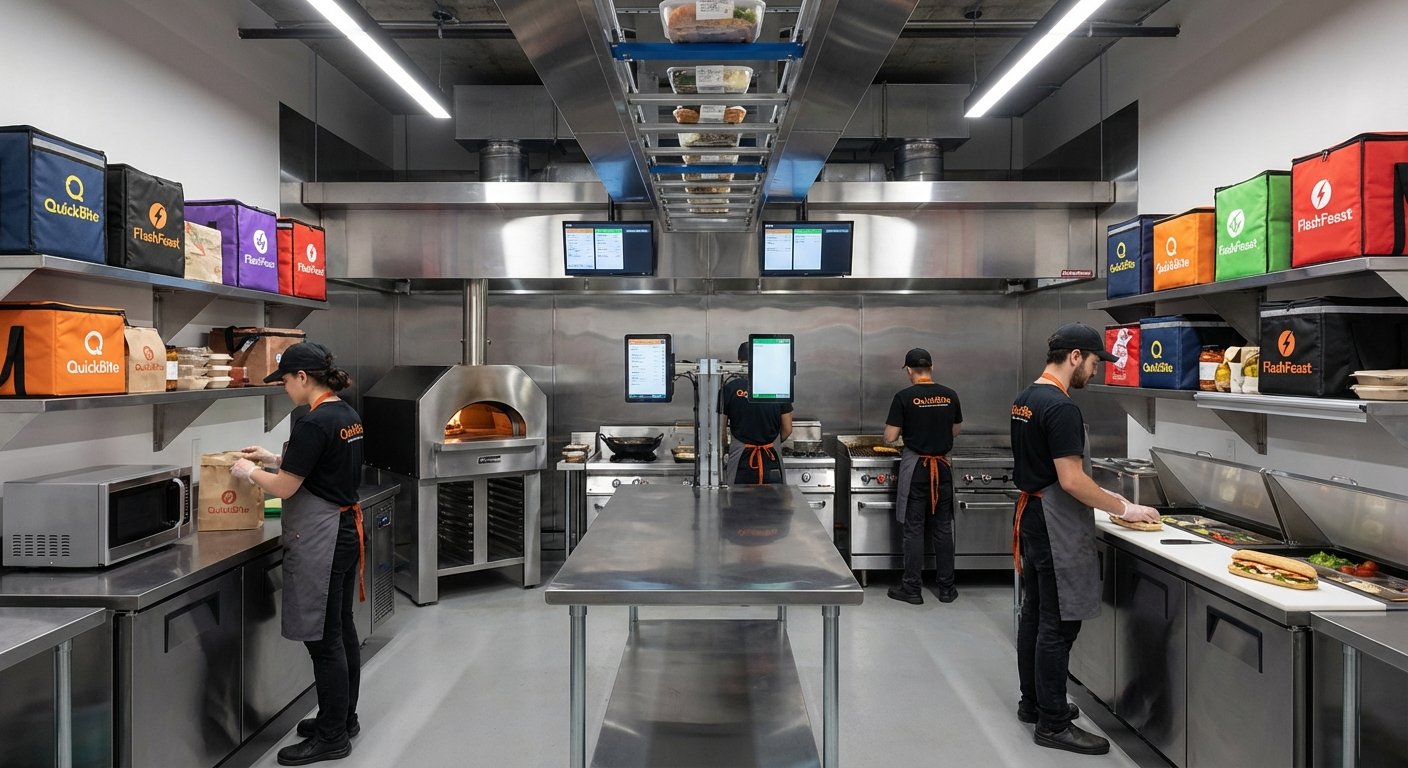
Dark Kitchen (delivery-only kitchen): A kitchen facility built or converted exclusively for delivery production — no dine-in, no walk-up counter. Sometimes operated by a single brand, sometimes by multiple brands sharing one facility. The "darkness" refers to having zero customer-facing presence.
Ghost Kitchen (shared commercial facility): A rented kitchen space operated by a facility company (CloudKitchens, Kitchen United, etc.) that provides space, utilities, and sometimes equipment. Tenants bring their own staff, recipes, and brands. You pay rent: $1,500–5,000/month depending on market and size.
Virtual Brand: A delivery-only brand that operates inside an existing restaurant kitchen — typically during off-hours or alongside regular service. It has its own name, menu, and delivery app presence, but no physical location customers visit. The key advantage: it leverages infrastructure you already own.
Side-by-Side Economics
| Dark Kitchen | Ghost Kitchen (rented) | Virtual Brand | |
|---|---|---|---|
| Startup cost | $150K–400K | $5K–20K setup | $500–3K setup |
| Monthly overhead | High (own facility) | $1,500–5,000/month | Near zero |
| Flexibility | Low (lease commitment) | Medium (month-to-month) | High |
| Throughput capacity | High | Medium | Limited by existing kitchen |
| Best for | High-volume proven concept | Testing a new concept | Adding revenue to existing restaurant |
Dark Kitchens: High Investment, High Volume
A dark kitchen makes sense when you have a proven concept with strong delivery demand in a specific geography and need dedicated production capacity at lower cost than a full restaurant buildout.
The economics only work at scale. At $15,000/week in delivery revenue, a dark kitchen is viable. At $5,000/week, you're likely losing money after rent, labor, and delivery commissions.
The biggest risk: no walk-by traffic, no brand-building from physical presence. Dark kitchens live and die by their delivery app ratings. A dip in stars costs you orders immediately.
Ghost Kitchens: Fastest to Launch, Hardest to Profit
Renting space in a ghost kitchen facility is the quickest, cheapest way to test a delivery concept. You get a licensed commercial kitchen, the equipment you need, and (in most markets) month-to-month flexibility.
The unit economics are difficult. Ghost kitchen rent ($2,500–4,000/month) plus platform commissions (25–30%) plus food cost (28–32%) plus labor leaves thin margins. Most operators need $20,000+/month in delivery revenue just to break even. Most ghost kitchen tenants fail within 12 months.
Best use cases: concept validation, market testing in a new geography, seasonal overflow production.
Virtual Brands: The Lowest-Risk Option
For existing restaurant operators, virtual brands are the most accessible model. You already have the kitchen, equipment, staff, and (ideally) idle capacity during non-peak hours.
Setup cost is minimal: new menu photography, a brand identity (logo and name), and delivery app listings (usually free or $50–150 one-time).
Example: A pizza restaurant with capacity for 80 pies/hour running at 45 during peak and near-zero at lunch launches a "wings and sandwiches" virtual brand. Same crew, same kitchen, different menu on delivery apps. Incremental revenue from the virtual brand has near-zero fixed cost — nearly everything above food and direct labor is profit.
The constraint: A virtual brand only works in a kitchen with meaningful idle capacity. If you're already running at full capacity, it creates chaos and degrades your core concept.
How to Choose Your Model
The decision tree:
- Existing restaurant with 30%+ idle kitchen capacity? → Virtual brand
- New concept, want to test delivery economics before full commitment? → Ghost kitchen
- Proven concept, high delivery demand, ready to scale production? → Dark kitchen
All three share the same fundamental challenge: delivery platforms take 25–30% of revenue. Price your delivery menu 15–20% higher than dine-in to maintain margins.
FAQ: Dark Kitchen vs Ghost Kitchen vs Virtual Brand
What's the cheapest way to start a delivery-only restaurant?
A virtual brand from an existing kitchen is the lowest-cost entry point — typically under $3,000 to launch. Ghost kitchens require more upfront investment ($5,000–20,000) but don't require an existing restaurant.
Are ghost kitchens profitable?
Some are, but most aren't. The combination of rent, platform commissions, food cost, and labor requires $20,000+ in monthly delivery revenue to generate meaningful profit. Most ghost kitchen tenants close within the first year.
Can I run multiple virtual brands from one kitchen?
Yes, and some operators run 2–4 virtual brands from a single kitchen. The practical limit is kitchen complexity — each additional brand adds menu items and order management burden. Most operators top out at 2–3 brands before quality suffers.
Ready to take control of your food costs? Try CostLab free for 14 days →
Track Food Cost on Every Dish — Automatically
CostLab.AI calculates food cost percentage in real time. Update one ingredient price and see the impact across your entire menu instantly.
Start Free Trial →