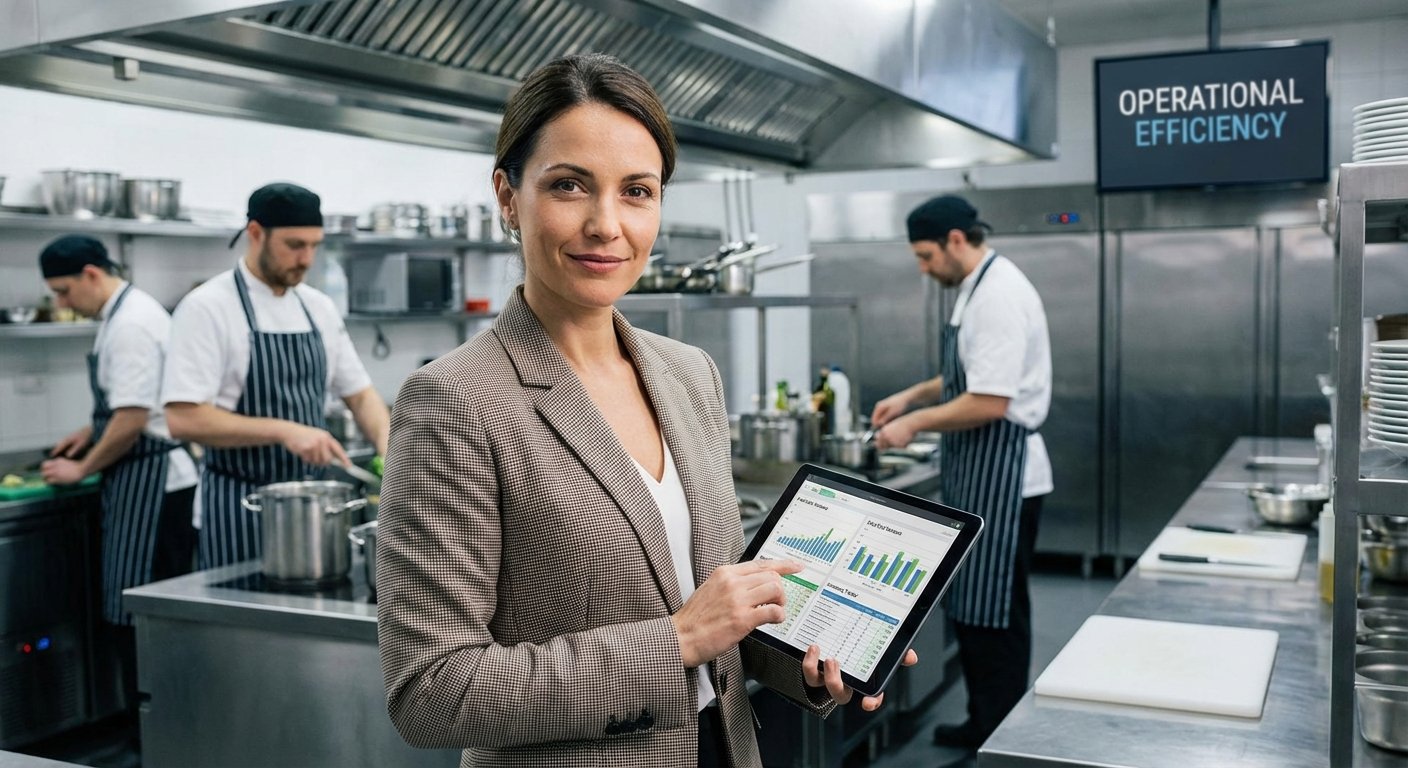
Food Cost Control: 7 Systems That Keep Restaurant Margins From Slipping
Food cost control requires systems, not vigilance. These 7 operational systems prevent the margin drift that kills restaurant profitability — and they compound.
Food Cost Control: 7 Systems That Keep Restaurant Margins From Slipping
Food cost control doesn't fail catastrophically — it slips. A price increase you didn't absorb into menu pricing, a portion drift that became habit, an over-prepped item thrown out every Tuesday. None of it is dramatic. All of it compounds.
The solution is systems, not vigilance. You can't personally catch every drift. Systems do it automatically.
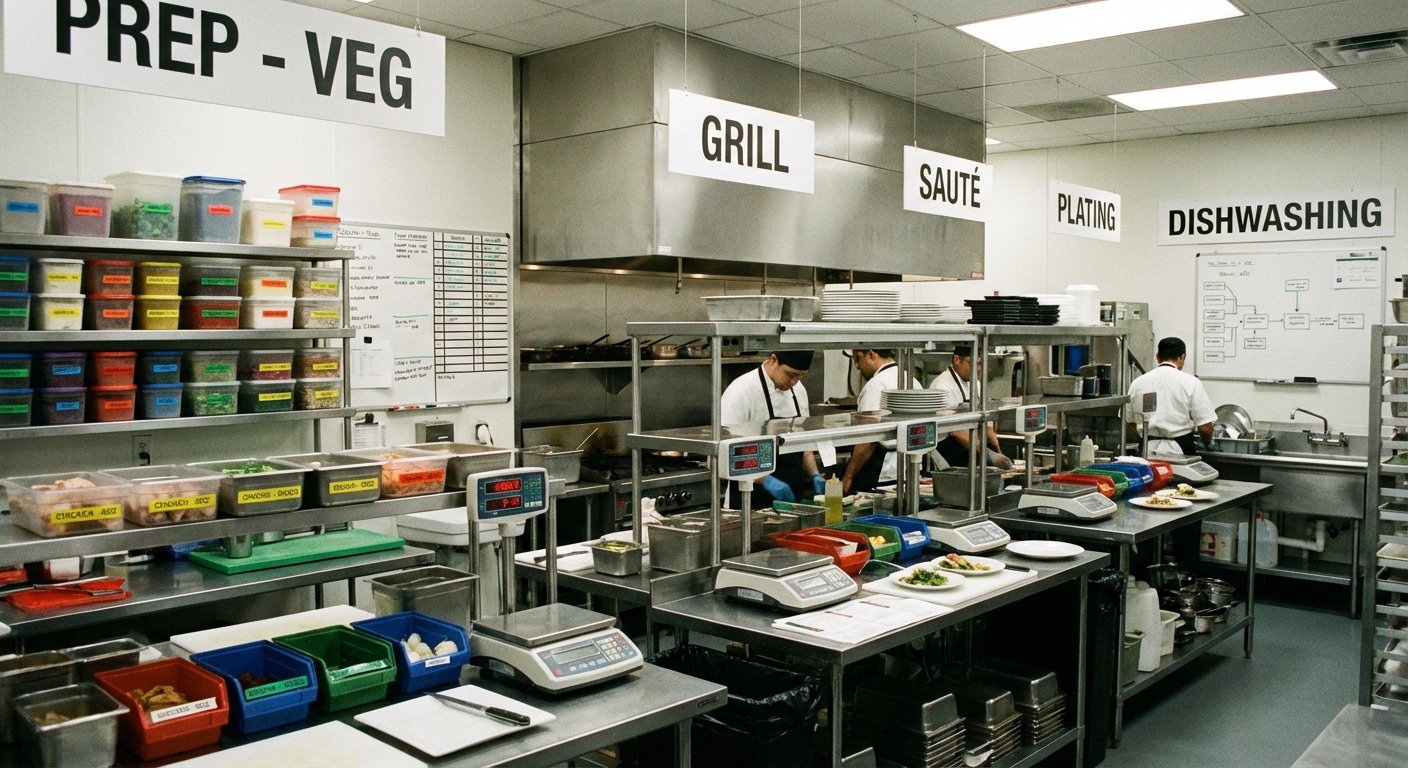
System 1: Standardized Recipe Cards With Current Costs
Every dish has a written recipe with exact quantities, yield-adjusted costs, and a current plate cost. Not from when you opened. Updated.
This is your baseline. Without it, you're managing food cost by feel.
System 2: Locked Supplier Price Updates
When a supplier invoice shows a price change, the update workflow is: (1) update ingredient cost in your recipe system, (2) recalculate affected dishes, (3) flag any dish now above food cost target for repricing review.
This should happen within 48 hours of receiving an invoice with a price change. Not at the end of the month.
System 3: Weekly Theoretical vs Actual Comparison
Calculate what food cost should have been (based on recipes and sales) versus what it actually was (based on purchases and inventory). Track the gap weekly. When the gap exceeds 2%, investigate.
System 4: Portion Audit Schedule
Randomly spot-check portions twice a week during service. Not announced. Weigh what comes off the line. Compare to standard. Document findings. Review with kitchen leadership monthly.
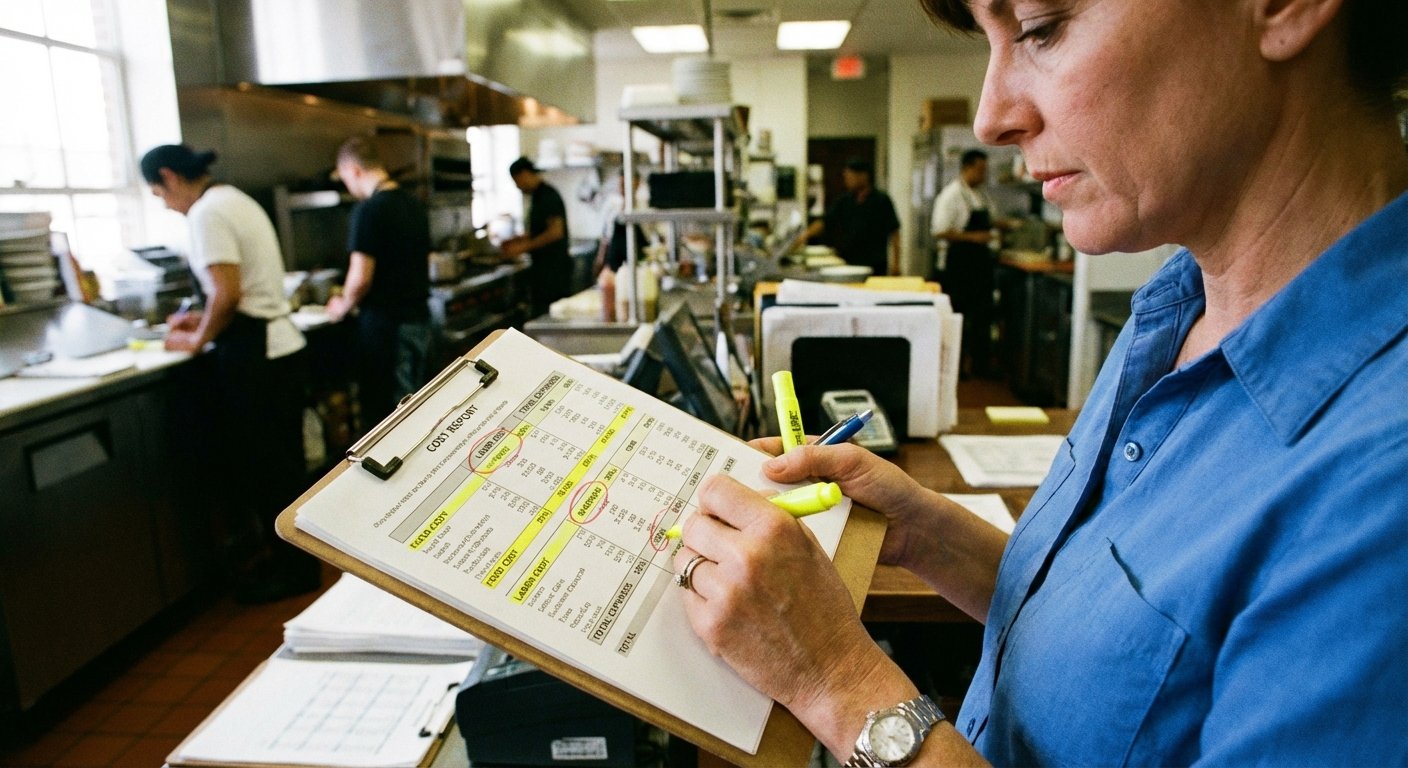
System 5: Purchase Order Discipline
Only order to par. Par levels should be based on actual sales velocity plus a safety buffer — not on round numbers or historical habit. Review par levels quarterly and after any significant sales volume change.
System 6: Comp and Void Tracking
Every comp and void is recorded with a reason. Review weekly. A kitchen running 3% void rate on a specific dish usually has a consistency problem. A server running high comp rates may need retraining.
System 7: End-of-Period Recipe Cost Refresh
Quarterly: review every recipe for accuracy. Prices change, prep methods evolve, portion standards drift. A 15-minute review per recipe, four times a year, keeps your baseline clean.
The Compounding Effect of All 7 Systems
None of these systems moves the needle dramatically in isolation. Together, they do.
A restaurant that implements all seven typically reduces food cost variance from 4–6% above theoretical to 1–2% — which on $1M in food revenue is $20,000–$40,000 per year in recovered margin.
FAQ: Food Cost Control Systems
What is the biggest cause of food cost variance in restaurants?
The most common causes are portioning errors (1–3%), waste and spoilage (1–4%), and theft or unrecorded consumption (0.5–2%). A total variance above 3% signals an operational problem that needs investigation.
How often should I do theoretical vs actual food cost comparisons?
Weekly for high-volume operations, bi-weekly as a minimum. Monthly comparisons reveal problems too late — four weeks of variance can add up to thousands of dollars before you act.
What is a portion audit and how do I do one?
A portion audit involves weighing actual plates or portions during service and comparing to your standard recipe quantities. Do this unannounced, twice a week, for different dishes each time. Document results and review with kitchen staff monthly.
How much can systematic food cost control save a restaurant?
On $1M in food revenue, reducing variance from 5% above theoretical to 1.5% above theoretical recovers $35,000 per year. On $2M in revenue, that's $70,000. The systems themselves cost time, not money.
Ready to take control of your food costs? Try CostLab free for 14 days →
Track Food Cost on Every Dish — Automatically
CostLab.AI calculates food cost percentage in real time. Update one ingredient price and see the impact across your entire menu instantly.
Start Free Trial →