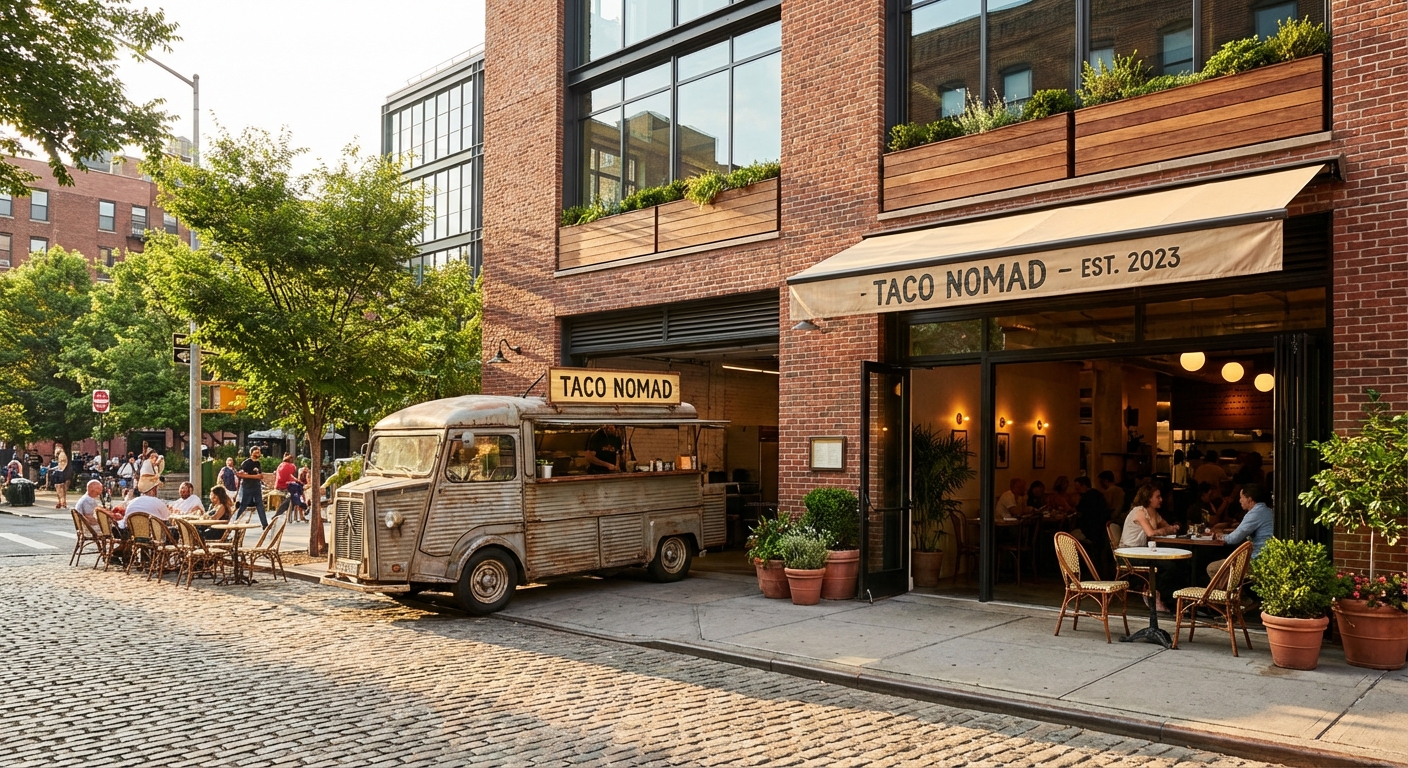
Food Truck to Restaurant: How to Make the Transition Successfully
Transitioning from food truck to brick-and-mortar restaurant is a completely different business. Learn the 6 steps, true costs, and most common mistakes to avoid.
Food Truck to Restaurant: How to Make the Transition Successfully
The food truck to restaurant transition is one of the most common growth moves in the industry — and one of the most underestimated. You've built something real: regulars, a solid menu, and reliable revenue. But a permanent location is a completely different business.
The leap from food truck to brick-and-mortar flips everything that makes a truck work: fixed costs multiply, the menu expands, and the staff structure transforms. This guide walks through exactly what changes, what to prepare for, and how to do it without torching the business you've already built.
Why the Food Truck Model Doesn't Automatically Transfer
A food truck is lean. Your overhead is low, your menu is focused, and if a location isn't working, you move. Brick-and-mortar flips all of that.
Fixed costs go up dramatically. Expect to pay:
- Rent: $3,000–$15,000/month depending on market and size
- Utilities: $1,500–$4,000/month (gas, electric, water)
- Additional staff: Servers, a host, dishwashers — roles you probably didn't have before
- Insurance: Commercial property, liquor liability, workers' comp
Your food truck probably ran at 25–35% labor and 28–32% food cost. In a brick-and-mortar with table service, those percentages can creep up fast if you're not watching them closely.
Step 1: Validate the Concept Before You Sign a Lease
Your truck has proven people love your food. But does that translate to a sit-down experience?
Before committing to a lease, answer honestly:
- What's your average ticket? Food trucks often run $12–18 per person. A dine-in restaurant needs $25–45+ to cover added overhead.
- Who are your customers? Are they grabbing lunch and leaving, or would they sit and linger over drinks?
- What neighborhoods do you perform best in? That's where your permanent location should be.
Consider doing a pop-up dinner or a weekend residency inside an existing space before committing. Real sit-down service at real volumes will tell you more than any spreadsheet.
Step 2: Build Your Financial Foundation
The number one reason food truck operators fail at this transition: undercapitalization.
A typical quick-service or casual restaurant buildout runs $150,000–$450,000. Full-service with a bar can exceed $600,000. Even taking over an existing space with equipment, budget at least $50,000–$100,000 for renovations, permits, inventory, and working capital.
You'll need:
- 3–6 months of operating expenses in reserve before you open
- Startup capital for buildout, equipment, and deposits
- A line of credit for the first year's cash flow gaps
Build a 12-month pro forma. Model conservative, base, and optimistic revenue scenarios. If the conservative scenario doesn't break even by month 9, reconsider the deal.
Step 3: Find the Right Space
Look for:
- Type 1 commercial hood already installed — adding one costs $15,000–$50,000
- Adequate gas and electrical capacity — upgrading mid-lease is expensive
- ADA compliance — retrofitting is costly; look for spaces that already meet code
- Grease trap in place — confirm municipal requirements before signing
- Foot traffic and parking — match to your customer profile
Work with a commercial real estate broker who specializes in restaurant spaces. Target a lease term of 3–5 years with renewal options — don't get locked into a 10-year lease until you've proven the concept.
Step 4: Redesign Your Operations
Your food truck kitchen was built for speed and simplicity. A restaurant kitchen needs to handle more complexity, more volume, and a larger team.
Things to rethink:
- Menu engineering: Trim to 20–35 items maximum. More items slow prep, increase waste, and confuse guests.
- Staff structure: You'll need a kitchen hierarchy (chef, line cooks, prep cooks), plus front-of-house (servers, host, bussers). Plan for 1 FOH staff per 15–20 seats during service.
- POS and inventory systems: Upgrade to a full restaurant POS with table management and inventory tracking.
Calculate your food cost percentage carefully. If a dish costs $7 to make and sells for $22, your food cost is 32%. Price your menu so your blended food cost stays at 28–33%.
Step 5: Keep the Truck (If You Can)
The best move most successful operators make: don't sell the truck right away.
Keep it running for catering, events, and marketing. It reinforces your brand, generates revenue during the ramp-up period, and provides a fallback if year one is rough. Some operators use the truck as a marketing vehicle for the permanent location — parking it nearby on busy weekends and driving foot traffic.
Step 6: Plan Your Marketing Around the Opening
You already have an audience. Use it:
- Email list: If you haven't been collecting emails, start now. Email is how you'll fill tables opening week.
- Social media countdown: Document the buildout on Instagram and TikTok. Followers who watched your journey will show up opening night.
- Grand opening soft launch: Invite regulars for a soft opening before you go public. Get the kinks out with a friendly crowd.
- Google Business Profile: Claim and optimize it before you open.
Common Mistakes to Avoid
- Signing a lease before permits are approved — confirm zoning, use permits, and health department requirements first
- Underpricing the menu — your costs are higher in brick-and-mortar; your prices must reflect that
- Hiring too fast — start lean and add staff as volume demands it
- Ignoring cash flow — revenue lags expenses in the first 6–12 months; know your numbers every week
FAQ: Food Truck to Brick-and-Mortar Restaurant
How much does it cost to transition from a food truck to a restaurant?
A typical casual restaurant buildout runs $150,000–$450,000. Taking over an existing restaurant space can reduce this to $50,000–$150,000, but you still need 3–6 months of operating reserves before opening.
What is the biggest mistake food truck owners make when opening a restaurant?
Undercapitalization. Most operators underestimate fixed costs — rent, utilities, insurance, additional staff — and run out of working capital before the location stabilizes. A well-funded transition with 3–6 months of reserves dramatically improves survival odds.
Should I sell my food truck when I open a restaurant?
Not immediately. Keep the truck for catering, events, and as a marketing vehicle for the new location. It generates revenue during the ramp-up period and provides a fallback if the first location struggles. Sell it after year two when the restaurant is stable.
How do I price my restaurant menu after running a food truck?
Start with your plate costs and target food cost percentage (28–33% for most concepts). Your brick-and-mortar costs are significantly higher than your truck, so menu prices need to reflect that. Don't price a dine-in menu like a truck menu.
Ready to take control of your food costs? Try CostLab free for 14 days →
Track Food Cost on Every Dish — Automatically
CostLab.AI calculates food cost percentage in real time. Update one ingredient price and see the impact across your entire menu instantly.
Start Free Trial →