Food Waste Reduction in Restaurants: What Actually Works
The average restaurant wastes 4–10% of food purchased. Learn the practical systems — FIFO, demand-driven prep, secondary use planning — that cut waste by 30–40%.
Food Waste Reduction in Restaurants: What Actually Works
Food waste reduction in restaurants is one of the highest-ROI operational improvements available. The average restaurant wastes 4–10% of all food purchased — before it ever reaches a customer. For a restaurant with $400,000 in annual food purchases, that's $16,000–$40,000 thrown away every year.
The breakdown is roughly:
- Storage and spoilage: 20–35% of food waste
- Prep waste: 30–40%
- Plate waste (guest leftovers): 25–35%
- Overproduction: 10–20%
The most actionable categories are storage/spoilage and overproduction. You can control those without changing your menu or your guests.
Starting With FIFO
First In, First Out is the foundation of waste prevention, and most kitchens enforce it inconsistently.
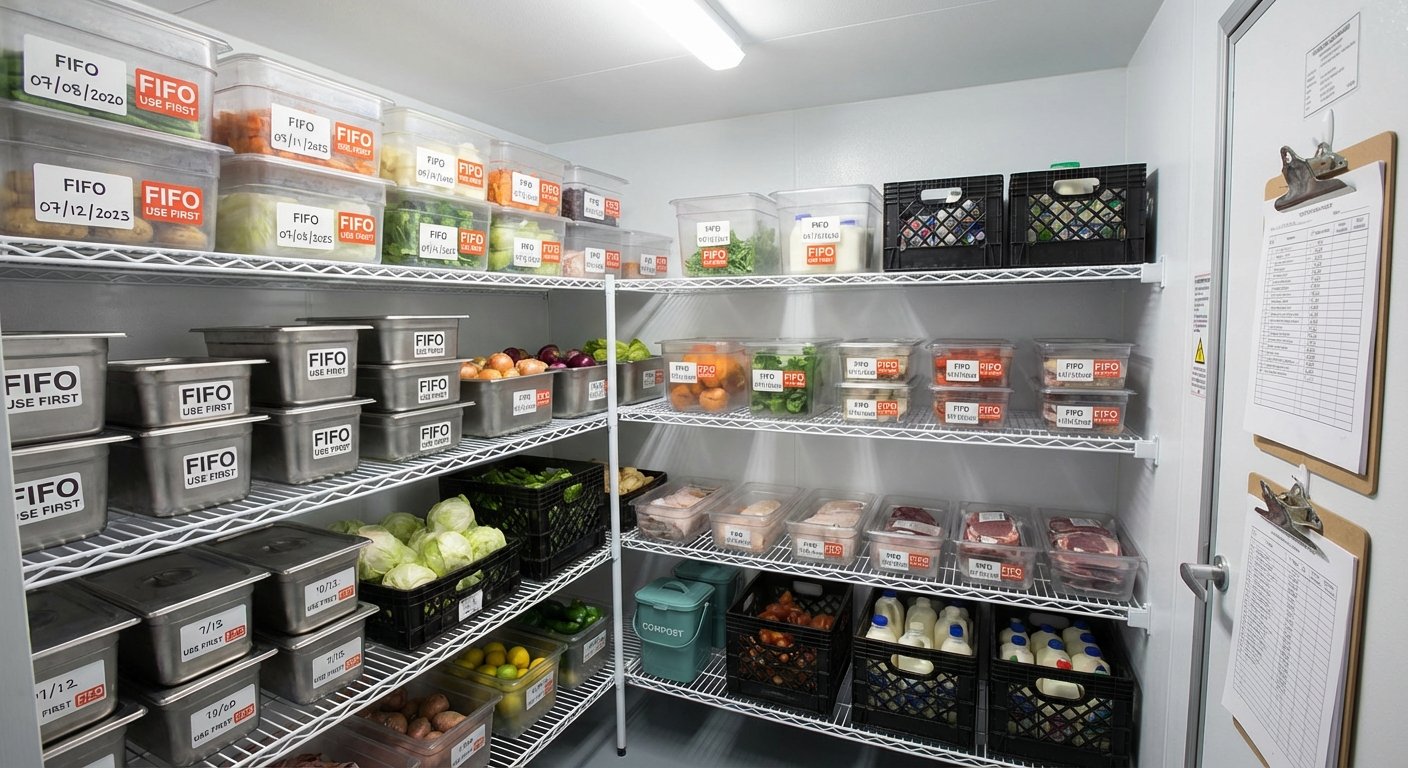
The discipline: every time product comes in, older stock moves to the front. New stock goes behind. Date every container. Train every person who touches the walk-in.
FIFO sounds obvious. In practice, the walk-in gets busy, boxes get stacked, and the oldest product ends up buried. A weekly walk-in audit — 20 minutes, someone with authority to throw out expired product — catches most spoilage before it compounds.
Demand-Driven Prep
Over-production is the silent killer. A kitchen that preps 40 portions of a specials item and sells 22 has wasted 18 portions of labor and food.
The fix is systematic, not intuitive:
- Pull POS data from the last 4 comparable periods (same day of week, same season)
- Calculate average sales + 15% buffer for peak variance
- Prep to that number, not to a round number or a vague "enough"
On low-volume days, reduce prep quantities. The discipline to prep less is harder than it sounds — but running out of a specials item once a week is far cheaper than throwing out 20% of your prep every night.
Secondary Use Planning
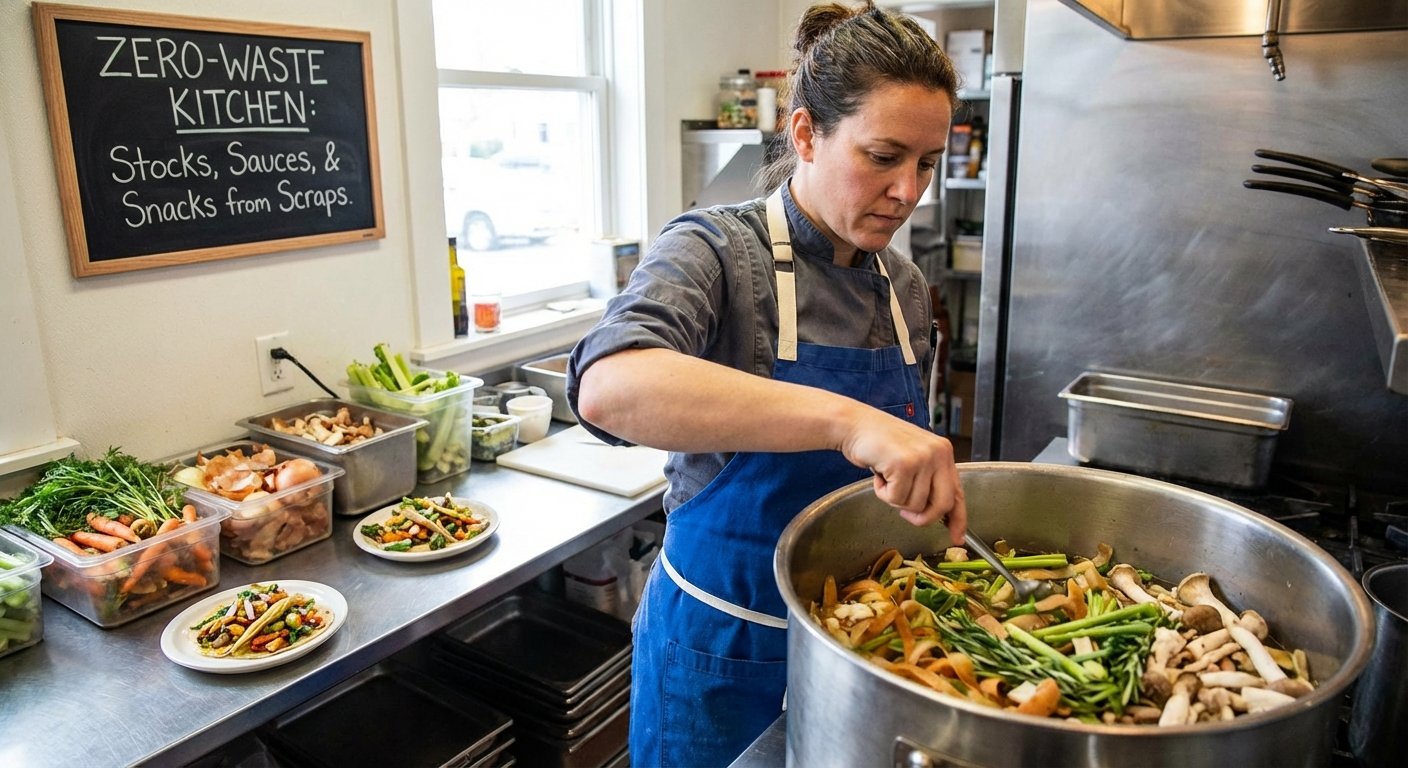
Many trim products have secondary value. Vegetable trim becomes stock. Bread that didn't sell becomes croutons or breadcrumbs. Slightly over-ripe fruit becomes jam or dessert components.
Build secondary uses into your mise en place planning. A kitchen that thinks systematically about trim has lower effective ingredient costs than one that throws trim in the garbage.
Practical Waste Tracking
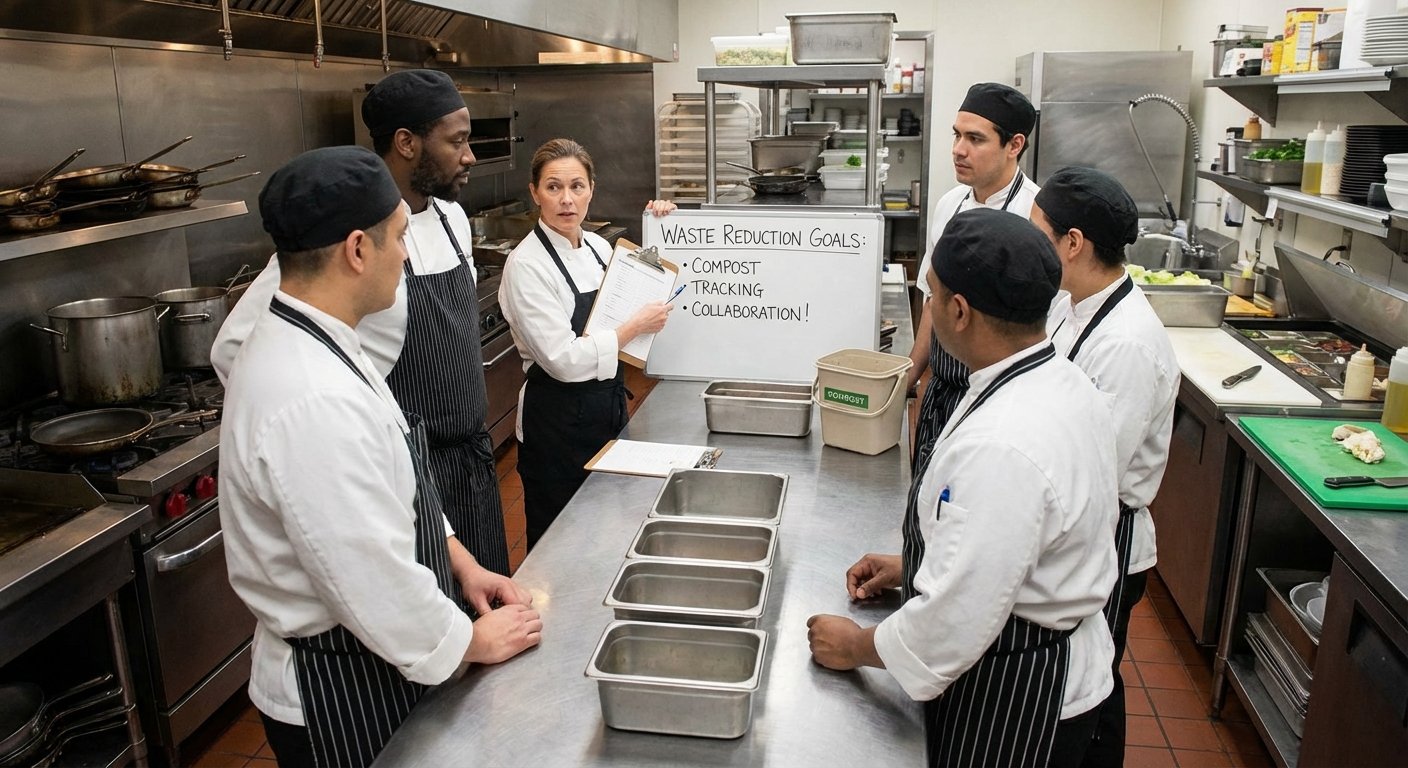
- Daily waste log: A sheet by the trash can where anyone throwing away food records what and how much. Takes 10 seconds per entry. After two weeks, you have real data.
- End-of-night leftover review: Quick assessment of what didn't sell. Adjust tomorrow's prep accordingly.
- Monthly waste as % of purchases: Benchmark against your own history first, industry averages second.
What Not to Do
Don't over-engineer it. Sophisticated food waste software that requires hourly logging creates compliance fatigue and gets abandoned. Start with a clipboard by the trash, consistent FIFO, and demand-driven prep. Those three alone can cut waste by 30–40% in most kitchens.
FAQ: Restaurant Food Waste Reduction
What percentage of food do restaurants typically waste?
The average restaurant wastes 4–10% of food purchased before it reaches a customer. Storage/spoilage and overproduction account for roughly 50% of that waste and are the most controllable categories.
What is the most effective way to reduce food waste in a restaurant kitchen?
Three systems deliver the most impact: consistent FIFO enforcement with dated product, demand-driven prep quantities based on POS history, and a daily waste log that builds accountability. Together these can reduce waste by 30–40%.
How does food waste affect restaurant profitability?
On $400,000 in annual food purchases, reducing waste from 8% to 4% recovers $16,000 per year. Waste reduction compounds with recipe costing improvements since it closes the gap between theoretical and actual food cost.
Do I need waste tracking software to reduce restaurant food waste?
No. A clipboard waste log by the trash can is more likely to get used than complex software. Start simple, build the habit, and only upgrade to software once you're committed to the process.
Ready to take control of your food costs? Try CostLab free for 14 days →
Track Food Cost on Every Dish — Automatically
CostLab.AI calculates food cost percentage in real time. Update one ingredient price and see the impact across your entire menu instantly.
Start Free Trial →