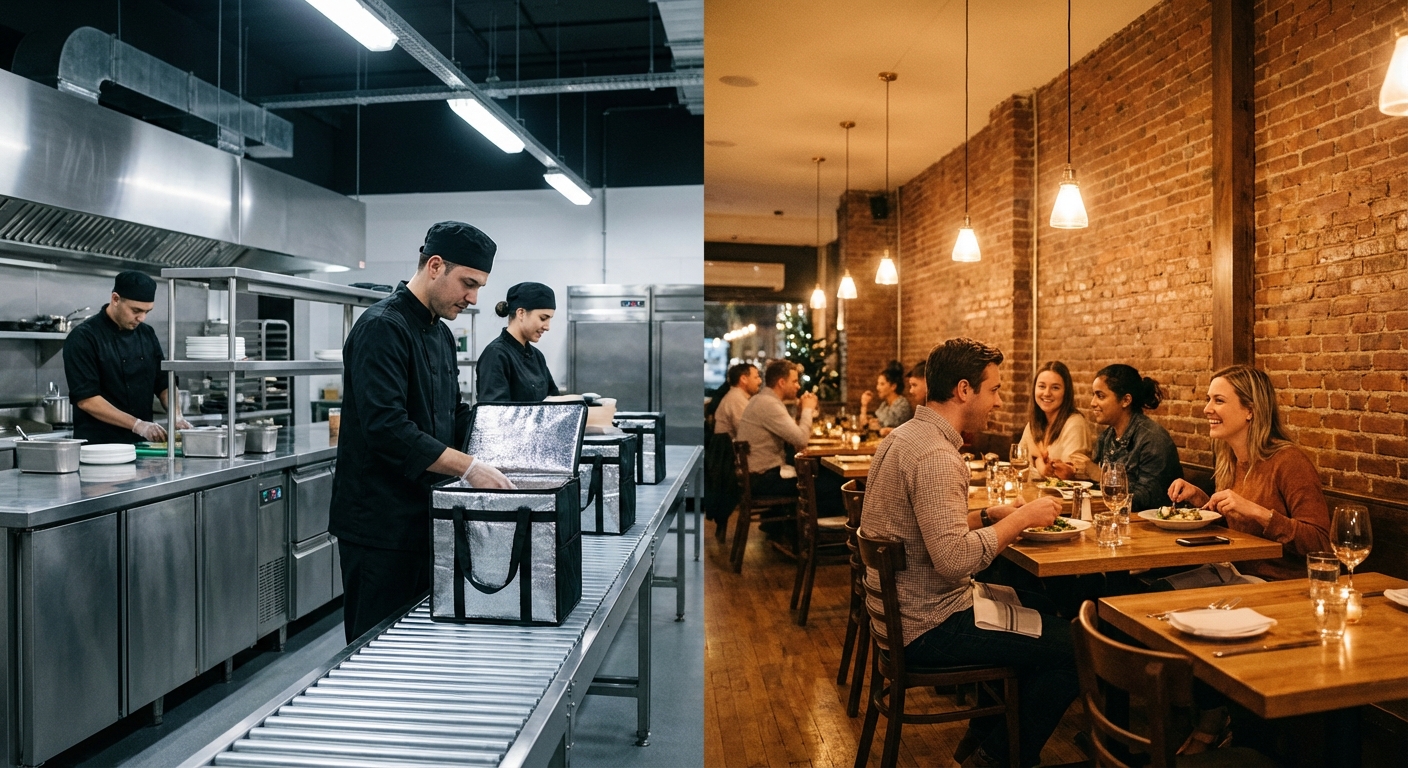
Ghost Kitchen vs Brick-and-Mortar: Honest Cost Comparison
Ghost kitchen vs brick-and-mortar: compare startup costs, margins, revenue potential, and operating challenges to decide which model fits your goals.
Ghost Kitchen vs Brick-and-Mortar: Honest Cost Comparison
Ghost kitchens vs. brick-and-mortar restaurants represent fundamentally different business models with different cost structures, risk profiles, and revenue ceilings. If you're deciding which to launch — or whether a ghost kitchen makes sense alongside your existing restaurant — here's an honest look at the numbers.
What Is a Ghost Kitchen?
A ghost kitchen (also called a virtual kitchen, dark kitchen, or cloud kitchen) is a food production facility that exists solely for delivery orders. There's no dining room, no front-of-house staff, no tables. Customers order through apps like DoorDash, Uber Eats, or Grubhub.
Some ghost kitchens operate as standalone businesses. Others are add-on revenue streams for existing brick-and-mortar restaurants using their kitchen during off-hours.
Startup Cost Comparison
| Cost Category | Ghost Kitchen | Brick-and-Mortar |
|---|---|---|
| Lease deposit | $2,000–$10,000 | $15,000–$60,000 |
| Kitchen build-out | $5,000–$50,000 | $100,000–$400,000 |
| Equipment | $10,000–$30,000 | $50,000–$150,000 |
| Furniture / decor | $0 | $20,000–$80,000 |
| Signage | $0–$500 | $2,000–$10,000 |
| Pre-opening labor | $5,000–$15,000 | $20,000–$60,000 |
| Total | $22,000–$105,000 | $207,000–$760,000 |
Ghost kitchens have dramatically lower startup costs. The trade-off: you're fully dependent on third-party delivery platforms and their commission structures.
Monthly Operating Cost Comparison
| Cost Category | Ghost Kitchen | Brick-and-Mortar |
|---|---|---|
| Rent | $2,000–$6,000 | $5,000–$25,000 |
| Labor | $8,000–$20,000 | $25,000–$60,000 |
| Platform commissions | 15–30% of sales | N/A |
| Marketing | $500–$2,000 | $1,000–$3,000 |
The platform commission is the ghost kitchen's equivalent of front-of-house labor and real estate. At 25–30% commission, delivery platforms take a significant chunk of every order.
The Margin Math: Where Ghost Kitchens Win and Lose
Ghost kitchen at $30,000/month revenue:
- Food cost (32%): -$9,600
- Labor: -$10,000
- Platform commissions (25%): -$7,500
- Rent + other: -$6,000
- Net: -$3,100 (loss)
Ghost kitchen at $60,000/month revenue:
- Food cost (32%): -$19,200
- Labor: -$10,000
- Platform commissions (25%): -$15,000
- Rent + other: -$6,000
- Net: +$9,800 (16.3% margin)
Ghost kitchens need volume to be profitable. Platform commissions are a fixed percentage of revenue — they don't decrease as you scale.
The Brick-and-Mortar Advantage
Brick-and-mortar restaurants have higher fixed costs but also have:
- No platform commission on dine-in revenue
- Higher average check (bar sales, desserts, upsells are easier in person)
- Repeat customer loyalty from the physical experience
- Brand equity — a real location that people know and return to
A well-run full-service restaurant at 80% capacity can generate significantly higher revenue per square foot than a ghost kitchen at full delivery capacity.
When Ghost Kitchen Makes Sense
A ghost kitchen is the right model when:
- You want to test a concept before committing to a full build-out
- You're an existing restaurant looking to monetize off-hours kitchen capacity
- You're targeting delivery-first markets (dense urban areas with high delivery penetration)
- Your concept is simple enough to execute at volume with minimal labor
A ghost kitchen is a bad model when:
- Your concept depends on the dining experience
- Delivery platforms are charging 28%+ commission in your market
- You're not running at high volume
- Your city has low delivery market penetration
FAQ: Ghost Kitchen vs Brick-and-Mortar
Is a ghost kitchen more profitable than a restaurant?
Not automatically. Ghost kitchens have lower startup costs but face 15–30% platform commissions. At low volume, ghost kitchens often lose money. At high volume, they can be very profitable. Brick-and-mortar has higher fixed costs but higher revenue potential per unit.
How much does a ghost kitchen cost to start?
A ghost kitchen typically costs $22,000–$105,000 to start. This compares to $200,000–$750,000 for a full-service brick-and-mortar restaurant.
What are the biggest risks of a ghost kitchen?
Platform dependency (algorithm changes or commission increases can crash revenue overnight), low customer loyalty, and margin compression from high commissions.
Can I run a ghost kitchen out of my existing restaurant?
Yes — this is one of the most effective uses of ghost kitchen infrastructure. Your existing restaurant can operate a separate delivery brand during slow hours using the same kitchen and equipment.
Ready to take control of your food costs? Try CostLab free for 14 days →
Track Food Cost on Every Dish — Automatically
CostLab.AI calculates food cost percentage in real time. Update one ingredient price and see the impact across your entire menu instantly.
Start Free Trial →