How to Open a Ghost Kitchen: Step-by-Step Guide for First-Time Operators
Learn how to open a ghost kitchen — from concept selection and kitchen space to licensing, delivery platforms, and the real startup costs ($13,500–$34,000).
How to Open a Ghost Kitchen: Step-by-Step Guide for First-Time Operators
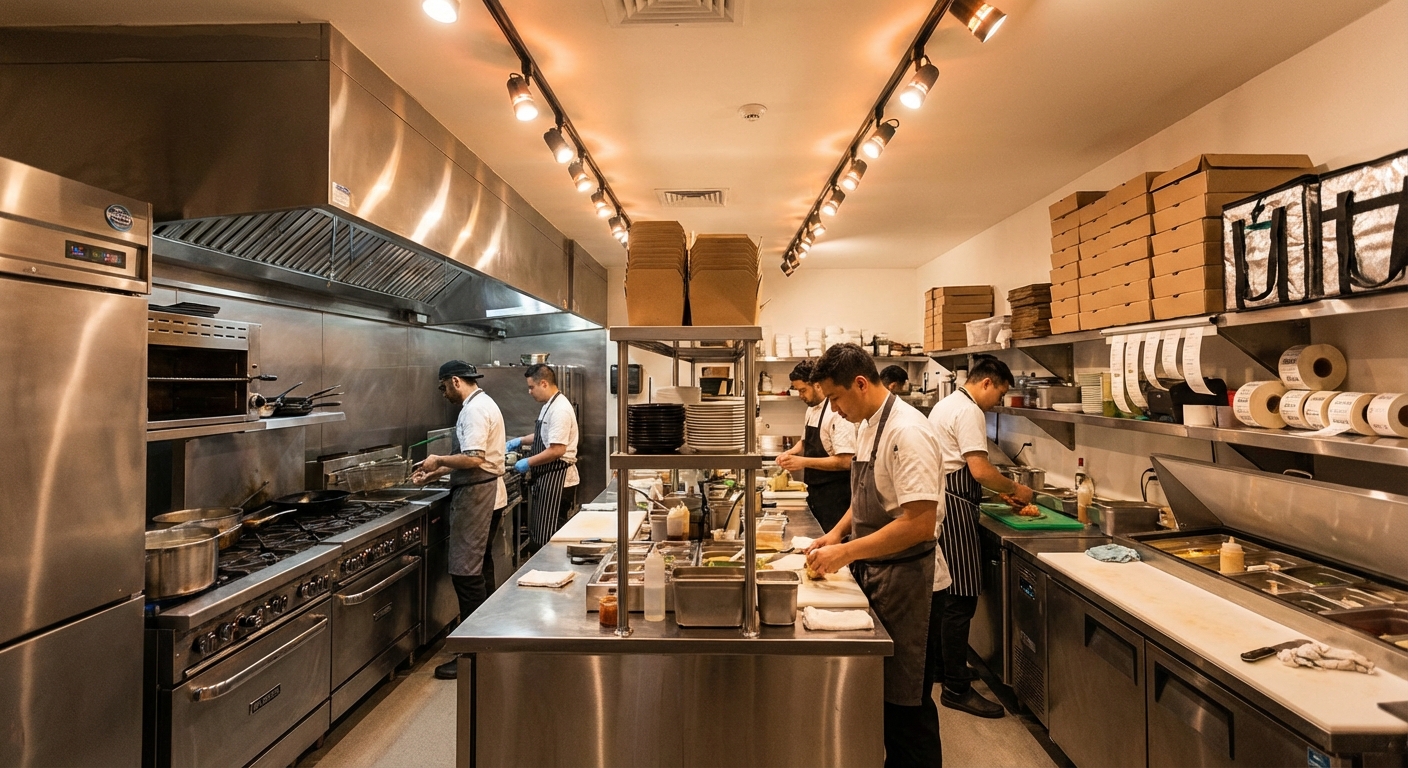
Learning how to open a ghost kitchen is the starting point for one of the lowest-cost paths into the food business. Ghost kitchens — also called cloud kitchens, dark kitchens, or virtual kitchens — produce food exclusively for delivery with no dining room, no servers, and no front-of-house.
They've grown rapidly since 2020 for good reason: lower startup costs, fewer staff requirements, and the ability to test a concept without signing a 10-year lease. But they aren't as simple as "rent a kitchen and start cooking."
What Is a Ghost Kitchen, Exactly?
A ghost kitchen exists only to fulfill delivery orders. Customers order through DoorDash, Uber Eats, or Grubhub, and your kitchen prepares the food. There are three main formats:
- Shared ghost kitchen facility: Rent space inside an existing commissary or ghost kitchen building (Kitchen United, CloudKitchens, local commissaries). You get a cooking station, shared utilities, and usually a shared loading dock.
- Your own ghost kitchen space: Lease a standalone commercial kitchen or convert back-of-house space you already have.
- Virtual brand from an existing restaurant: Operate a delivery-only brand out of your existing kitchen — different name, different menu, same kitchen.
For first-time operators, shared facilities are the lowest-risk entry point.
Step 1: Choose Your Concept and Menu
Your ghost kitchen lives or dies by its delivery economics. Before you pick a menu, understand the constraints:
- Food must travel well. Anything that goes soggy or degrades in 20–40 minutes is a problem. Burgers, wings, bowls, burritos, pizza, and Asian noodle dishes perform well. Crispy-fried food and composed plates do not.
- Your menu should be tight. 10–20 items max. Fewer items = faster service = better delivery ratings = more orders.
- Average order value matters. Delivery platforms charge 15–30% commission per order. Target an average ticket of $25–40 and keep your food cost under 30% after platform fees are factored in.
Step 2: Find Your Kitchen Space
Shared Ghost Kitchen Facilities: Companies like CloudKitchens, Kitchen United, and Reef Technology offer month-to-month leases ($1,500–$4,000/month per station) with included equipment and shared utilities.
Leased Standalone Commercial Kitchen: More control, more cost ($2,500–$7,000/month). Requires more buildout but gives full control over hours and operations.
Adding Delivery to an Existing Restaurant: If you have unused kitchen capacity, operate a delivery-only brand during off-peak hours — no additional rent, just staffing and platform fees.
Step 3: Get Licensed and Permitted
You'll typically need: business license, food handler's permits for all staff, health department inspection and permit, seller's permit/sales tax ID, and food manager certification (ServSafe or equivalent).
Budget 4–8 weeks for licensing. Health department timelines vary widely. Apply early.
Step 4: Set Up Delivery Platform Accounts
| Platform | Commission Rate | Best Market |
|---|---|---|
| DoorDash | 15–30% per order | Nationwide, strong suburban |
| Uber Eats | 15–30% per order | Urban markets |
| Grubhub | 15–25% per order | Dense urban |
| Direct ordering (e.g., ChowNow) | Flat monthly fee | Your own customers |
Start with DoorDash and Uber Eats — they have the most volume. Commission rates are negotiable — once you hit $5,000–$10,000/month in sales, ask your account rep for a rate reduction.
Build your own direct ordering channel too. Every order through your own channel is $5–6 you keep instead of giving to a platform.
Step 5: Build Your Operational System
Staffing: A small ghost kitchen can run with 2–3 people per shift. Many operators start dinner-only before expanding hours.
Equipment: Commercial range, oven, fryer (if needed), prep tables, refrigeration, packaging supplies, label printer. In a shared facility, major equipment is usually provided.
Tech stack: POS (Toast or Square), optional Kitchen Display System for managing multiple platform orders simultaneously, and a food cost tracking tool — ghost kitchens operate on thin margins and costs drift fast.
Step 6: Launch and Optimize for Platform Rankings
Delivery platforms rank kitchens algorithmically. To rank well:
- Fast acceptance time: Accept orders within 2–3 minutes
- Low cancellation rate: Below 1%
- High ratings: Aim for 4.5+ stars — packaging quality and accuracy are the #1 complaint in delivery reviews
What Does It Actually Cost to Open a Ghost Kitchen?
| Item | Cost |
|---|---|
| Shared kitchen rent (3 months) | $4,500–$12,000 |
| Licensing and permits | $500–$2,000 |
| Initial inventory | $2,000–$5,000 |
| Packaging supplies | $500–$1,500 |
| Equipment (smallwares) | $1,000–$3,000 |
| POS setup | $0–$500 |
| Working capital reserve | $5,000–$10,000 |
| Total | $13,500–$34,000 |
This is dramatically lower than a traditional restaurant buildout, making ghost kitchens an attractive first concept.
FAQ: Opening a Ghost Kitchen
How much does it cost to start a ghost kitchen?
In a shared facility, total startup costs typically run $13,500–$34,000. This includes 3 months of kitchen rent, licensing, initial inventory, packaging, smallwares, and a working capital reserve.
Do I need a commercial kitchen to run a ghost kitchen?
Yes. Home kitchens don't meet health department requirements for commercial food production. You need a licensed commercial kitchen — either a shared ghost kitchen facility, a leased space, or an existing restaurant kitchen.
What food concepts work best for ghost kitchens?
Foods that travel well and have fast prep times: burgers, wings, bowls, burritos, pizza, fried chicken sandwiches, and Asian noodle dishes. Tight menus of 10–20 items beat broader menus for speed and delivery ratings.
How do ghost kitchen delivery platform fees work?
DoorDash, Uber Eats, and Grubhub charge 15–30% commission per order. On a $30 order, the platform keeps $4.50–$9.00. Your food cost + platform fee + labor must leave enough margin to cover rent and turn a profit. Most ghost kitchens target food cost under 30% and average tickets above $25.
Ready to take control of your food costs? Try CostLab free for 14 days →
Track Food Cost on Every Dish — Automatically
CostLab.AI calculates food cost percentage in real time. Update one ingredient price and see the impact across your entire menu instantly.
Start Free Trial →