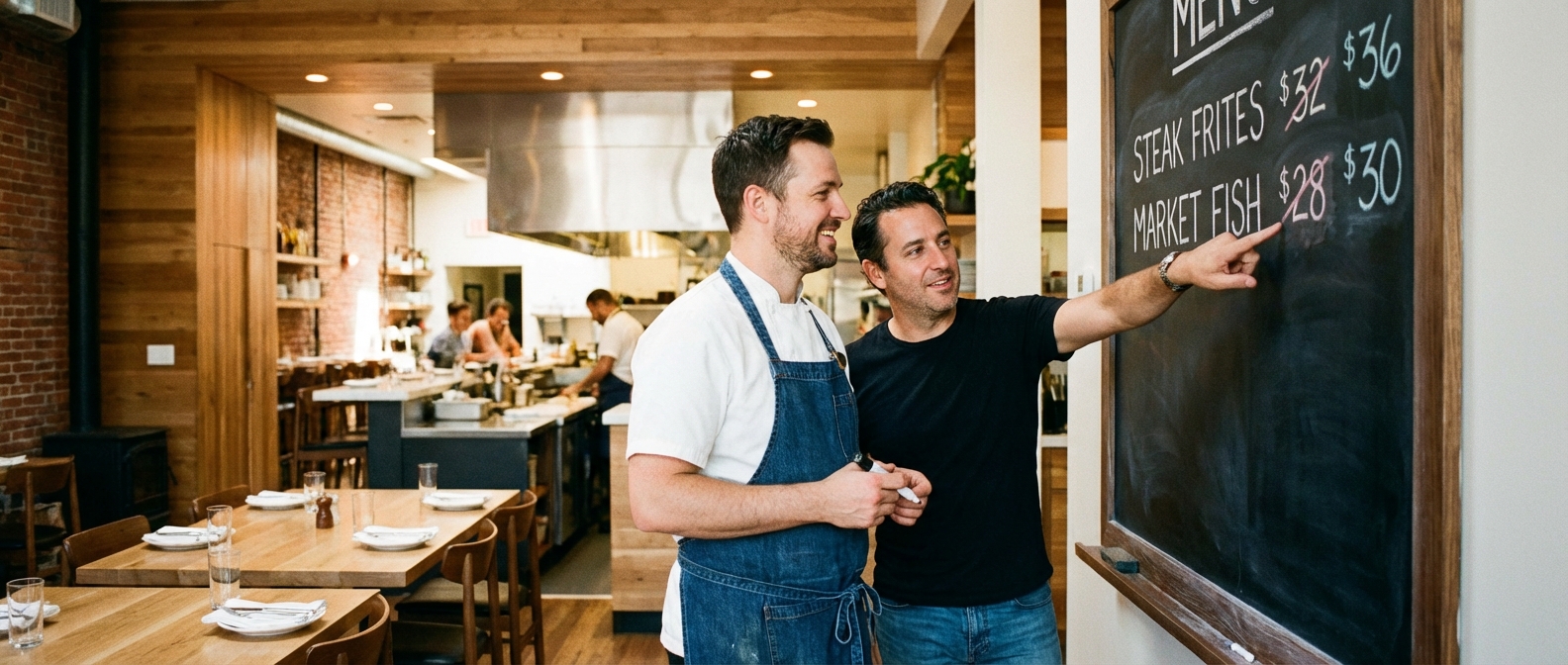
How to Raise Menu Prices Without Losing Regulars
Food costs are up across the board. Here's a step-by-step method for raising restaurant menu prices strategically—without driving away loyal customers.
How to Raise Menu Prices Without Losing Regulars
Raising restaurant menu prices is one of the most uncomfortable things an operator can do — and one of the most necessary. Food costs are up. Chicken breast has gone from $1.80/lb to $2.60/lb in two years. Ground beef, eggs, cooking oil, dairy — all higher. If you haven't raised prices in the last 12–18 months, you're absorbing those increases out of your margin. That's not a strategy. That's a slow leak.
The good news: customers understand inflation. Most are paying more at the grocery store too. The key is doing it intelligently — not randomly, and not apologetically.
Step 1: Calculate the Minimum Increase You Actually Need
Before changing anything, figure out how much you need to raise prices to hit your target food cost percentage. Don't guess.
Example — pasta dish:
- Current price: $16.00
- Current food cost: $5.60 (35% — too high)
- Target food cost: 28%
To hit 28% at current ingredient cost: $5.60 ÷ 0.28 = $20.00 required price
That's a big jump. What if you trim recipe cost slightly — reduce pasta portion by half an ounce, use a less expensive garnish?
- Revised food cost: $5.00
- At 28%: $5.00 ÷ 0.28 = $17.86 → round to $18.00
Going from $16 to $18 is a 12.5% increase — noticeable, but justifiable given food cost reality.
The rule of thumb: If food cost is running 3–5 points above target, you likely need an 8–15% increase on affected items. Calculate per dish rather than applying a flat percentage across the board.
Step 2: Know Which Items to Raise (and Which to Leave Alone)
Anchor Items vs. Stealth Items
Anchor items are what your restaurant is known for. The burger, the signature pasta, the item everyone orders. Regulars know the price. A $2 increase gets noticed.
Stealth items are ordered but not talked about. Sides, appetizers, secondary entrees. These can absorb larger increases with almost no pushback.
Strategy: Hold anchor prices steady or raise minimally ($0.50–$1.00). Take bigger increases ($1.50–$3.00) on stealth items where food cost is worst.
The Bottom 20% Rule
Identify your lowest-selling 20% by POS data. These are candidates for significant increases — if 3 people order the lamb shank per week, you can raise it $5 and most guests won't notice.
Step 3: Time Your Price Increase Strategically
Good timing:
- Start of a new season (frame it as "new seasonal menu")
- After a positive change — new dish, improved ingredient quality, renovation
- When competitors have already raised prices
Bad timing:
- Right after a bad review cycle
- During your slowest month
- During a local economic downturn
Step 4: Redesign the Menu — Don't Just Cross Out Numbers
A physical menu redesign is the cover story for a price increase. Guests accept new prices much more readily when they're looking at a new menu — it frames the change as intentional rather than reactive.
Even if the only change is prices, a fresh layout signals: "We've updated things." That psychological reset is worth the $200–$500 to reprint.
Design tip: Remove price columns. When prices are lined up on the right, guests scan the numbers and anchor to the cheapest option. Prices embedded in descriptions are processed differently.
Step 5: Train Your Staff on the Narrative
Your servers will get questions. They need a simple, honest answer:
"Our ingredient costs have gone up significantly over the past year — we updated prices to make sure we can keep sourcing the quality you're used to."
Train staff not to apologize for prices — it signals you don't believe the price is fair.
Frequently Asked Questions
How much can I raise menu prices without losing customers?
Most restaurants can raise 8–15% without meaningful customer loss, especially if spread across items and delivered through a menu redesign.
Should I tell customers about the price increase?
Generally, no. A redesigned menu communicates the change without requiring a conversation. An announcement draws more attention than the increase warrants.
How often should restaurants raise menu prices?
1–2 times per year in small increments rather than one large jump every 3–4 years. Gradual increases are absorbed more easily.
What's the best way to handle regulars who notice?
Be direct: ingredient costs have increased significantly. Most regulars understand — they're buying groceries too. Don't offer discounts to smooth it over.
Should I raise everything at once or phase it in?
Phase it in. Raise the worst-performing items by food cost first. Evaluate response over 4–6 weeks before the next round.
Ready to take control of your food costs? Try CostLab free for 14 days →
Track Food Cost on Every Dish — Automatically
CostLab.AI calculates food cost percentage in real time. Update one ingredient price and see the impact across your entire menu instantly.
Start Free Trial →