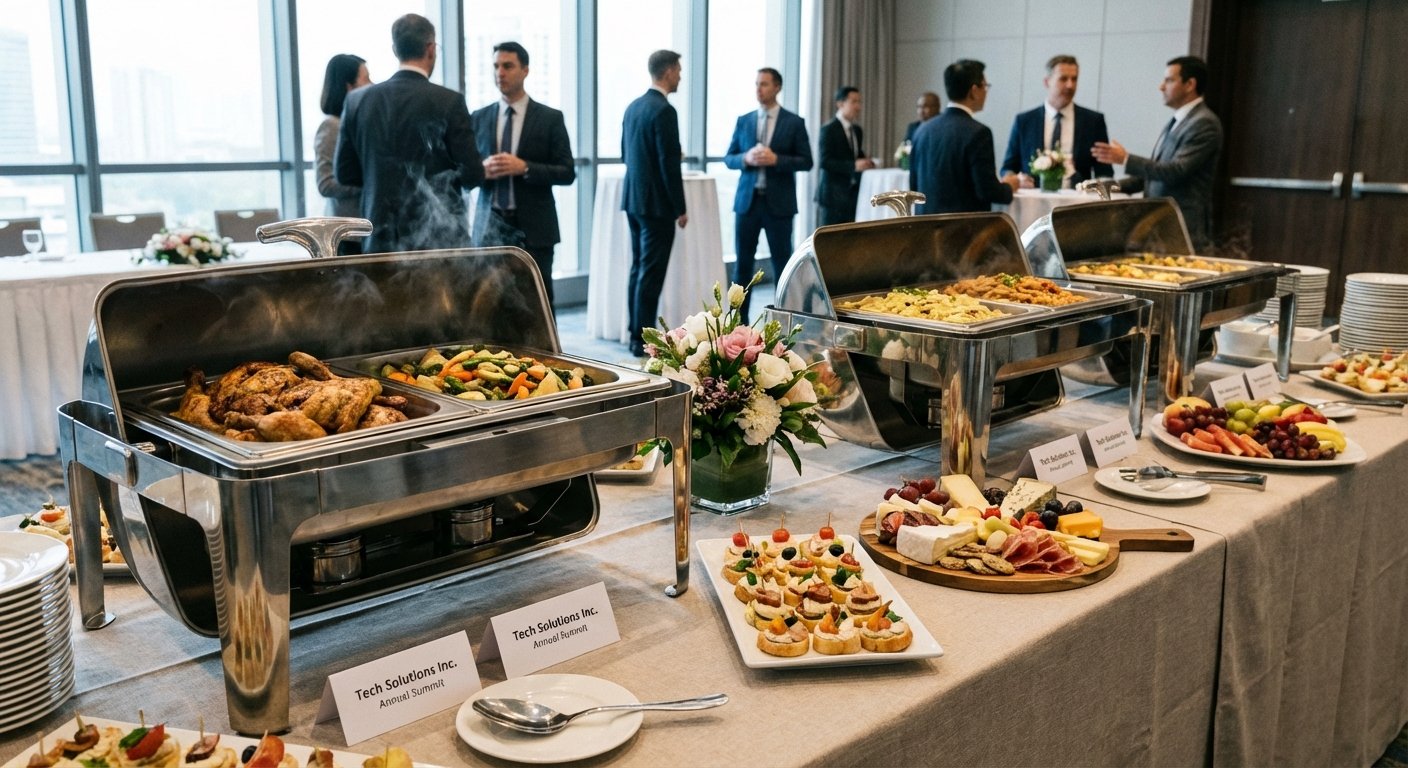
How to Launch Restaurant Catering Without Destroying Your Kitchen
Catering delivers 45%+ contribution margins vs. dine-in's 35–40%—but only with the right systems. Here's how to add catering revenue without chaos.
How to Launch Restaurant Catering Without Destroying Your Kitchen
Restaurant catering is the most logical revenue extension for most operators. You already have the kitchen, the team, and the food. A catering order at $800 for a corporate lunch uses the same infrastructure as your dining room—often with better economics: no table turns, no individual plate presentation, no expediting.
But catering can destroy your core business if you add it without systems. Here's how to do it right.
Why Catering Has Better Unit Economics
On a standard dinner service, your kitchen is executing 5–8 different dishes per table across staggered timing. Each dish requires individual attention, plating, and coordination.
A catering order for 30 people? Three items: protein, two sides. All batch-produced. Packaged. Delivered. No misfires, no re-fires.
Typical catering economics:
| Item | Amount |
|---|---|
| Order value (30 people x $26.67/head) | $800 |
| Food cost (30%) | $240 |
| Packaging | $45 |
| Labor (3 hrs x 2 staff x $18/hr) | $108 |
| Delivery | $40 |
| Contribution margin | $367 (45.9%) |
Compare that to $800 in dine-in at typical prime cost (60–65% of revenue), where contribution is $280–320. Catering wins on margin.
The "Destroying Your Kitchen" Problem
Catering fails—and hurts your core business—when:
Production timing conflicts with service. A Friday noon catering order requiring 3 hours of kitchen time competes directly with Friday lunch prep. Solution: schedule catering production on off-peak days (Monday, Tuesday) or early morning before prep begins.
You accept every order that comes in. A 200-person Saturday catering order when your dining room is full is guaranteed chaos. Set policies: no orders over X people, minimum 72 hours notice, no delivery during peak service windows.
Packaging is wrong for the volume. Delivering a 30-person order in mismatched takeout containers creates a bad impression. Invest $200–400 in aluminum full-pan containers, chafing dishes, and serving utensils dedicated to catering.
Building Your Catering Menu
Your catering menu should be a subset of your regular menu—items that scale well, travel well, and don't require last-minute prep.
Safe catering formats from any cuisine:
- Protein + starch + vegetable tray service
- Salads (dressing served separately)
- Sandwich and wrap platters
- Passed appetizer boxes
Avoid for catering:
- Anything fried that goes soggy (unless delivery window under 20 minutes)
- Dishes requiring tableside preparation
- Items with highly perishable components (raw fish, soft-boiled eggs)
Develop 2–3 tiered packages: $18/head, $24/head, $32/head. Pricing packages simplify ordering and let you control margins through menu engineering.
Pricing Catering Correctly
Most restaurants underprice catering because they forget packaging ($0.50–2.00/person), delivery (labor + fuel), and equipment amortization.
Example: 20-person corporate box lunch
- Food cost: $4.50/person
- Packaging: $1.20/person
- Allocated labor: $2.80/person
- Total production cost: $8.50/person
- Target 32% food cost: $8.50 / 0.32 = $26.56/person
Many operators price this at $18/person because "that's what lunch costs." At $18, your food and labor already exceed 47% before packaging and delivery.
Getting Your First Catering Clients
Your existing regulars. People who already eat at your restaurant trust you. If someone mentions they're from a local company, ask for a card and follow up.
Google My Business. Add "Catering" as a service attribute. Include sample menus and a contact method. This drives inbound inquiries from local searches.
EZCater. A catering marketplace connecting corporate clients with restaurants. They take 15%, but provide qualified, repeat corporate customers.
Frequently Asked Questions
How much advance notice should I require for catering orders?
Minimum 72 hours for orders under 50 people; 1 week or more for orders above 50 people. This gives you time to source ingredients and schedule production without disrupting regular service.
Should I charge a delivery fee?
Yes. Delivery costs include driver labor, fuel, vehicle wear, and your time. Charge $25–75 depending on distance and order size. Build it into your pricing transparently.
How do I handle payment for catering?
Require a 25–50% deposit at booking to cover ingredient costs. Collect the balance on delivery or within 30 days for established corporate accounts. Never do a large catering order without a deposit.
Ready to take control of your food costs? Try CostLab free for 14 days →
Track Food Cost on Every Dish — Automatically
CostLab.AI calculates food cost percentage in real time. Update one ingredient price and see the impact across your entire menu instantly.
Start Free Trial →