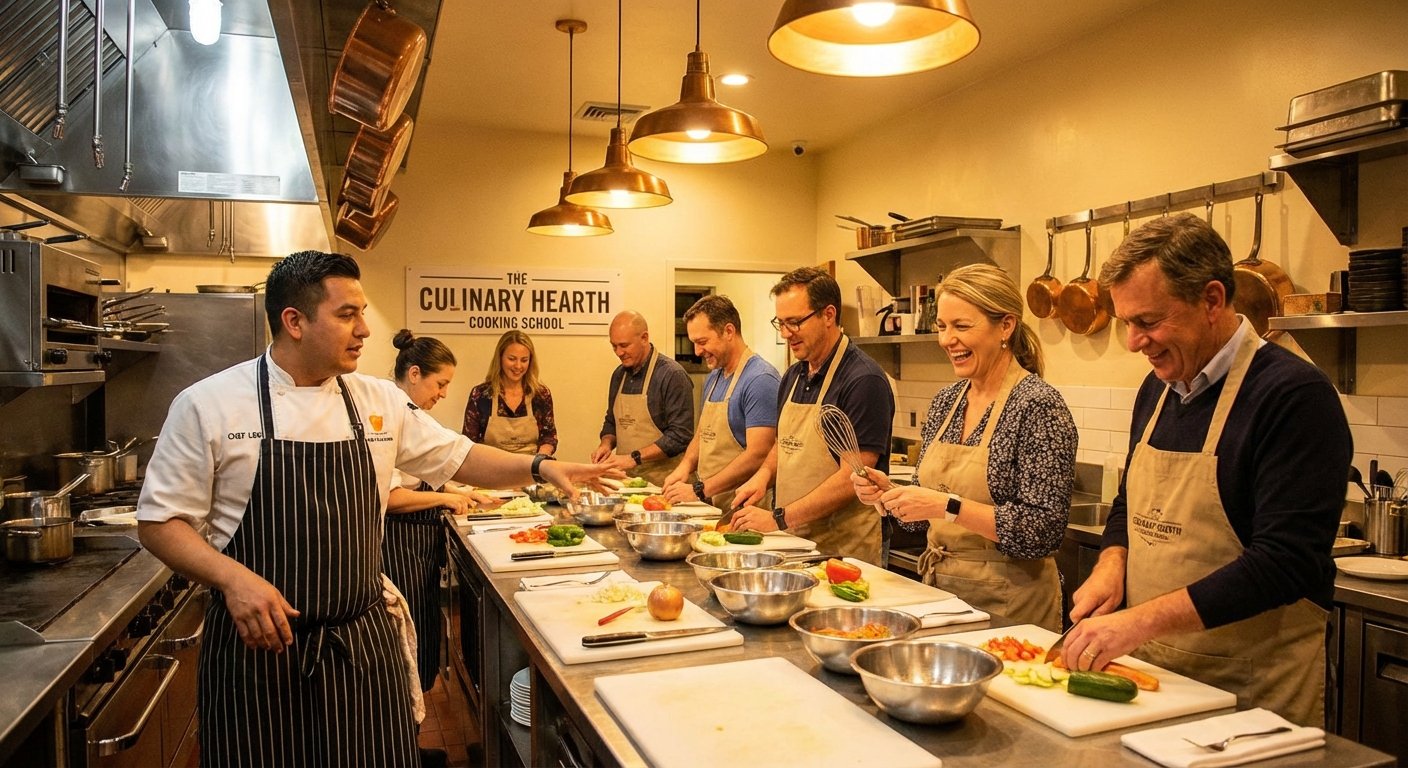
Cooking Classes as a Restaurant Revenue Stream: The Complete Guide
Cooking classes generate 68%+ margins using kitchen space that's already idle. Learn pricing, scheduling, and marketing to make the model work for your restaurant.
Cooking Classes as a Restaurant Revenue Stream: The Complete Guide
Restaurant cooking classes are one of the easiest revenue diversification options for operators with kitchen space. You already have the kitchen, the knives, the chef, and the food. You charge guests for a 2–3 hour experience in that kitchen, and the incremental cost is almost entirely ingredients.
The model works. The question is whether the time investment is worth it for your specific restaurant.
The Basic Economics of Cooking Classes
Example class: 12 participants at $85/person
| Cost Item | Amount |
|---|---|
| Ingredients ($8/person x 12) | $96 |
| Chef time (3 hrs instruction + 1 hr prep x $35/hr) | $140 |
| Staff support (3 hrs x $18/hr) | $54 |
| Supplies (aprons, printed recipes, etc.) | $30 |
| Total cost | $320 |
| Gross revenue | $1,020 |
| Net profit | $700 (68.6% margin) |
That's $700 in roughly 4 hours of work, using space that would otherwise be idle on a Sunday afternoon.
Scale to 2 classes per month: $1,400/month in incremental revenue with no new fixed costs.
What Makes a Cooking Class Work
The right time slot. Sunday afternoon (2–5 PM) is the most popular—people aren't working and aren't going out to dinner yet. Tuesday or Wednesday evening (6:30–9 PM) works for mid-week bookings.
A focused, achievable curriculum. Guests aren't culinary students. They want to learn 2–3 techniques and make something delicious. "Italian pasta night," "knife skills + stir fry," "cocktails + small plates"—specific, doable, fun.
A meal at the end. Participants want to eat what they cooked. Build it into the program and price. The shared meal is often more memorable than the cooking itself.
Appropriate class size. 8–16 participants is ideal. Below 8 and the economics get thin. Above 16 and instruction quality suffers unless you have multiple chef-instructors.
Pricing Strategy: What to Charge
Research your market: what are culinary schools and other restaurants charging for similar classes? Classes typically range from $55–150/person depending on:
- Length (2 hours vs. 4 hours)
- What's included (instruction only vs. instruction + dinner + wine pairing)
- Complexity of curriculum
- Brand positioning
A mid-tier casual restaurant in a mid-size city can typically charge $65–95. A fine dining restaurant with a known chef can push $125–200.
Adding Wine or Cocktails: The Margin Multiplier
Class + wine pairing: Add $25–35/person for 3–4 pours timed to the cooking. Your beverage cost: $8–12/person. Net: $17–23 additional per person with minimal extra effort.
Cocktail class variant: "Date night cocktails and apps"—90 minutes, guests make 2 cocktails and a few appetizers. Popular for couples. Price: $70–100/couple.
Corporate team building: Companies pay $100–200/person for cooking class experiences. One corporate booking fills your kitchen at 3–4x your normal per-head rate.
Marketing Your Classes Effectively
Email list first. Your existing customers are your best prospects. A single email to your list will outperform any social post.
Eventbrite or Tock. These platforms make ticketing simple and their marketplaces bring in guests who don't know your restaurant.
Gift card companion. "Buy a $100 gift card, get $20 off a cooking class" bundles two high-margin revenue streams together.
Is It Worth It for Every Restaurant?
Cooking classes work best when:
- Kitchen has idle time 1–2 days per week
- Chef or sous chef genuinely enjoys the teaching component
- Your brand has a "craft" or "culinary education" angle
Consider alternatives if:
- You hate the idea of strangers in your kitchen
- Your chef is stretched thin on regular service
- Your concept doesn't have a natural "learn to cook this" story
Frequently Asked Questions
How far in advance should I sell tickets for cooking classes?
Open bookings 4–8 weeks in advance. This gives enough lead time for ingredient planning and enough runway for marketing to work.
What if a class doesn't sell enough to be profitable?
Set a minimum enrollment (typically 6–8 people) and cancel if you don't hit it one week before the class. Offer ticketholders a refund or transfer to the next session.
Do I need special insurance for cooking classes?
Check your existing general liability policy. Many restaurant policies cover cooking classes, but confirm with your insurer. If participants are handling knives and hot equipment, some insurers want a specific endorsement.
Ready to take control of your food costs? Try CostLab free for 14 days →
Track Food Cost on Every Dish — Automatically
CostLab.AI calculates food cost percentage in real time. Update one ingredient price and see the impact across your entire menu instantly.
Start Free Trial →