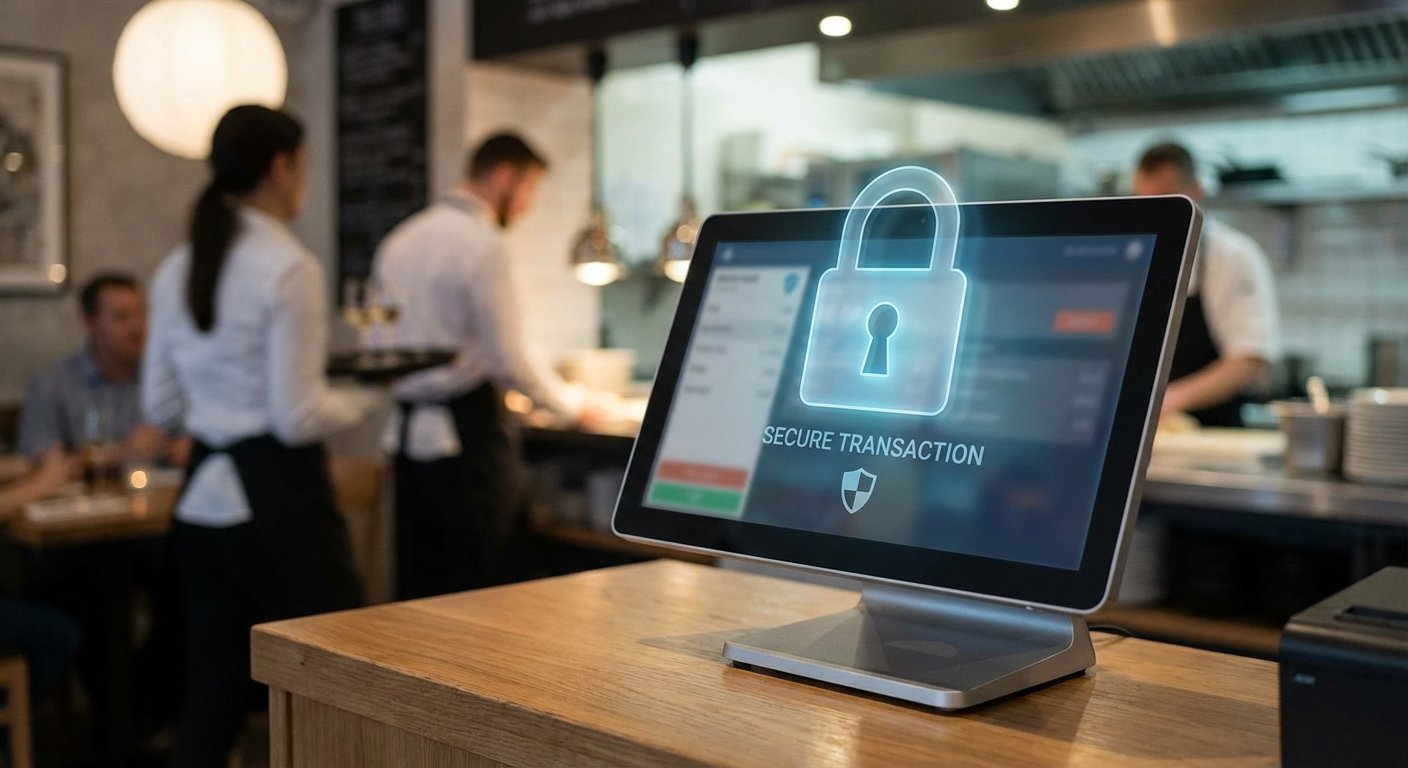
Restaurant Cybersecurity 101: Protect Your POS and Data
Restaurant POS breaches have exposed millions of credit card numbers. Here's the basic security checklist every independent restaurant owner needs to implement.
Restaurant Cybersecurity 101: Protect Your POS and Data
Restaurant cybersecurity isn't theoretical — POS breaches have exposed tens of millions of credit card numbers across the industry. Dairy Queen saw 395 locations compromised in 2014. Wendy's had over 1,000 locations hit in 2016. Independent restaurants are targeted constantly because they're easier to breach than large chains. Here's the essential security checklist every restaurant needs.
Securing Your POS System
Your point-of-sale system handles every card transaction — it's your most attractive target.
Change default passwords immediately. POS systems ship with default credentials (admin/1234 or similar) that are published in publicly available manuals. Changing your POS admin password takes 3 minutes and eliminates one of the most common entry points.
Use a wired network for your POS. WiFi adds an attack surface that's much easier to exploit. Where possible, run POS terminals on wired Ethernet connections.
Segment your POS from guest WiFi. Your guest WiFi and your POS must be on completely separate networks (different VLANs or separate routers). A guest on your WiFi should have zero network path to your POS terminals.
Enable end-to-end encryption (E2EE). All major POS systems (Toast, Square, Lightspeed) support E2EE. With it enabled, card data is encrypted at the moment of swipe — unreadable even if your network is compromised.
Keep POS software updated. Software updates frequently include security patches. Enable automatic updates or set a weekly reminder. Outdated POS software is one of the most exploited entry points.
WiFi Network Security
Use WPA3 encryption (or WPA2 if WPA3 isn't available). Never use WEP — it's been broken for over a decade.
Create separate networks:
- Network 1: POS and operational systems (private, never shared)
- Network 2: Guest/customer WiFi (completely separate)
- Network 3 (optional): Staff personal device WiFi
Never let personal phones or guest devices on the same network as your POS.
Email Security: The Overlooked Threat
Phishing attacks — fake vendor invoices, supplier emails — are the most common way restaurants get hacked. An employee clicks a link, enters their password, and the attacker has access to your accounts.
Enable two-factor authentication (2FA) on all business email accounts. Even if an attacker gets your password, they can't log in without your phone. Takes 5 minutes to set up for Google Workspace or Microsoft 365. This single step blocks 99% of account takeover attacks.
Train staff on phishing awareness. Show examples of fake vendor invoices. Teach the rule: if an email asks for payment, a password reset, or a wire transfer — call the vendor directly to verify before clicking anything.
Use business email, not personal Gmail. yourrestaurant.com email addresses are easier to protect and more credible with suppliers.
PCI Compliance Basics for Restaurants
PCI DSS (Payment Card Industry Data Security Standard) is required by Visa, Mastercard, and Amex for any business accepting card payments.
If you use a certified POS (Toast, Square, Lightspeed) and don't store card data locally, you're likely compliant on most requirements. Your payment processor will send annual questionnaires — complete them honestly. Non-compliance fines after a breach range from $5,000–$100,000, plus potential loss of card processing privileges.
Quick Security Checklist
☐ Change all default passwords (POS, router, email) ☐ Enable 2FA on all business email accounts ☐ POS on separate network from guest WiFi ☐ WPA2 or WPA3 on all WiFi networks ☐ POS software auto-updates enabled ☐ Complete annual PCI compliance questionnaire ☐ Back up critical data weekly ☐ Limit POS admin access to essential staff only
These steps take 2–3 hours total to implement and protect against the vast majority of attacks targeting small restaurants.
Frequently Asked Questions
How often do restaurant POS systems get hacked?
Industry estimates suggest thousands of independent restaurants experience some form of payment card breach annually. Small, independent restaurants are disproportionately targeted because they typically have less security infrastructure than chains.
What happens if my restaurant has a data breach?
Consequences include: fines from your payment processor ($5,000–$100,000+), potential card brand assessments, legal liability to affected cardholders, and reputational damage. Your processor may also suspend your ability to accept card payments during investigation.
Is free guest WiFi a security risk for my restaurant?
Only if it's on the same network as your POS or business systems. A completely separate guest network is safe and expected. The risk comes from network segmentation failures — where a guest device could theoretically reach your POS network.
Ready to take control of your food costs? Try CostLab free for 14 days →
Track Food Cost on Every Dish — Automatically
CostLab.AI calculates food cost percentage in real time. Update one ingredient price and see the impact across your entire menu instantly.
Start Free Trial →