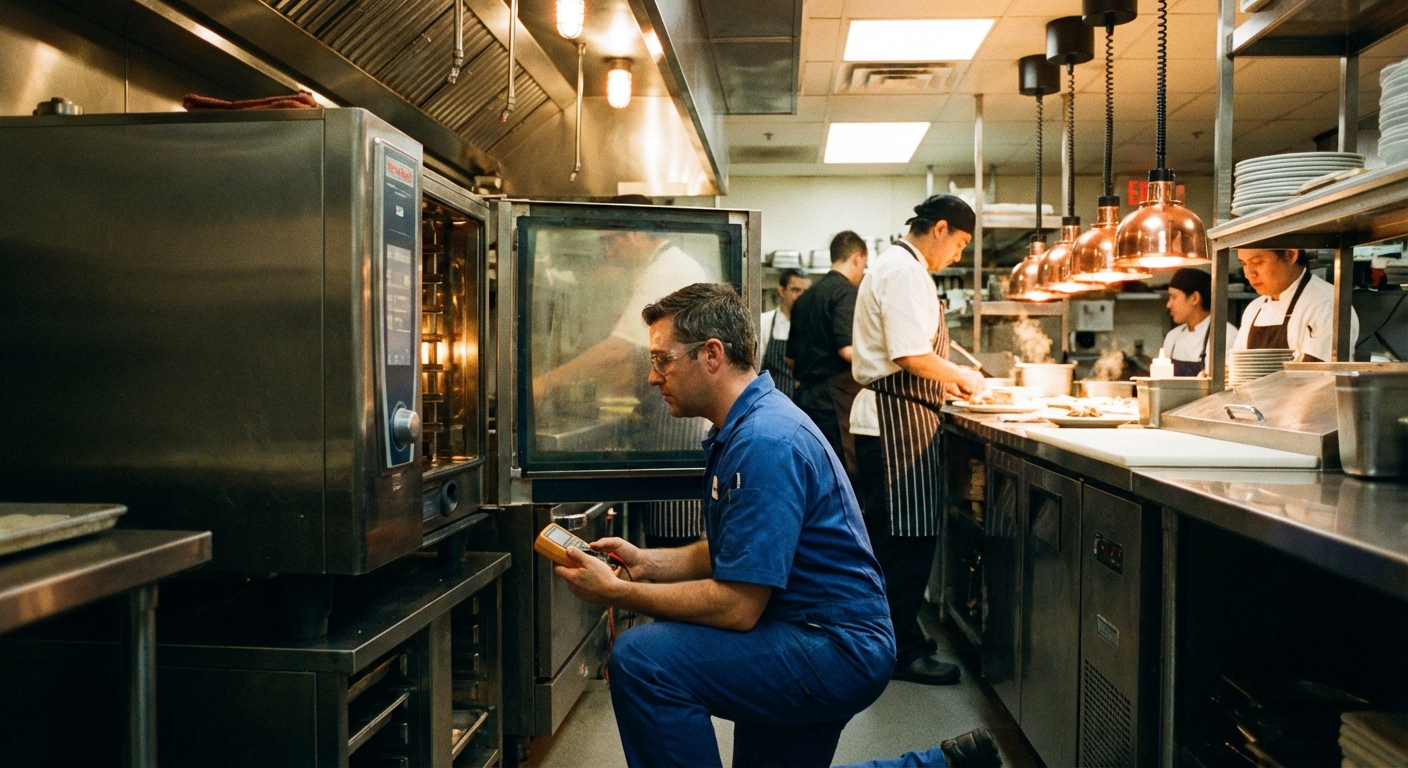
Restaurant Equipment Maintenance Checklist (Monthly)
A $10,000 equipment breakdown is almost always preventable. Use this monthly restaurant equipment maintenance checklist to catch problems before they cost you.
Restaurant Equipment Maintenance Checklist (Monthly)
Restaurant equipment maintenance is the highest-ROI habit most independent operators ignore — until something breaks. A compressor failure on your walk-in, an oven that goes down on Saturday, a dishwasher that stops mid-service: these aren't bad luck. They're predictable outcomes of deferred maintenance. A 90-minute monthly checklist can prevent $5,000–$15,000 in emergency repairs each year.
The Cost of Skipping Maintenance
- Commercial refrigeration repair: $200–$600 minor, $1,500–$3,500 major
- Walk-in compressor failure: $2,000–$7,000 in repairs plus food loss
- Commercial dishwasher repair: $150–$600; replacement: $3,000–$15,000
- Emergency HVAC call on summer Saturday: $400+ in after-hours labor
- Food loss from refrigeration failure: often $1,000–$3,000 in a single incident
Preventive maintenance typically costs 10–20% of what reactive repairs cost.
Your Monthly Restaurant Equipment Maintenance Checklist
Assign this to your kitchen manager on the first Monday of every month.
🧊 Refrigeration (Walk-In, Reach-In, Lowboy)
- Inspect door gaskets for cracks, tears, or gaps — a bad gasket forces the compressor to work overtime
- Clean condenser coils — dust buildup is the #1 cause of compressor failure
- Verify temperature logs (walk-in: 35–38°F, freezer: 0°F or below)
- Check evaporator fan — running and not iced over
- Inspect drain pan and drain line — clean if there's any buildup
- Test door closers and self-closing hinges
- Look for ice buildup in freezer units (suggests a defrost issue)
Quarterly add-on: Full inspection by a refrigeration tech including refrigerant levels and electrical connections.
🔥 Cooking Equipment (Ovens, Ranges, Fryers, Griddles)
- Clean burner ports on gas equipment — clogged ports mean uneven heat and wasted gas
- Inspect pilot lights — relighting repeatedly signals a thermocouple issue
- Check oven door seals — worn seals cause temperature inconsistency and energy waste
- Calibrate oven thermostat with an independent thermometer — digital readouts drift over time
- Clean fryer baskets, heating elements, and drain valves — carbon buildup reduces oil life and creates fire risk
- Inspect griddle surface for cracks or warping
- Check gas line connections for any smell of gas
🍽️ Dishwasher
- Descale spray arms and clean nozzles — mineral buildup reduces water pressure and sanitization
- Check wash temp (150–160°F) and final rinse temp (180°F for high-temp; verify sanitizer concentration for low-temp)
- Inspect door gaskets and curtains
- Clean strainer baskets
- Test sanitizer concentration with test strips
- Check water softener salt level if applicable
💨 Ventilation and Hood System
- Clean hood filters — grease-saturated filters are a fire hazard and health code violation
- Inspect make-up air supply for blockages
- Check exhaust fan is running at full capacity
- Wipe down hood interior surfaces
Quarterly/Semi-annual: Professional hood cleaning required every 3–6 months under most health codes. Keep documentation on file.
❄️ Ice Machine
- Clean and sanitize per manufacturer instructions (2-step clean + sanitize cycle)
- Inspect water filter — replace every 6 months
- Check ice production rate — a significant drop suggests scale buildup or refrigerant issue
- Inspect and clean condenser coils
- Verify ice bin is clean and free of mold or slime
🔌 Smallwares and Miscellaneous
- Inspect electric mixer attachments and bowl locks
- Check slicer blade for chips or dullness
- Test fire suppression system monthly indicators (visual check; annual inspection required)
- Inspect hand sinks for hot water temperature (minimum 100°F)
- Check CO2 tanks for beer/soda systems
Building Your Maintenance Log
Track every check in a simple log:
| Date | Equipment | Issue Found | Action Taken | By |
|---|---|---|---|---|
| 3/1 | Walk-in | Gasket cracking E door | Ordered replacement | KM |
| 3/1 | Dishwasher | Temp 172°F, not 180°F | Called tech | KM |
This log is invaluable for warranty claims, insurance documentation, and identifying patterns that signal replacement vs. repair.
Frequently Asked Questions
How often should restaurant equipment be professionally serviced?
Refrigeration: Annual professional inspection minimum; twice yearly for walk-in coolers. Hood system: Every 3–6 months (required by code). Fire suppression: Annual professional inspection required by law.
What's the most commonly neglected piece of restaurant equipment?
Ice machines and condenser coils on refrigeration units. Both fail gradually in ways that aren't obvious until the damage is done.
How do I create a maintenance schedule?
Start with this monthly checklist. Add quarterly items to your digital calendar with recurring reminders. Assign ownership to a specific person — not "the staff."
Should I buy an equipment maintenance contract?
For high-value equipment (walk-in refrigeration, commercial ovens), a maintenance contract often makes sense. Expect to pay $500–$2,000/year. It typically covers labor on covered failures and prioritizes your service calls.
When should I replace instead of repair?
If the repair estimate exceeds 50% of replacement cost and the equipment is more than 7–10 years old, replacement is usually the better financial decision.
Ready to take control of your food costs? Try CostLab free for 14 days →
Track Food Cost on Every Dish — Automatically
CostLab.AI calculates food cost percentage in real time. Update one ingredient price and see the impact across your entire menu instantly.
Start Free Trial →