Restaurant Food Cost Formula: The Two Equations Every Operator Needs
The restaurant food cost formula has two versions — per-dish and period. Learn both, see real examples, understand the variance between them, and avoid common mistakes.
Restaurant Food Cost Formula: The Two Equations Every Operator Needs
The restaurant food cost formula has two versions, and most operators only know one. Both are essential — they answer different questions and serve different purposes.

Formula 1: Per-Dish Food Cost %
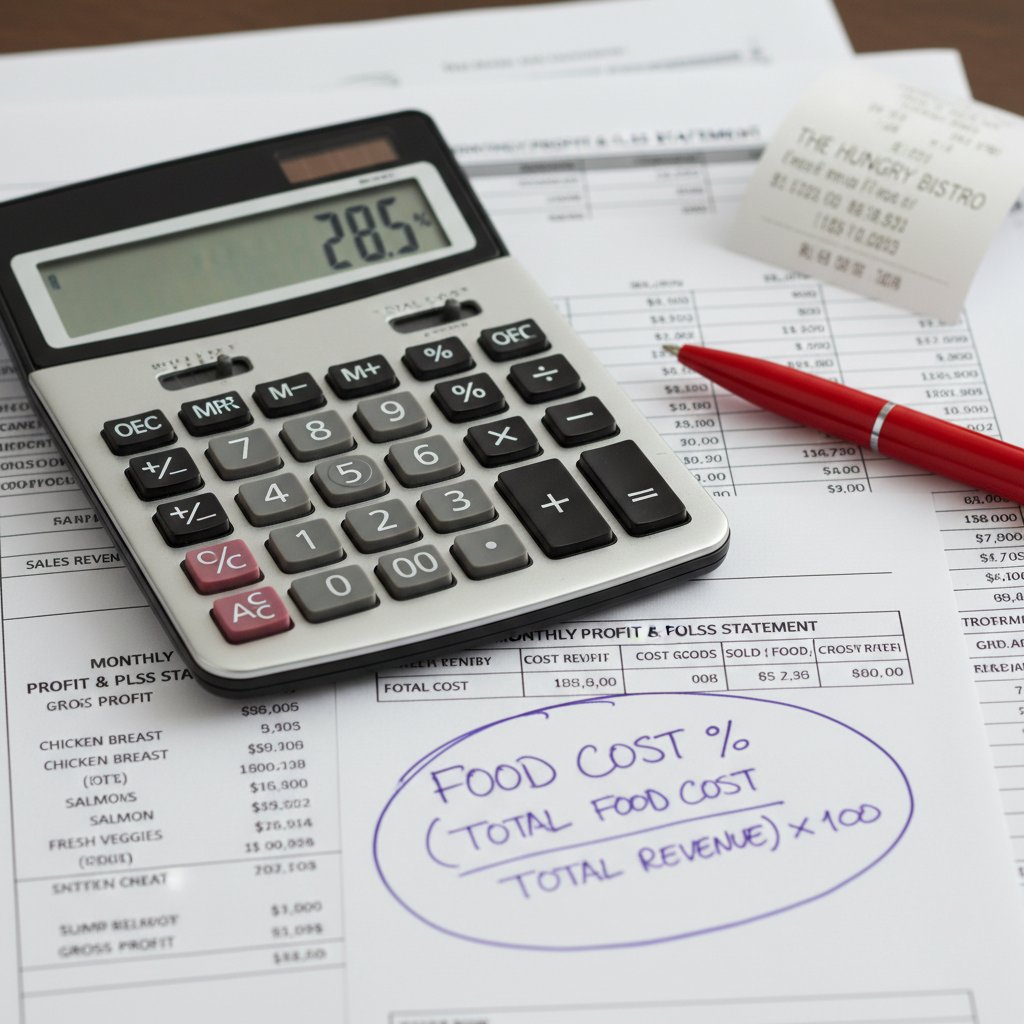
Food Cost % = Plate Cost / Menu Price x 100
This is your theoretical food cost — what each dish should cost to produce under perfect conditions.
Example: A grilled salmon dish
- Salmon (6oz, 90% yield from 6.7oz raw): $3.85
- Vegetables and sides: $0.95
- Sauce and garnish: $0.40
- Starch: $0.30
- Total plate cost: $5.50
- Menu price: $26
- Food cost %: $5.50 / $26 x 100 = 21.2%
Formula 2: Period Food Cost %
Food Cost % = (Opening Inventory + Purchases - Closing Inventory) / Food Revenue x 100
This is your actual food cost — what was really spent over a period.
Example (monthly):
- Opening inventory: $8,200
- Purchases this month: $22,400
- Closing inventory: $7,900
- COGS: $8,200 + $22,400 - $7,900 = $22,700
- Food revenue: $68,500
- Actual food cost %: $22,700 / $68,500 x 100 = 33.1%
Understanding the Gap Between Formulas
Your per-dish (theoretical) and period (actual) food cost percentages will always differ. The difference is your variance.
| Source of Variance | Typical Impact |
|---|---|
| Portioning errors | 1–3% |
| Waste and spoilage | 1–4% |
| Theft or unrecorded consumption | 0.5–2% |
| Recipe inaccuracies | 0.5–1.5% |
| Inventory count errors | 0.5–1% |
A total variance of 1–2% is normal and acceptable. Above 3% means something is operationally wrong.
Common Food Cost Formula Mistakes
Using purchase date instead of delivery date: Food cost should reflect when product was received, not when it was invoiced.
Not counting staff meals: If staff eat at the restaurant, those ingredients are a cost. Either charge for them or track them separately.
Forgetting the bar: Beverage cost and food cost are separate. Mixing them distorts both numbers.
Rounding portions: 6oz and "about 6oz" can be a $200/week difference at volume.
Which Formula to Use When
Use per-dish food cost % to:
- Price new menu items
- Identify dishes to reprice or re-engineer
- Model the impact of ingredient price changes
Use period food cost % to:
- Measure real operational performance
- Compare against theoretical (variance analysis)
- Report to investors or lenders
FAQ: Restaurant Food Cost Formula
What is a good food cost percentage for a restaurant?
Target 28–35% for most full-service restaurants. Fine dining concepts can run 25–30%. Fast casual often runs 30–38%. The right target depends on your concept, price point, and what other costs look like.
How do I calculate food cost for a whole period?
Use the period formula: (Opening Inventory + Purchases - Closing Inventory) / Food Revenue x 100. Run this weekly or monthly. The more frequently you calculate it, the sooner you catch problems.
Why is my actual food cost higher than my theoretical food cost?
The gap represents variance from portioning errors, waste, spoilage, theft, or measurement inconsistencies. A variance above 3% needs investigation — identify the source before trying to fix it.
How do I reduce my food cost percentage?
The most effective levers are: accurate recipe costing, weekly theoretical vs actual comparison, portion auditing, demand-driven prep to reduce waste, and repricing dishes that have drifted above target due to ingredient price increases.
Ready to take control of your food costs? Try CostLab free for 14 days →
Track Food Cost on Every Dish — Automatically
CostLab.AI calculates food cost percentage in real time. Update one ingredient price and see the impact across your entire menu instantly.
Start Free Trial →