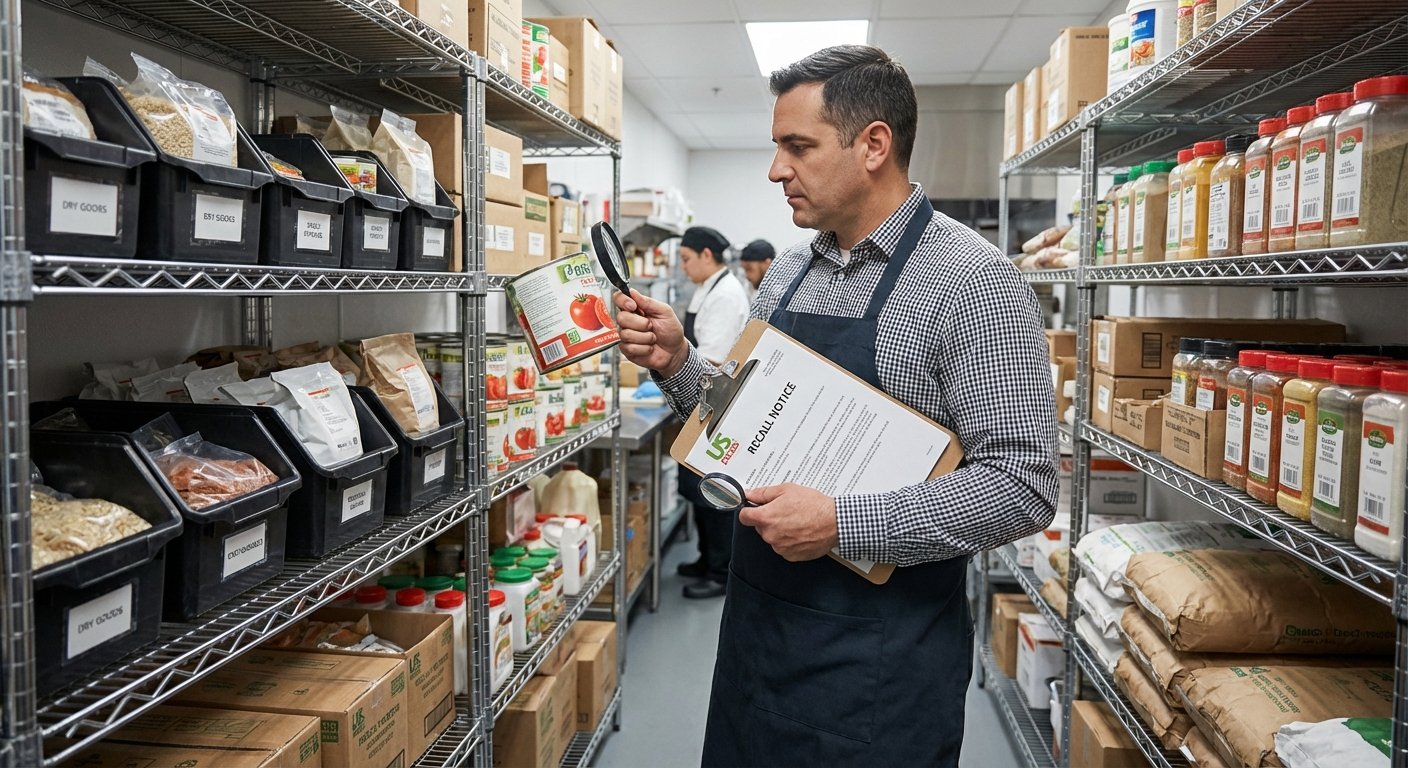
Restaurant Food Recalls: What to Do When a Supplier Issues a Recall
A food recall requires you to pull affected product immediately and document everything. Here's the step-by-step response process for restaurant operators.
Restaurant Food Recalls: What to Do When a Supplier Issues a Recall
A food recall notification arrives. Your supplier sends notice that a batch of romaine lettuce, raw poultry, or canned goods has been recalled due to contamination risk. What you do in the next 2 hours determines whether this is a manageable disruption or a health department citation. Here's the step-by-step response process every restaurant operator needs to know.
Step 1: Stop Using the Product Immediately
The moment you receive a recall notice, pull the affected product. This is not optional.
- Pull all potentially affected product from the line and walk-in immediately
- Move it to a clearly labeled quarantine area (a closed box labeled "QUARANTINE - RECALL")
- Stop serving anything made with the product from that point forward
- Check if product was used in prep earlier in the day — if so, assess whether affected menu items need to be removed from service
This step should take 5–10 minutes. Speed is critical.
Step 2: Identify the Exact Scope
Read the recall notice carefully:
- What product is recalled? (Brand name, product type)
- What lot numbers, best-by dates, or date codes are affected?
- Where was it sold or distributed?
Check your incoming invoices and receiving logs. Not all product from a supplier is affected — only specific lot numbers. Your invoice should have lot number information from the delivery. If you don't have lot-number tracking, assume all product from that supplier in the relevant time window may be affected.
Step 3: Document Everything
This is where restaurants fail — they pull the product but don't document what they pulled, when, and what they did with it. Create a recall log immediately:
- Date and time recall notice was received
- Source of notification (supplier email, FDA website, health department)
- Product name, brand, and lot numbers affected
- Quantity on hand (by unit count and weight/volume)
- Where product was stored (walk-in shelf, dry storage)
- Action taken (quarantined, returned, or discarded)
- Who made the decision and who executed the quarantine
- Any items sold before quarantine was established (approximate quantities)
This documentation protects you if a health inspector shows up or if a guest later claims illness.
Step 4: Contact Your Supplier
Call (don't email) your supplier's customer service or sales rep immediately. Tell them:
- You received the recall notice
- You have X units on hand
- You need their process for returning recalled product or receiving credit
Most suppliers offer one of three remedies:
- Pick up and credit: They collect the product and issue a credit against your next invoice
- Photo proof of disposal: You photograph and dispose, they issue credit
- Return shipment: You ship it back (rare for perishables)
Don't discard recalled product before confirming the credit process — you may forfeit the credit.
Step 5: Calculate the Financial Impact
- Quantity on hand × purchase price = inventory write-off value
- Menu items removed from service = opportunity cost for the day
- Supplier credit expected: should cover the product cost, sometimes with additional compensation
For a restaurant with $400 of recalled product that gets a full supplier credit, the financial impact is essentially zero. For product discarded without credit, it's a full write-off.
Log write-offs under a "recall/write-off" expense category in your accounting system — not against food cost — so you can track recalls separately.
Step 6: Communicating with Guests
If you served recalled product before the recall notice:
- You are generally not required to proactively notify guests unless directed by the health department
- If a guest asks, be honest: "We did serve [product] earlier today and learned of a recall this evening. We recommend monitoring for [symptoms] and seeking medical attention if concerned."
- If a guest claims illness related to your restaurant, consult an attorney before making any admissions
Building a Recall Response System (Before You Need It)
- Keep invoices with lot number information for at least 30 days
- Set up FDA email alerts at fda.gov/safety/recalls-market-withdrawals-safety-alerts
- Train your full management team on the quarantine protocol so any manager can execute it independently
Frequently Asked Questions
How quickly do I have to respond to a food recall?
Immediately. The moment you receive a recall notice, affected product must be pulled from service. There is no grace period — serving recalled product after receiving notice creates significant health and legal liability.
Do I have to notify guests if I served recalled food?
You're generally not required to proactively contact guests unless directed by the health department. However, you should be prepared to respond honestly if guests inquire, and you should document everything you served before the recall was known.
Can I get a refund from my supplier for recalled product?
Yes, in most cases. Call your supplier immediately and ask about their recall credit process. They typically offer pickup and credit, photo-proof-of-disposal credit, or return shipment. Don't discard product before confirming the credit process or you may lose the reimbursement.
Ready to take control of your food costs? Try CostLab free for 14 days →
Track Food Cost on Every Dish — Automatically
CostLab.AI calculates food cost percentage in real time. Update one ingredient price and see the impact across your entire menu instantly.
Start Free Trial →