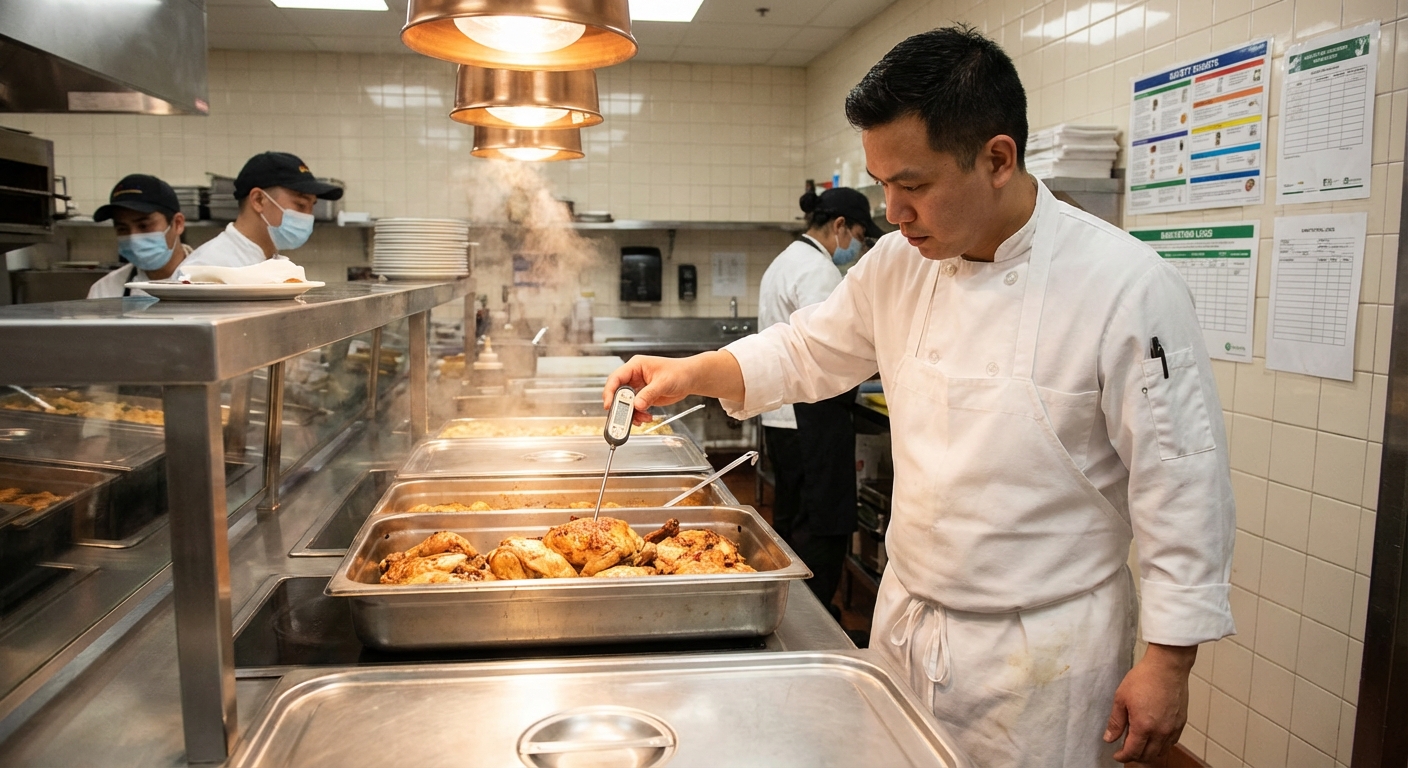
Food Safety Temperature Log: What to Track and How Long to Keep Records
A food temperature log is required for health inspections and protects you from foodborne illness liability. Here's what to track, how often, and for how long.
Food Safety Temperature Log: What to Track and How Long to Keep Records
A food temperature log is one of the most important — and most neglected — pieces of paperwork in a restaurant kitchen. Health inspectors check them. Liability attorneys ask for them. And more importantly, they're your early warning system for equipment failures that cause foodborne illness before a crisis develops.
This guide covers exactly what temperatures to track, how often, and how long to retain those records.
Why Temperature Logs Matter
A single foodborne illness outbreak can shut down your restaurant. Even a near-miss can cost tens of thousands of dollars in legal fees, medical claims, and reputation damage. Temperature logs do three things:
- Prevent illness by forcing regular checks. The act of checking catches problems before they become crises.
- Document compliance so you can show health inspectors — and if needed, attorneys — that you followed proper procedures.
- Catch equipment failures early. A reach-in running at 44°F instead of 38°F might not be obvious to the eye — a temperature log catches it within a day. Catching it costs $200–$400 in repairs. Not catching it costs $800–$3,000 in lost product plus potential liability.
The Two Categories You Must Track
Cold Holding Temperatures
Cold food must be kept at 41°F (5°C) or below. This applies to walk-in coolers, reach-in refrigerators, line coolers (lowboys, prep tables), bar coolers holding perishables, and cold food on salad bars.
The Danger Zone: 41°F–135°F is where bacteria multiply rapidly. At 70°F, harmful bacteria like Salmonella can double every 20 minutes. Food in the danger zone for more than 4 cumulative hours must be discarded.
Hot Holding Temperatures
Hot food must be maintained at 135°F (57°C) or above. This applies to steam tables, soup wells, holding ovens, and hot food on buffet lines. Any hot-held item that drops below 135°F is in the danger zone.
What Every Temperature Log Entry Must Include
- Date and time of the check
- Location or equipment being checked ("Walk-in Cooler #1," "Steam Table Well 2")
- Actual temperature recorded — not "OK" or a checkmark
- Action taken if temperature is out of range
- Name or initials of the person who took the reading
Writing "OK" instead of the actual number is one of the most common health code violations. Inspectors want real data — 38°F, not "fine."
Sample Log Entry
| Date | Time | Location | Temp (°F) | In Range? | Action Taken | Staff |
|---|---|---|---|---|---|---|
| 02/25 | 7:00 AM | Walk-in Cooler | 38°F | Yes | — | JS |
| 02/25 | 11:30 AM | Steam Table Well 1 | 137°F | Yes | — | MR |
| 02/25 | 11:30 AM | Steam Table Well 2 | 129°F | No | Turned up heat, rechecked at 11:45 — 136°F | MR |
| 02/25 | 4:00 PM | Walk-in Cooler | 44°F | No | Called refrigeration tech, moved contents to Walk-in #2 | JS |
How Often to Check Temperatures
Equipment temperatures (coolers, hot holding):
- Minimum: twice per day — once before service and once during peak
- Best practice: three times per day — opening, mid-service, closing
Minimum internal cooking temperatures:
- Poultry: 165°F
- Ground beef/pork/fish: 155°F
- Whole cuts of beef, pork, lamb: 145°F (with 3-minute rest)
- Fish and shellfish: 145°F
- Eggs cooked to order: 145°F
- Vegetables and grains for hot holding: 135°F
Cooling temperatures (HACCP critical control point):
- Cool from 135°F to 70°F within 2 hours
- Then from 70°F to 41°F within the next 4 hours
- Log every batch cool — write start time, temperature at 2-hour mark, and when it reaches 41°F
A Practical Daily Checking Schedule
Opening (7:00–8:00 AM):
- Check and log all cooler and freezer temperatures
- Verify walk-in door seal is intact
- Note any product that appears to have thawed
Mid-service (11:00 AM or 5:00–6:00 PM for dinner-only):
- Check and log all hot holding temperatures
- Check and log all cold holding line temperatures
- Spot-check any item that's been sitting more than 2 hours
Closing (9:30–10:30 PM):
- Final temperature check on all coolers and freezers
- Log walk-in temperature after staff have stopped entering/exiting
- Confirm all hot holding equipment is off
How Long to Keep Temperature Records
| Record Type | Minimum Retention |
|---|---|
| Daily temperature logs (coolers, hot holding) | 90 days |
| Cooling logs | 90 days |
| HACCP records (cooking temps, batch records) | 1 year |
| Records tied to a complaint or incident | Until legal matter resolved |
When in doubt, keep records for 1 year. Store paper logs in the office — never in the kitchen (humidity, heat, and water damage paper records within weeks). Digital records in the cloud cost almost nothing to retain indefinitely.
What Happens Without Logs
If a health inspector asks to see temperature logs and you don't have them, "failure to maintain records" is a standalone code violation — often $100–$500 per violation, separate from any actual temperature issue.
More seriously: if a guest ever files a foodborne illness complaint, your attorney's first question will be whether you have temperature records for that date. Without them, you've lost your best defense.
Frequently Asked Questions
Are food temperature logs legally required?
Yes, in virtually all U.S. jurisdictions. Health departments require documented evidence that food is being held at safe temperatures. "Failure to maintain records" is a separate violation from actual temperature problems — you can be cited for both.
What thermometers do I need for temperature logs?
You need an NSF-certified digital probe thermometer ($20–$50) for internal food temperatures, and permanent thermometers mounted inside each cooler and freezer ($8–$20 each). Calibrate your probe thermometer monthly using the ice water method — it should read 32°F.
How do I cool large batches of soup or stock safely?
Use ice baths, divide large batches into 2-inch depth containers to release heat faster, or use a blast chiller if available. Stir periodically during cooling. Target: 135°F to 70°F within 2 hours, then to 41°F within 4 more hours.
What's the best way to make sure temperature logs actually get done?
Attach temperature checks to existing routines — the morning walk-in check is part of opening, the steam table check is part of service setup, the cooler check is on the closing checklist. When temperature logging is integrated with what staff already do, it actually happens consistently.
Ready to take control of your food costs? Try CostLab free for 14 days →
Track Food Cost on Every Dish — Automatically
CostLab.AI calculates food cost percentage in real time. Update one ingredient price and see the impact across your entire menu instantly.
Start Free Trial →