Restaurant Gift Card Program: Setup, Cash Flow & Accounting Guide
Gift cards are an interest-free loan from your customers. Learn how to set up a restaurant gift card program, account for breakage, and maximize cash flow.
Restaurant Gift Card Program: Setup, Cash Flow & Accounting Guide
A restaurant gift card program is the most underused financial tool in independent restaurants. When a customer buys a $50 gift card, they give you $50 today—and you provide food weeks or months in the future. In the meantime, that money sits in your bank account: an interest-free loan with no repayment deadline.
The restaurant industry collectively holds over $10 billion in unredeemed gift card balances annually. Some of that becomes pure profit—what's called "breakage."
The Cash Flow Math
A restaurant selling $2,000/month in gift cards has $2,000 in cash received before any food or labor is delivered. If average redemption happens 45 days after purchase, that's 45 days of float on every dollar sold.
During peak seasons (November/December, Valentine's Day, Mother's Day), well-marketed independent restaurants can spike to $5,000–10,000/month in gift card sales. That cash hits your account before the holiday rush—when you most need it for increased inventory and staffing.
Breakage: The Revenue You Never Have to Earn
Industry research consistently shows that 10–19% of gift card value is never redeemed (breakage). Cards are lost, forgotten, or expire (check your state laws on expiration—some prohibit it).
For accounting purposes, breakage is revenue—recognized after a waiting period:
- If cards expire: recognize breakage when the card expires
- If cards don't expire: recognize based on historical redemption patterns (typically after 24–36 months)
On $24,000 in annual gift card sales at 15% breakage, that's $3,600 in pure revenue you never had to deliver food for.
How to Set Up a Gift Card Program
Option 1: Through your POS system. Most modern POS platforms (Toast, Square, Lightspeed) include gift card functionality. Physical cards cost $0.50–1.50 each. Digital eGift cards are typically included at no additional cost.
Option 2: Third-party platforms. GiftUp, Yiftee, and Square Gift Cards let you sell digital gift cards through your website. Fees run 3–4% per transaction. Better if you want a customizable online gift card store.
Option 3: Paper gift certificates. Works for launch. Print on cardstock, track manually. Doesn't scale, but costs $0 to start.
What to Sell and How to Promote
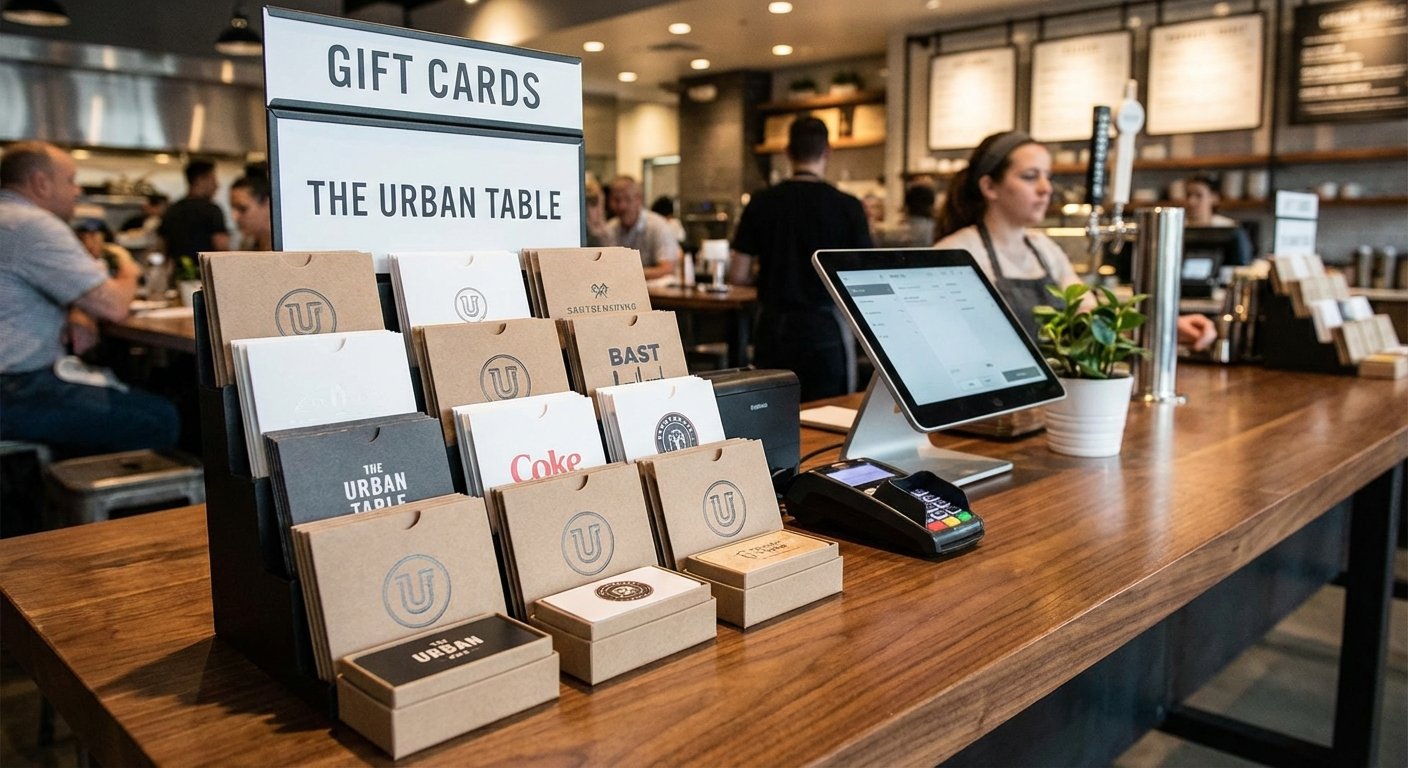
Physical cards at the register. A display holder at eye level can move 20–50 units/month with no active selling. Train servers to mention them during birthday and anniversary celebrations.
Digital gift cards via website. Add a gift card button to your homepage. It should take under 60 seconds to purchase an eGift card. Promote before every holiday.
Denominations. Offer $25, $50, $100. Studies show $50 is the most common purchase. A $75–100 denomination feels premium for higher-check restaurants.
Promotion ideas:
- "Buy $100, get $20 bonus" (drives repeat visits)
- Cross-promotions with local hotels or businesses
- Holiday gift guide features if you have local media relationships
Accounting for Gift Cards Correctly
Gift card proceeds are a liability, not revenue, when first sold—you owe future food service. Revenue is recognized upon redemption.
Journal entries:
- Gift card sold: Debit Cash, Credit "Gift Card Liability" (current liability account)
- Gift card redeemed: Debit "Gift Card Liability," Credit Revenue
- Breakage recognized: Debit "Gift Card Liability," Credit "Gift Card Breakage Revenue"
Never run gift card sales directly to a revenue account until you've delivered the goods. This is one of the most common accounting errors in restaurants—and creates tax problems if audited.
Frequently Asked Questions
Do gift cards expire in all states?
No. Many states (including California) prohibit expiration on gift cards. Others allow expiration after a minimum period (typically 5 years). Check your state's specific laws.
How do I prevent gift card fraud?
Use POS-integrated gift cards with magnetic stripe or QR code verification. Paper gift certificates are more susceptible to counterfeiting and duplicate use.
What's the best time of year to promote gift cards?
November and December are by far the highest-volume period. Capitalize with in-restaurant displays, email campaigns, and social promotion starting November 1. Mother's Day and Valentine's Day are secondary peaks.
Ready to take control of your food costs? Try CostLab free for 14 days →
Track Food Cost on Every Dish — Automatically
CostLab.AI calculates food cost percentage in real time. Update one ingredient price and see the impact across your entire menu instantly.
Start Free Trial →