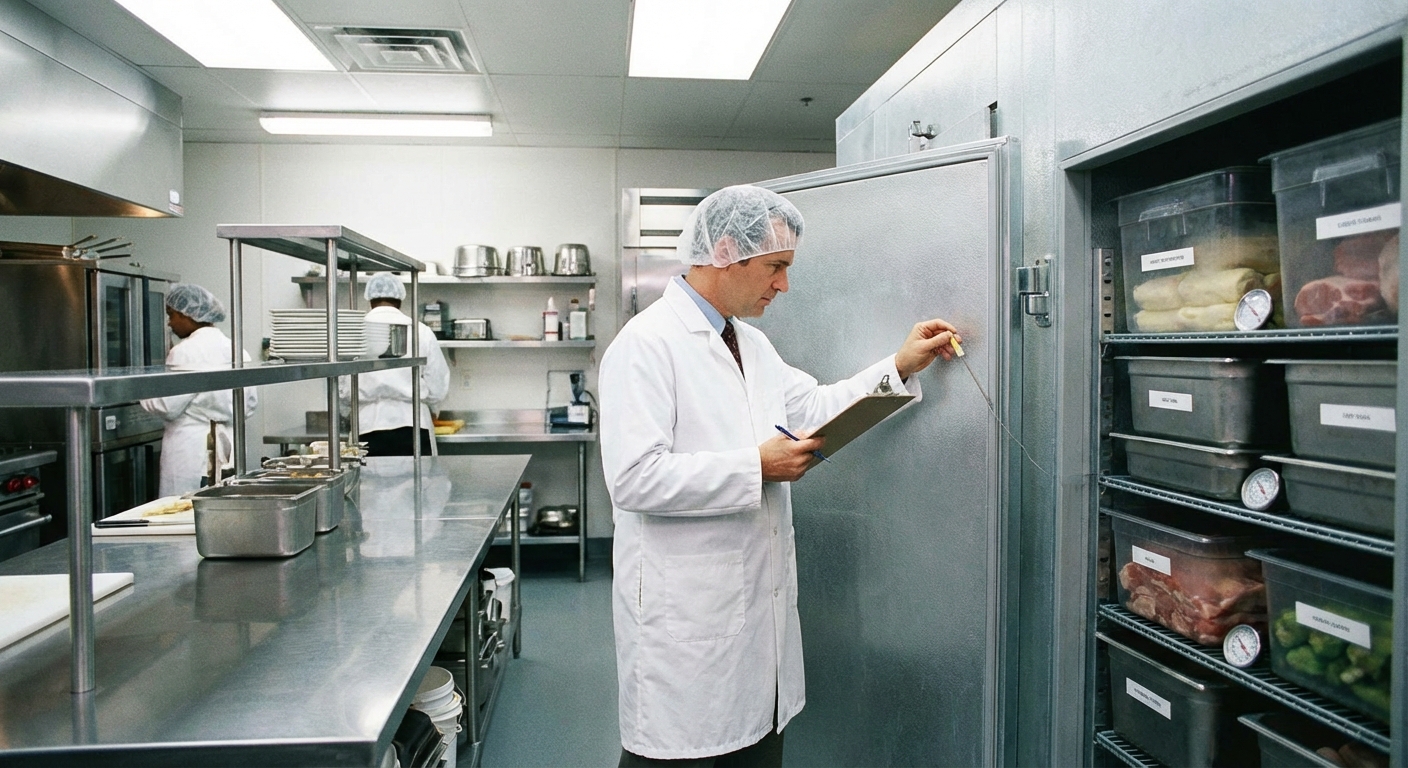
Restaurant Health Inspection Checklist: How to Always Be Ready
Pass every restaurant health inspection with this prep checklist covering the top violations, daily routines, 48-hour prep, and what to do if you fail.
Restaurant Health Inspection Checklist: How to Always Be Ready
Restaurant health inspections don't have to be a surprise. Restaurants that fail almost always fail for the same reasons — and those reasons are 100% preventable. This guide gives you a real prep checklist, a daily readiness routine, and a clear plan for what to do if things go sideways.
The goal: run a kitchen so clean that an unannounced inspection is just another Tuesday.
How Health Inspections Actually Work
Most inspections are unannounced. An inspector walks your kitchen and scores what they find using two types of violations:
- Critical violations — things that directly cause foodborne illness: food held at wrong temperature, employees not washing hands, raw meat stored above ready-to-eat food. Each can cost 5–25 points depending on your state.
- Non-critical violations — less immediate risk: missing labels, equipment in disrepair, cracked floor tile.
A score of 70 or below typically triggers a re-inspection or forced closure. The goal is to stay above 90 and never see a critical violation.
The 5 Violations That Cause Most Failures
1. Temperature Control Food in the "danger zone" — 41°F to 135°F — grows bacteria fast. Your fridge should run at 38–40°F. Hot-held food stays above 135°F. Check temps with a calibrated thermometer every shift, and log it.
2. Handwashing Stations Every handwashing sink must have soap, paper towels, and nothing blocking access. A blocked sink or missing paper towels is often an automatic critical. Walk every sink before every shift.
3. Cross-Contamination Raw proteins stored above ready-to-eat food is one of the most common critical violations. Rule: raw chicken on the bottom, everything else above. Use color-coded cutting boards.
4. Pest Evidence One mouse dropping in your prep area can shut you down on the spot. Seal every gap. Check dry storage weekly. Keep pest control service reports on file.
5. Date Labeling Every prepared food item needs a label with what it is and when it was made. Unlabeled containers are an easy violation to get — and an easy one to prevent.
The 30-Day Readiness Routine
Daily:
- Check fridge and freezer temps at open and close
- Verify handwashing stations are stocked and accessible
- Walk storage areas — anything unlabeled?
- Confirm food storage order (raw proteins below cooked/ready-to-eat)
Weekly:
- Deep clean behind and under equipment
- Check for pest evidence in dry storage, dumpster area, delivery entry points
- Verify sanitizer concentration (usually 200 ppm for chlorine bleach)
- Review and sign temperature logs
- Confirm food handler certifications are current
Monthly:
- Test and calibrate thermometers
- Review pest control service report
- Check equipment for cracks, broken seals, non-functional parts
- Walk dining room and bathrooms for cleanliness and supply levels
The 48-Hour Prep Checklist
Kitchen & Storage
- All refrigerators and freezers holding correct temps — documented
- All food items labeled with name and date
- Raw proteins on lowest shelves
- No food stored directly on the floor (must be 6 inches off the ground)
- Dry storage organized, sealed, pest-free
- Chemicals stored separately from food — never above food prep surfaces
Equipment & Surfaces
- Cutting boards — no deep grooves; replace if scored
- Slicer, can opener, and equipment — cleaned and sanitized
- Hood filters cleaned; grease buildup addressed
- Dishwasher reaching required sanitizing temp (usually 160°F for high-temp machines)
People & Paperwork
- Every employee has a valid food handler card
- Illness policy posted — employees know not to work sick
- Handwashing posters visible at every sink
- Pest control service reports on file
- Thermometer calibration log available
What to Do If You Fail
You have the right to a re-inspection. In most states, request one within 24–48 hours after correcting violations.
| Violation | Typical Fix | Time to Fix |
|---|---|---|
| Wrong food temps | Repair/replace refrigeration unit | 1–3 days |
| Missing date labels | Label everything; train staff | Same day |
| Cross-contamination setup | Reorganize cooler; add color-coded boards | Same day |
| Pest evidence | Emergency pest service + sealing entry points | 1–2 days |
| Blocked handwashing sink | Clear and restock | Same hour |
The mindset shift: Don't treat the inspection as the standard. Treat every shift as if an inspector could walk in at any moment. Because they can.
Frequently Asked Questions
How often do restaurant health inspections happen?
Most states inspect restaurants 1–4 times per year depending on risk level. Some states use risk-based inspection frequency, meaning cleaner operations get inspected less often.
What's the most common reason restaurants fail health inspections?
Temperature control violations — food held in the danger zone (41°F–135°F) — are the most common critical violation nationwide. Handwashing compliance and cross-contamination issues follow.
Can I request a copy of my health inspection report?
Yes. Health inspection reports are public records in most states. Many counties now post reports online. Reviewing your report and tracking trends over time is good practice.
What score do you need to pass a health inspection?
Passing scores vary by state. Most jurisdictions use a 100-point system where scores below 70 trigger re-inspection or closure. Aim for 90+ consistently.
Ready to take control of your food costs? Try CostLab free for 14 days →
Track Food Cost on Every Dish — Automatically
CostLab.AI calculates food cost percentage in real time. Update one ingredient price and see the impact across your entire menu instantly.
Start Free Trial →