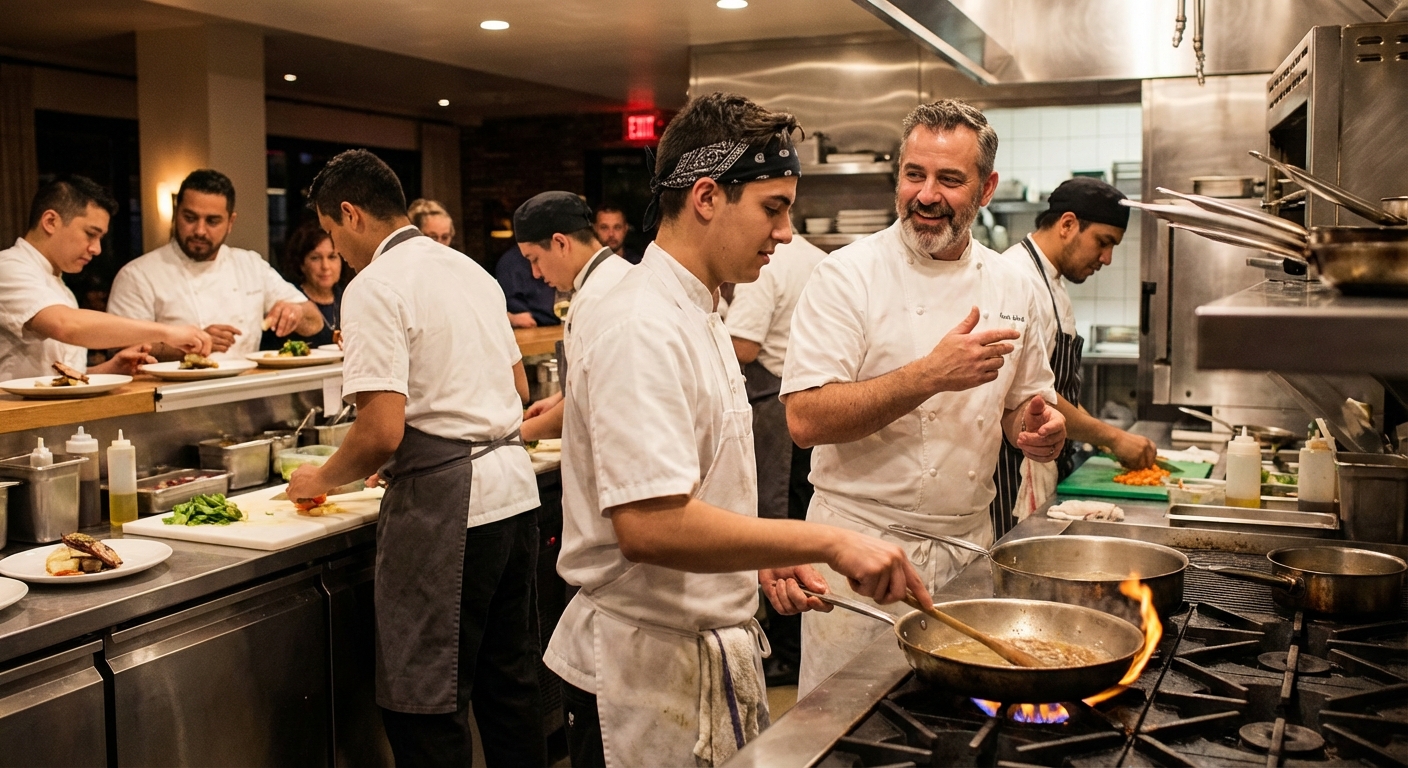
How to Build a Positive Restaurant Kitchen Culture
Restaurant kitchen culture determines whether your best cooks stay or leave. Here's how to build one that reduces turnover and improves your bottom line.
How to Build a Positive Restaurant Kitchen Culture
Walk into any thriving independent restaurant and you'll find something you can't taste on the menu: a kitchen culture where people actually want to show up. With restaurant turnover rates hovering above 70%, the difference between a kitchen that retains talent and one that cycles through cooks every three months often comes down to culture — not pay alone.
This guide breaks down what kitchen culture actually means, why it matters for your bottom line, and concrete steps you can take this week.
What Kitchen Culture Actually Means
Kitchen culture is the unwritten set of rules and attitudes that govern how people treat each other during service. It's the difference between a chef who yells at a line cook for a plating mistake in front of the whole kitchen, and one who pulls that cook aside after service to walk through it.
It's not about being soft. It's about being consistent, fair, and worth working for.
A toxic kitchen culture shows up as:
- High turnover — losing a trained cook costs $1,500–$3,000 in recruiting, onboarding, and lost productivity
- Chronic no-shows and call-outs
- Poor food consistency (stressed cooks make more mistakes)
- Negative Glassdoor and Indeed reviews that poison your hiring pool
The Real Cost of High Turnover
If you run a 30-seat bistro with a kitchen team of 6 and lose 4 cooks per year — below the industry average — here's what that actually costs:
| Cost Item | Per Hire | × 4 Hires |
|---|---|---|
| Job posting | $150 | $600 |
| Manager screening time (5 hrs @ $25/hr) | $125 | $500 |
| Training labor (2 weeks shadowing) | $600 | $2,400 |
| Mistakes and waste during learning curve | $200 | $800 |
| Total | $1,075 | $4,300 |
At a 5–8% net margin, you'd need to sell $54,000–$86,000 in food just to cover that cost. Culture investment is cost control.
Start With Respect, Not Perks
The number-one reason cooks leave jobs isn't pay — it's how they're treated. A 2023 survey by the National Restaurant Association found that "feeling disrespected by management" ranked higher than "low wages" as a reason for quitting.
What respect looks like in a kitchen:
Clear Expectations Before Each Service
A two-minute pre-shift meeting isn't soft — it's efficient. Tell the team what's 86'd, what specials need explaining, and any large reservations to prepare for. When people know what to expect, they perform better.
Feedback in Private, Praise in Public
Correcting someone in front of the whole kitchen creates shame and resentment. Pull them to the walk-in, address it directly and factually, and move on. Save "nice work on the risotto tonight" for when the whole crew can hear it.
Saying Thank You and Meaning It
"Good service tonight, team" at the end of a hard Friday dinner rush costs you nothing and is wildly underused.
Build Systems That Remove Uncertainty
Cooks don't leave kitchens — they leave chaos.
Post Schedules 10–14 Days in Advance
This is the single highest-ROI scheduling habit you can build. Your cooks have second jobs, kids, and lives. If you struggle to plan two weeks out, that's a signal your menu or staffing model needs attention.
Create Consistent Station Standards
Document what each station looks like at the start and end of service. A one-page prep checklist for each position removes guesswork and creates accountability without confrontation. When the standard is written down, it's not personal — it's just the standard.
Enforce Rules Equally
Nothing erodes culture faster than favoritism. If your sous chef gets to leave early without cleaning their station but everyone else does full breakdown, the team notices. Every time.
Invest in Growth — Even Small Investments Count
- Teach one technique per month. Spend 15 minutes before a slow service showing the team a new skill. Cooks who are learning stay longer.
- Cross-train on at least two stations. Cooks who can run both sauté and grill feel more valuable — and they are. This also protects you during call-outs.
- Give cooks a voice on the menu. Let each cook submit one staff meal or specials idea per month. It costs almost nothing and creates ownership.
- Give a path forward. Even if you can't promote today, tell them what the path looks like. "Get consistent on grill for three months and I'll move you to sous chef training" is more motivating than silence.
Handling Conflict Before It Blows Up
Don't let it fester: If two cooks had a blowup during service, address it that night — briefly, factually, privately. "What happened at the pass tonight? Let's fix it now so it doesn't affect tomorrow."
Zero tolerance for harassment and bullying: One harassment claim can cost $30,000+ in legal fees and settlements. Put your policy in writing and follow through.
Frequently Asked Questions
What's the biggest driver of turnover in restaurant kitchens?
"Feeling disrespected by management" consistently outranks low pay as a reason cooks quit. Poor scheduling, inconsistent management, and lack of recognition are the most common culprits. Pay matters, but culture keeps people.
How do I fix a toxic kitchen culture that's already established?
Start with one visible, consistent change — usually scheduling or feedback style. Write down your standards so they're not personal. Identify one or two key staff members who can model the new culture and invest in them first. Cultural change is slow but real.
How much does high kitchen turnover actually cost a restaurant?
Plan for $1,000–$3,000 per lost cook when you factor in job posting costs, manager time, training labor, and the quality dip during the learning curve. At a 5% net margin, that requires $20,000–$60,000 in food sales just to break even.
What's a quick win I can implement this week?
Post next week's schedule today — and the week after. That single act signals to your team that you respect their time and plan ahead. It's the most underrated culture investment in restaurant operations.
Ready to take control of your food costs? Try CostLab free for 14 days →
Track Food Cost on Every Dish — Automatically
CostLab.AI calculates food cost percentage in real time. Update one ingredient price and see the impact across your entire menu instantly.
Start Free Trial →