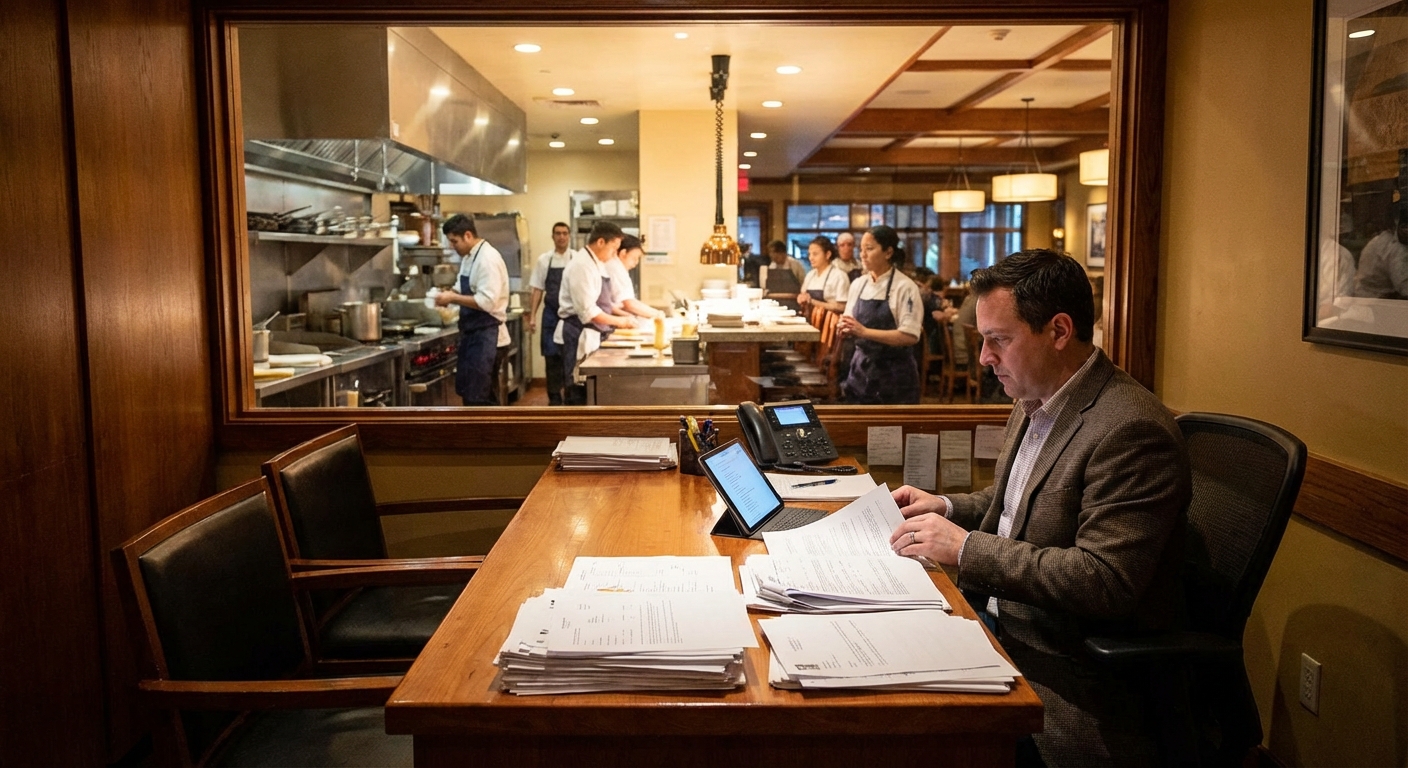
Restaurant Labor Cost Percentage: 2025 Benchmarks by Type
What's a good labor cost percentage for your restaurant? 2025 benchmarks by concept type, the formula to calculate it, and 5 proven ways to improve your labor efficiency.
Restaurant Labor Cost Percentage: 2025 Benchmarks by Type
Restaurant labor cost percentage is your total labor expense divided by total revenue — and it's typically your largest expense. Getting it wrong by even a few percentage points can mean the difference between profit and loss. This guide gives you the 2025 benchmarks, the formula, and five ways to improve it.
Do You Actually Know If Your Labor Cost Is Good?
Most restaurant owners track food cost percentage obsessively. But ask them what their labor cost percentage is, and you get a shrug.
Labor is where most margin disappears. And unlike food cost, it's hard to see in real time — by the time your monthly P&L arrives, the overstaffed Thursday shifts are ancient history.
What Labor Cost Percentage Actually Includes
Labor cost percentage includes everything you pay related to labor:
- Hourly wages (front-of-house and back-of-house)
- Salaried employees (including yourself if you pay yourself)
- Payroll taxes — Social Security, Medicare, unemployment insurance (~10–15% on top of wages)
- Benefits — health insurance, paid time off, sick leave, meals
- Workers' compensation insurance
- Overtime premiums
A lot of owners track wages but forget taxes and benefits. That's like tracking food cost but forgetting packaging.
How to Calculate Your Labor Cost Percentage
Labor Cost % = (Total Labor Cost ÷ Total Revenue) × 100
Example: Casual Mexican restaurant doing $80,000/month in sales.
| Line Item | Monthly Cost |
|---|---|
| Kitchen wages | $12,000 |
| FOH wages | $9,500 |
| Manager salary (1 FT) | $5,200 |
| Payroll taxes (~12%) | $3,204 |
| Workers' comp | $800 |
| Total Labor | $30,704 |
Labor cost %: $30,704 ÷ $80,000 × 100 = 38.4%
That's too high for casual dining (benchmark is 30–35%). You're burning $2,700–$5,700/month more on labor than you should be.
2025 Labor Cost Benchmarks by Restaurant Type
| Restaurant Type | Target Labor Cost % |
|---|---|
| Quick Service (QSR) | 25–30% |
| Fast Casual | 28–33% |
| Casual Dining | 30–35% |
| Fine Dining | 30–35% |
| Bar / Gastropub | 28–35% |
| Coffee / Café | 35–45% |
The Prime Cost Connection
Prime cost = food cost % + labor cost %. Industry benchmark: prime cost under 65% of revenue.
If your food cost is 32% and your labor is 36%, your prime cost is 68% — you're working hard for very little after rent, utilities, and insurance.
5 Ways to Improve Your Labor Cost Percentage
1. Build a sales forecast before you schedule. Pull last week's sales by day and hour from your POS. Schedule to anticipated volume, not habit.
2. Cut overtime aggressively. Overtime is the most expensive labor you can buy — 1.5x the hourly rate. A system that alerts you when an employee hits 35 hours mid-week can save $500–1,000/month.
3. Cross-train your team. A server who can also bus, run food, and work the host stand gives you scheduling flexibility. Single-function employees create staffing inefficiency.
4. Track labor cost daily, not monthly. By the time your P&L shows you're at 38% labor for the month, half the month is already gone. Track daily: yesterday's labor cost vs. yesterday's sales.
5. Align manager compensation to revenue. Fixed salaries hurt when revenue drops. Consider performance-based components for managers above a revenue threshold.
FAQ
What is a good labor cost percentage for a restaurant?
Target varies by concept: 25–30% for QSR, 28–33% for fast casual, 30–35% for casual and fine dining. The number that matters most is prime cost (food + labor) staying under 65%.
Should owner pay count in labor cost?
Yes — if you're working the floor or kitchen, your time has a cost. Excluding owner pay flatters your labor numbers and gives a false picture of profitability.
How do I lower restaurant labor cost without cutting staff?
Focus on scheduling efficiency (match staffing to actual sales forecasts), reduce overtime, cross-train for flexibility, and track labor cost daily rather than monthly.
Conclusion
Labor is your biggest lever. Unlike food cost where you're fighting ingredient prices, labor is almost entirely within your control — scheduling discipline, forecasting, and cross-training.
Start tracking your labor cost percentage weekly. Compare it to your concept's benchmark. The gap between where you are and where you should be is the opportunity.
Ready to take control of your food costs? Try CostLab free for 14 days →
Track Food Cost on Every Dish — Automatically
CostLab.AI calculates food cost percentage in real time. Update one ingredient price and see the impact across your entire menu instantly.
Start Free Trial →