Restaurant Server Upselling Training That Increases Check Averages
Effective restaurant server upselling training adds $3–$8 per guest to your average check. Here's the 5-step method that works without feeling pushy.
Restaurant Server Upselling Training That Increases Check Averages
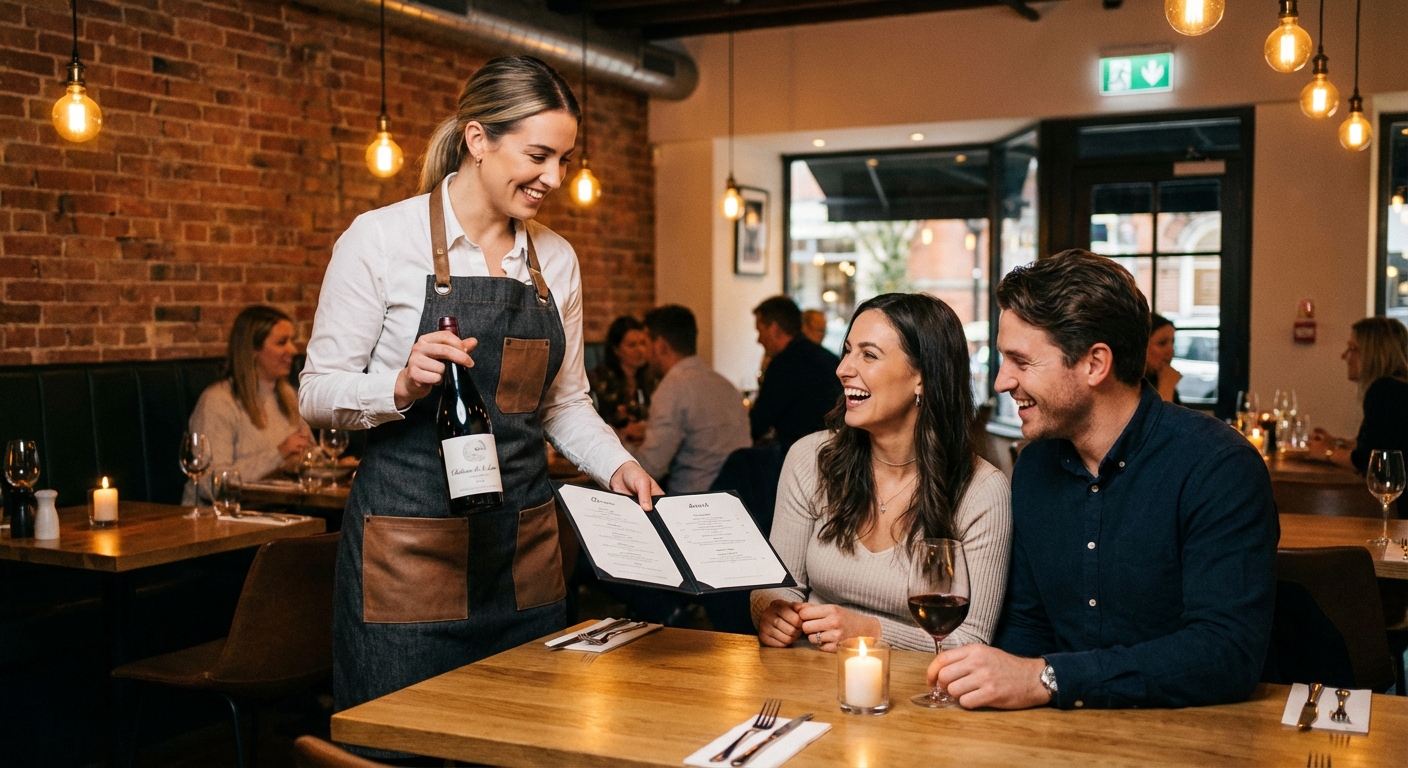
Most servers who are bad at upselling aren't bad at it because they're pushy — they're bad at it because they were trained to be transactional. Restaurant server upselling training done right isn't about pressure; it's about product knowledge, timing, and genuine enthusiasm.
Done correctly, upselling adds $3–$8 per guest to your average check. At 100 covers a night, 6 nights a week, that's $1,800–$4,800 per week in additional revenue — without adding a single new guest.
The Upsell vs. The Oversell
Upselling: Helping guests discover something they'll genuinely enjoy — a better wine pairing, a dish they might not have noticed, an add-on that enhances their meal.
Overselling: Pushing a purchase that benefits the restaurant but not the guest — recommending the most expensive bottle regardless of preference, repeating an offer that's already been declined.
Guests feel the difference. Your training goal is a team who love your menu and share that enthusiasm authentically.
Step 1: Build Menu Knowledge First
You cannot upsell something you don't understand. The most common reason servers fail to upsell is that they don't know the menu well enough to recommend it confidently.
Mandatory tastings: Every server should taste every dish and cocktail on the menu — especially when it changes seasonally. Budget $15–$25 per server per tasting session. For a team of 8, that's $120–$200 — easily recovered in one service.
The "tell me about it" test: Before a new menu goes live, have each server describe every dish aloud, as if to a guest. No notes. If they can't do it, they need more menu time.
Suggestive sell spotlights: Pick 2–3 dishes per service that servers actively mention — a seasonal special, a high-margin appetizer, a featured cocktail. Proactively mentioning specific items (rather than generic categories) is far more effective than "Can I get you any appetizers tonight?"
Step 2: Teach the Language of Recommendations
There's a big difference between "Do you want dessert?" and "We just got the crème brûlée from the kitchen — the caramel crust is perfect tonight. Should I grab one for the table to share?"
One is a yes/no question that invites a no. The other is a specific, sensory recommendation.
Phrases that work:
- "My favorite on the menu right now is..." — Personal and authentic. Guests trust servers who express genuine preference.
- "A lot of our guests do the [dish] — it's [one specific thing that makes it great]." — Social proof works.
- "Since you're getting the steak, the [sauce/side] is actually what makes it." — Ties the upsell to something they've already decided on.
Phrases to avoid:
- "Can I get you any appetizers tonight?" — Too vague, easy to decline
- "Do you want dessert?" — Binary; invites a no
- "Just so you know, we have specials" — Passive, no recommendation, no reason to engage
Step 3: Train on Timing
Even the best recommendation lands wrong at the wrong moment.
Natural upsell windows:
- When greeting the table: Mention a featured cocktail while guests look at the menu
- When taking the drink order: Recommend a specific cocktail or wine by name
- When taking the food order: Suggest an add-on tied to their order, or a starter that makes sense with their wait time
- After entrées are cleared: Describe dessert specifically — "We have a warm chocolate lava cake tonight — it takes about 8 minutes, so I can put that in now if you'd like"
When not to upsell: When a table is clearly in a rush, after an offer has already been declined, or when a guest has signaled they're watching what they spend. Emotional intelligence matters as much as technique.
Step 4: Role-Play Before the Floor
Knowing what to say is different from being able to say it naturally under pressure at table 12 on a busy Friday. Run role-play sessions during pre-shift:
Scenario 1: A couple is celebrating a birthday. They've ordered entrées. Walk them to a bottle of wine. Scenario 2: A solo diner orders a burger and water. Suggest a beer pairing without being pushy. Scenario 3: A table of four is clearly in a hurry. Practice reading the table and not upselling dessert.
10 minutes before a shift, three times a week, makes a measurable difference over a month.
Step 5: Track and Reward Results
Track:
- Average check per server from your POS data
- Appetizer attachment rate (% of tables that ordered a starter)
- Dessert close rate (% of tables that ordered dessert)
Reward:
- Monthly bonus for highest average check (even $50 goes a long way)
- Public recognition during pre-shift meetings
- Server of the month tied to check average
Never pit servers against each other in a way that creates tension. The goal is everyone improving together.
Sample Training Schedule
| Week | Focus | Activity |
|---|---|---|
| Week 1 | Menu knowledge | Mandatory tasting + "tell me about it" test |
| Week 2 | Language | Phrases workshop + script practice |
| Week 3 | Timing | Timing scenarios + table-reading discussion |
| Week 4 | Role-play | Full sessions with feedback |
| Ongoing | Data review | Weekly check average review + recognition |
Frequently Asked Questions
How do I train servers to upsell without being pushy?
Focus on product knowledge first. Servers who genuinely know and love the menu recommend naturally — it comes across as enthusiasm, not pressure. The pushy feeling comes from scripted pitches, not from real recommendations.
What's the best item to upsell in a restaurant?
High-perceived-value, high-margin items: cocktails, appetizers for the table, wine bottles, and desserts. Identify your highest-margin items from your POS and recipe costing data, then spotlight those in pre-shift meetings.
How much can upselling increase restaurant revenue?
Effective upselling training typically adds $3–$8 per guest to average check. At 100 covers per night, 6 nights a week, that's $1,800–$4,800 in additional weekly revenue with no increase in guest count or marketing spend.
Should I tie server compensation to upselling results?
Yes, with care. A monthly bonus for highest average check or appetizer attachment rate creates healthy motivation. Avoid cutthroat competition — the goal is the whole team improving, not one server dominating.
Ready to take control of your food costs? Try CostLab free for 14 days →
Track Food Cost on Every Dish — Automatically
CostLab.AI calculates food cost percentage in real time. Update one ingredient price and see the impact across your entire menu instantly.
Start Free Trial →