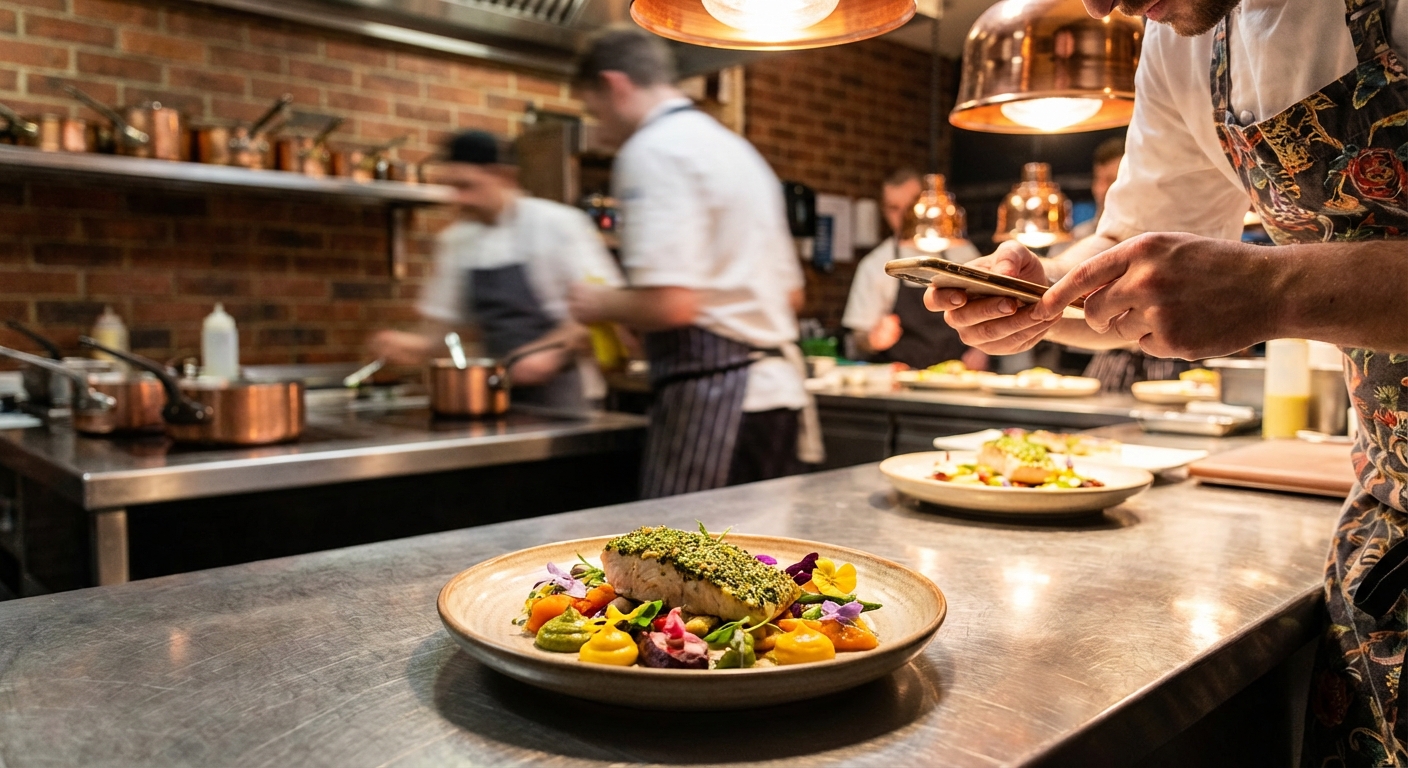
Restaurant Social Media Strategy: What Actually Works in 2025
A proven restaurant social media strategy for 2025. Platform priorities, content that drives engagement, a 3-post-per-week framework, and the $150/month local ad approach.
Restaurant Social Media Strategy: What Actually Works in 2025
A strong restaurant social media strategy isn't about posting pretty food photos and hoping for reservations. Most restaurants are doing social media wrong — posting occasionally, measuring the wrong things, and wondering why it doesn't translate to covers.
The restaurants actually driving walk-ins through social media have a deliberate strategy. This guide breaks down what's working right now for independent owners with limited time and no marketing team.
The Truth About Restaurant Social Media
Social media doesn't directly fill tables for most restaurants. What it does is:
- Build trust with people who are already considering you
- Keep you top of mind with your existing customers
- Help you show up when someone searches for places to eat in your area
Think of it as a long game, not a direct response channel. The exception: promotions, events, and limited-time offers perform better as direct drivers — especially on Instagram Stories and Facebook.
Platform Priorities in 2025
You don't need to be everywhere. Here's where to focus:
Instagram — Still Essential
Instagram remains the strongest visual platform for restaurants. Focus on:
- Feed posts: 3–4x per week, high-quality photos of your best dishes
- Stories: Daily or near-daily — behind-the-scenes, daily specials, quick polls
- Reels: 1–2x per week — short video has the most organic reach right now
TikTok — Highest Organic Reach
TikTok's algorithm gives small accounts a genuine chance to go viral without existing followers.
- Behind-the-kitchen content performs extremely well
- Transformation videos (prep to plated dish) get high completion rates
- Authenticity beats polish — a 30-second iPhone video beats a slick ad
Google Business Profile — Most Underrated
Someone searching "best tacos near me" is ready to spend money. Make sure your profile has current hours, recent photos (5+ new per month), and active responses to every review.
Facebook — Declining but Useful
Use for local community group engagement, Facebook Events for specific events, and paid ads if you have a small budget ($5–10/day can move the needle locally).
What Content Actually Gets Engagement
High performers:
- Dish reveals: "We just added this to the menu"
- Behind-the-scenes kitchen footage
- Staff spotlights
- Seasonal specials and limited items (creates urgency)
- Customer user-generated content (real guest photos build trust)
- Owner/chef story content
Low performers (stop wasting time here):
- Generic quotes ("Food is love")
- Stock photos
- Promotional posts with no context ("20% off this week!")
- Overly polished, corporate-looking content
The 3-Post-Per-Week Minimum Framework
If you're stretched for time, commit to this sustainable minimum:
Monday: Upcoming week preview — specials, events, highlights. Format: Story + feed post.
Wednesday: Behind-the-scenes or dish feature. Format: Reel or carousel.
Friday: Weekend call-to-action — reservation reminder, weekend special, or event. Format: Story + feed post.
That's 12 posts per month. Done consistently, this is enough to maintain an active presence.
Batch your content creation: Set aside 90 minutes once a week to shoot photos, write captions, and schedule everything with Later or Buffer.
Photography Without a Budget
You don't need a photographer. You need decent lighting, a clean background, and your phone.
- Shoot in natural light near a window
- Use a simple backdrop — wooden board, clean plate, linen napkin
- Shoot from directly above or at a 45-degree angle
- Edit with Lightroom Mobile (free presets make phone photos look professional in 30 seconds)
- Aim for "real and appetizing," not "magazine perfect" — authenticity performs better
Responding to Reviews: The Most Overlooked Social Strategy
Every response to a Google or Yelp review is public content. Rules:
- Respond to every review within 48 hours
- For positive reviews: thank them specifically, mention something they said, invite them back
- For negative reviews: acknowledge the issue, don't get defensive, offer to make it right offline
Never argue with a negative review publicly. You'll lose — even if you're right.
The $150/Month Local Ad Strategy
- Boost best-performing posts — only boost things that already performed organically ($20–30 per post)
- Run a "restaurant near me" campaign — $5/day, 1-mile radius, continuous
- Event promotion — $50–100 behind specific events 3–5 days before they happen
Total: ~$150/month. Focused on conversion, not vanity metrics.
What to Measure (and What to Ignore)
Track: Profile visits and website clicks from Instagram, Google Business Profile calls and direction requests, reservation bookings attributed to social.
Ignore: Follower count (doesn't pay the bills), likes and comments as primary success metrics.
FAQ: Restaurant Social Media Strategy
Which social media platform is best for restaurants?
Instagram and Google Business Profile are the two highest-priority platforms. Instagram for visual brand-building and engagement; Google Business Profile for capturing high-intent local searches. TikTok offers the highest organic reach for new audiences if you can create video content consistently.
How often should a restaurant post on social media?
A minimum of 3 posts per week on Instagram (feed + stories + at least one reel). Consistency over volume — posting 3x/week every week for a year outperforms posting 20 times in January and going quiet.
Does social media actually drive restaurant reservations?
Rarely as a direct last-click driver for regular service. Social media builds awareness and trust that leads to visits. Exceptions: event promotions and limited-time offers on Instagram Stories and Facebook do drive direct action when targeted correctly.
How much should a restaurant spend on social media ads?
$150/month is enough to see meaningful local results — allocate $5/day to a local "restaurant near me" campaign and boost 1–2 high-performing organic posts per month. Focus spend on specific events and promotions rather than always-on brand awareness.
Ready to take control of your food costs? Try CostLab free for 14 days →
Track Food Cost on Every Dish — Automatically
CostLab.AI calculates food cost percentage in real time. Update one ingredient price and see the impact across your entire menu instantly.
Start Free Trial →