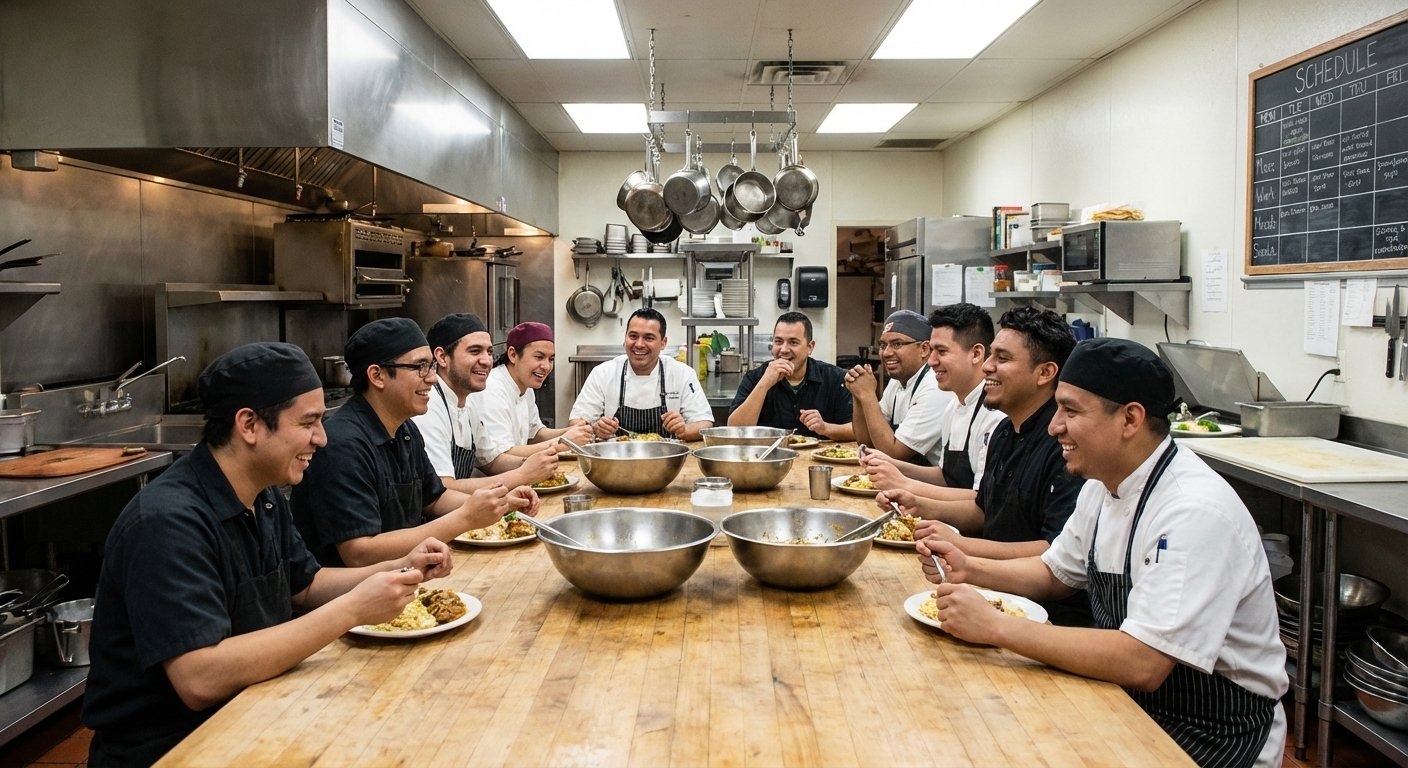
Staff Meals & Food Cost: How to Budget and Track Family Meal
Family meal can cost $18,000–$29,000/year untracked. Learn how to budget, plan, and account for staff meals without inflating your food cost.
Staff Meals & Food Cost: How to Budget and Track Family Meal
Staff meals food cost—often called family meal—is one of the most common untracked expenses in independent restaurants. It shows up as random ingredient consumption, inflated food cost variances, and a persistent sense that your numbers don't add up.
A restaurant serving 20 staff per day at an average cost of $3–4 per person spends $60–80/day on family meal, or roughly $18,000–$29,000/year. That's real money that deserves a real system.
Why Family Meal Matters Operationally
Beyond the cost, family meal serves a critical function: fed staff are faster, more accurate, and more engaged during service. Hungry employees make more mistakes.
The best operators don't cut family meal—they control it. There's a meaningful difference between spending $3/person on a well-planned dish and losing $6/person to staff eating premium proteins from hotel pans with no oversight.
Step 1: Assign Ownership
Designate who is responsible for family meal—typically a line cook or junior sous chef who prepares it as part of their daily prep. Rotating the responsibility creates variety and develops cooks' creativity with limited ingredients.
Without a designated owner, family meal becomes everyone's problem and no one's accountability.
Step 2: Set a Daily Budget
Calculate what you can afford:
| Component | Amount |
|---|---|
| Staff eating per shift | 15 people |
| Budget per person | $3.50 |
| Daily budget | $52.50 |
| Monthly budget | ~$1,575 |
| Annual budget | ~$18,900 |
This becomes a budget line item. Family meal should represent 1.5–3% of total food purchases for most restaurants.
Step 3: Plan Around Trim and Overproduction
The most cost-effective family meal uses ingredients you're already working with:
Vegetable trimmings: Carrot peels, celery leaves, onion roots, herb stems can become soup or grain bowls at near-zero cost.
Proteins past menu prime: Fish that's good today but won't be menu-quality tomorrow. Beef trim from butchering. Chicken backs earmarked for stock.
Overproduced items: Pastry that wasn't perfect enough to plate. Extra sauces made in bulk. Yesterday's bread.
Discounted day-old items from your supplier: Ask your produce or dairy rep for "seconds" pricing on items nearing their peak.
Step 4: Track It
Log family meal in your food cost system. When pulling ingredients, record them on a waste/family meal tracking sheet with quantity and estimated cost.
Most operators who start tracking discover two things: (1) it's cheaper than expected when planned intentionally, and (2) the cost spikes dramatically on days when there's no accountability.
What Good Family Meal Looks Like
Plan 24 hours in advance. Post the family meal menu in the kitchen so staff know what to expect. This prevents grazing from premium ingredients.
Make it a proper meal. A plate of rice and braised vegetables costs $1.80/person. An assortment of premium leftovers eaten from hotel pans costs $6/person. The planned version is better for cost and morale.
Set clear rules about what's available. Soda is fine. Bottled water is fine. Draft beer, premium proteins, and high-cost items are off-limits unless specifically allocated.
Accounting for Staff Meals in Your Food Cost
Two common approaches:
Option A: Include in overall food cost. Simplest but less visibility. Family meal cost is buried in your general food cost percentage.
Option B: Track as a separate line item. Deduct from gross food cost before calculating food cost %. Your "operating food cost" (what went to guests) is separate from "total food expenditure" (operating + family meal).
Option B gives you better data. If your food cost is running 33% but 2% of that is family meal, your true operating food cost is 31%—a meaningful difference when benchmarking.
Frequently Asked Questions
How much should family meal cost per person per day?
A reasonable target is $2.50–$4.50/person. Below $2 and meal quality suffers; above $5 and you're likely not using trim and overproduction effectively.
Should family meal be tracked separately from food waste?
Yes. These are different categories with different causes and solutions. Family meal is planned consumption; waste is unplanned loss. Mixing them obscures both.
What if staff are eating outside of designated family meal?
This is grazing, and it's a form of uncontrolled food cost. Address it through clear policies, designated snack items, and consistent enforcement.
Ready to take control of your food costs? Try CostLab free for 14 days →
Track Food Cost on Every Dish — Automatically
CostLab.AI calculates food cost percentage in real time. Update one ingredient price and see the impact across your entire menu instantly.
Start Free Trial →