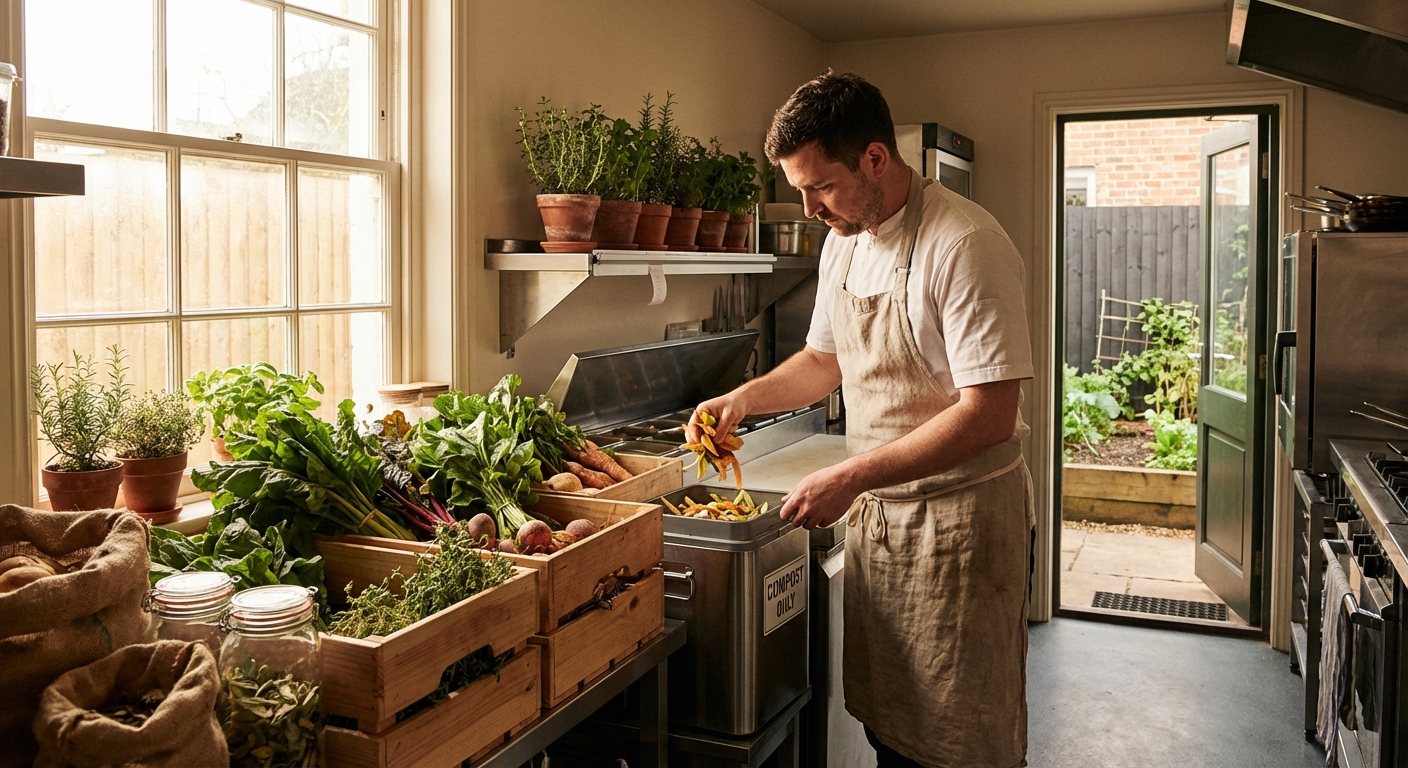
Restaurant Sustainability Practices That Cut Costs
Restaurant sustainability practices cut costs and win customers. The average restaurant wastes 4–10% of food purchased. Here's how to stop the bleeding.
Restaurant Sustainability Practices That Cut Costs
Restaurant sustainability practices are one of the fastest ways to cut costs and win loyal customers. The average restaurant wastes 4–10% of purchased food before it ever reaches a guest's plate. On $300,000 in annual food spend, that's $12,000–$30,000 in pure loss. The good news: fixing it doesn't require solar panels — it requires better habits and smarter systems.
Why Sustainability Reduces Food Costs
Sustainability and profitability are the same goal. Every ounce of wasted food is money you already spent on purchasing, storage, and labor — with zero return. Restaurants that implement structured waste-reduction programs typically cut food costs by 2–4 percentage points within 6 months.
Key areas where sustainability pays off:
- Prep waste tracking — Weigh and log trim waste by station to identify problem areas
- Portion consistency — Inconsistent portions are hidden waste; use scales and portion tools
- Inventory rotation — FIFO (first in, first out) prevents spoilage and reduces write-offs
- Menu engineering — Dishes that share ingredients reduce over-ordering across the board
Zero-Waste Cooking Techniques
Zero-waste cooking turns waste into revenue. Vegetable tops become stock. Stale bread becomes breadcrumbs or croutons. Fish collars get braised into specials. These aren't fancy concepts — they're what good cooks have always done.
Practical techniques:
- Whole-animal and whole-vegetable utilization — use everything you buy
- Daily specials from surplus — run a special to move proteins approaching their use-by date
- House stocks and sauces — use bones, trim, and aromatics that would otherwise be discarded
- Staff meal program — use near-date food to feed staff rather than writing it off
Energy and Utility Efficiency
Energy is one of the largest controllable costs in a restaurant, and sustainability practices directly reduce it. The average restaurant spends $2.50–$3.50 per square foot on energy annually. Small changes compound quickly.
High-impact changes:
- LED lighting — replaces halogen/fluorescent with 50–70% less energy use
- ENERGY STAR equipment — dishwashers, refrigerators, and fryers certified for efficiency
- Hood controls and ventilation scheduling — running hoods at full blast when the kitchen is empty wastes energy
- Water conservation — low-flow pre-rinse spray valves pay for themselves in months
Sourcing and Supply Chain Sustainability
Sustainable sourcing reduces price volatility and builds a better brand story. Relationships with local farms and suppliers give you more control over quality and cost — and give guests a reason to care about where their food comes from.
Strategies that work:
- Seasonal menus — seasonal ingredients are cheaper, fresher, and locally abundant
- Smaller supplier relationships — fewer intermediaries means better pricing and fresher product
- Imperfect produce programs — many farms offer cosmetically imperfect product at 20–40% discounts
- Group purchasing — join a buying co-op or GPO to get chain-level pricing on common items
How to Measure Your Sustainability Efforts
What gets measured gets managed. Tracking your waste and efficiency metrics is the only way to know whether your sustainability practices are working — or just good intentions.
Metrics to track weekly:
- Waste log (lbs/day) — by station and category
- Food cost % — before and after waste reduction initiatives
- Utility spend per cover — energy and water costs divided by guest count
- Inventory variance — theoretical vs. actual usage in your POS or inventory system
FAQ: Restaurant Sustainability Practices
Do sustainability practices actually save money?
Yes — significantly. Structured food waste reduction programs typically reduce food cost by 2–4 percentage points. On $500,000 in food revenue, that's $10,000–$20,000 in recovered profit annually.
What's the easiest sustainability change to make first?
Start with a daily waste log. Weigh what gets thrown out by station before service ends. Within two weeks, you'll identify the biggest culprits and can address them directly.
Do guests care about restaurant sustainability?
Increasingly yes. Studies show that 60–70% of diners consider sustainability when choosing where to eat, and younger diners weight it more heavily. A credible sustainability story — backed by real practices — differentiates your brand.
Is sustainable sourcing more expensive?
Not always. Seasonal local produce is often cheaper than imported out-of-season alternatives. Imperfect produce programs can cut produce costs by 20–40%. The key is building supplier relationships and planning menus around what's available.
Ready to take control of your food costs? Try CostLab free for 14 days →
Track Food Cost on Every Dish — Automatically
CostLab.AI calculates food cost percentage in real time. Update one ingredient price and see the impact across your entire menu instantly.
Start Free Trial →