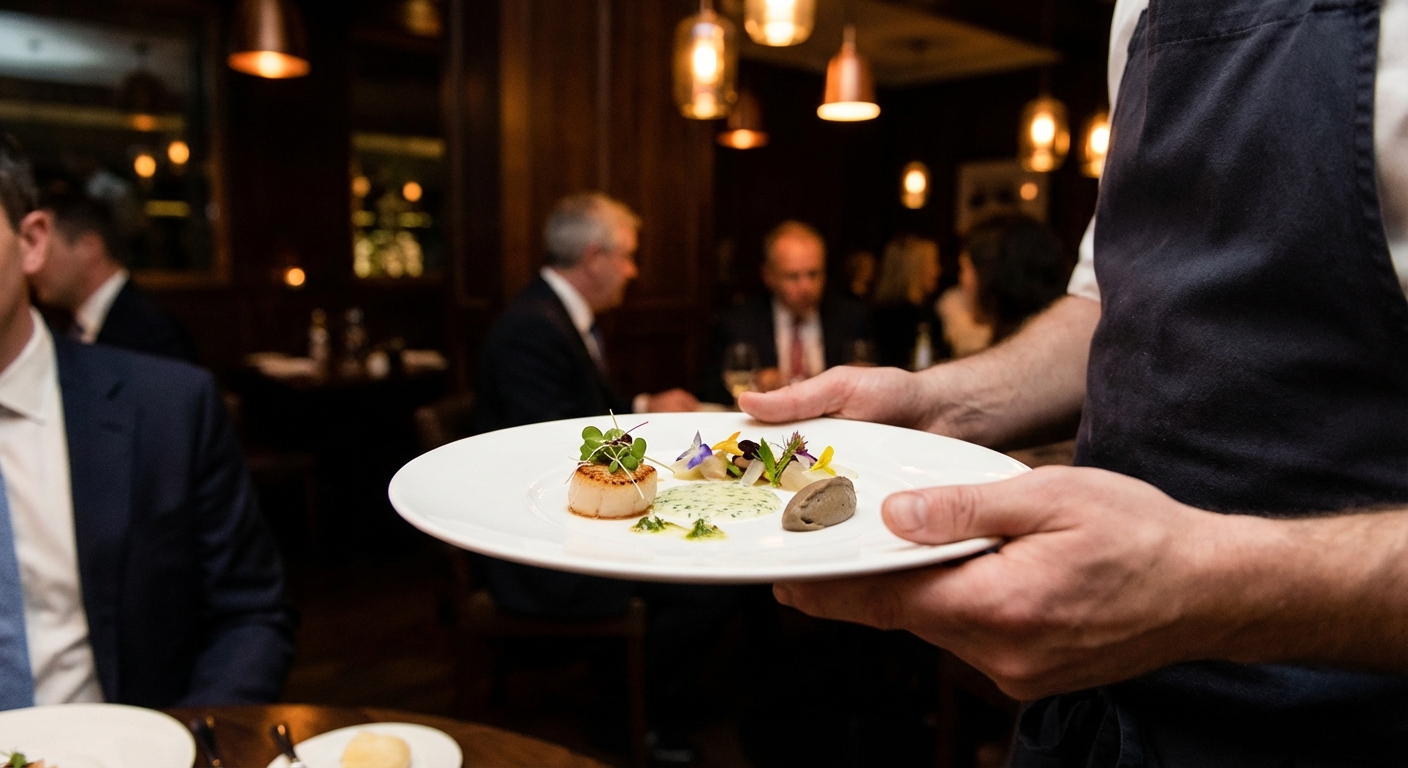
Tasting Menu Pricing Guide: The Math Behind Fixed-Price Dining
Learn how to price a tasting menu using per-course food cost analysis, target margins, and beverage pairing math. Includes pricing benchmarks by concept type.
Tasting Menu Pricing Guide: The Math Behind Fixed-Price Dining
Tasting menu pricing is fundamentally different from pricing a la carte dishes. You're selling an experience — a fixed sequence of courses at a single price — and the math must account for total food cost across all courses, high labor intensity, and the premium guests pay for exclusivity. Price too low and you're subsidizing the experience. Price too high and you can't fill the room.
What Makes Tasting Menus Different
A tasting menu is a fixed-price, multi-course meal where the kitchen controls the sequence and the guest pays one price for the full experience.
Common formats:
- 4-course: Amuse, appetizer, entrée, dessert — $65–$120
- 7-course: Extended narrative, often with intermezzo — $95–$175
- 10+ course: Chef's table / fine dining experience — $150–$500+
How to Calculate Tasting Menu Food Cost
Step 1: Cost every course individually — including amuse-bouche, intermezzo, bread service, mignardises.
Step 2: Sum the total food cost per cover:
| Course | Cost/Cover |
|---|---|
| Amuse-bouche | $1.20 |
| Cold appetizer | $3.80 |
| Soup/intermezzo | $2.10 |
| Fish course | $6.50 |
| Main protein | $9.40 |
| Cheese course | $3.20 |
| Dessert | $2.80 |
| Bread & butter | $0.90 |
| Mignardises | $1.10 |
| Total | $31.00 |
Step 3: Apply target food cost %:
Menu price = Total food cost ÷ Target food cost %
At 28% FC: $31.00 ÷ 0.28 = $110.71 → Price at $115
Setting Your Food Cost Target
Tasting menus justify lower food cost percentages (25–28%) than a la carte because:
- Labor is intensely high — multiple passes per table, complex prep
- Turns are limited — fewer covers per night
- Beverage pairing drives revenue — wine pairings often add $50–$150/cover at 70%+ margin
Pricing by Market and Concept
| Format | Target FC% | Food Cost/Cover | Typical Price Range |
|---|---|---|---|
| 4-course casual tasting | 30–33% | $18–$25 | $55–$85 |
| 6-course modern American | 27–30% | $25–$35 | $85–$130 |
| 7-course fine dining | 25–28% | $30–$45 | $110–$175 |
| 10+ course chef's table | 22–27% | $40–$70 | $150–$300+ |
The Beverage Pairing Math
If your menu is $120/cover and 60% of guests opt for a $75 wine pairing:
- 2-top, both guests pairing: $240 food + $150 beverage = $390
- Wine cost at 30%: $45
- Pairing adds $105 in gross margin per table
This is why fine dining operators push aggressively for pairing adoption.
FAQ
How do I price a tasting menu for the first time?
Cost every course ingredient by ingredient. Sum total cost per cover. Divide by 0.27. Round up to nearest $5. Reality-check against comparable restaurants in your market.
Should tasting menu food cost be higher or lower than a la carte?
Lower. Fine dining tasting menus typically run 23–28% food cost because high labor per cover demands better margins on food.
How do I handle fluctuating ingredient costs for a tasting menu?
Cost your menu quarterly and adjust pricing at each seasonal rotation. Build a 10% buffer into your food cost target for volatility.
Is a tasting menu profitable for a small restaurant?
Yes, if you can fill seats consistently. Tasting menus reduce turns but increase per-cover revenue significantly.
Ready to take control of your food costs? Try CostLab free for 14 days →
Track Food Cost on Every Dish — Automatically
CostLab.AI calculates food cost percentage in real time. Update one ingredient price and see the impact across your entire menu instantly.
Start Free Trial →