How to Launch a Virtual Restaurant Brand
A virtual restaurant brand runs from your existing kitchen under a different name — generating delivery revenue with no new rent or equipment. Here's how to launch one profitably.
How to Launch a Virtual Restaurant Brand
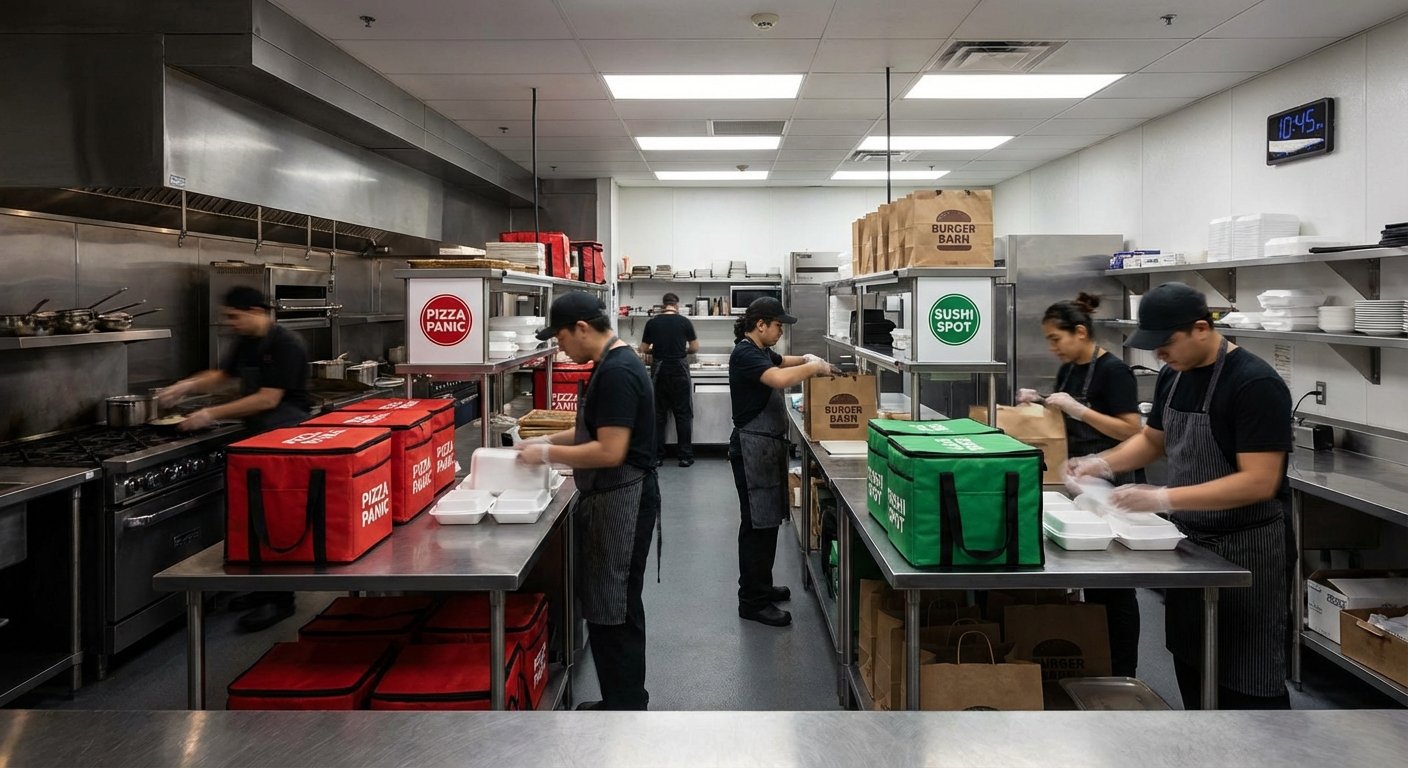
A virtual restaurant brand is a delivery-only concept that runs out of your existing kitchen under a separate name. Your dining room guests never know it exists — but DoorDash customers see a distinct restaurant with its own menu, photos, and reviews. Done right, a virtual brand generates incremental revenue with no new rent, no new equipment, and no additional dining room to manage.
When a Virtual Restaurant Brand Makes Financial Sense
The math only works when you have idle kitchen capacity. "Idle" means staffed, equipped, and open — but not producing near full output.
Calculate your kitchen utilization:
- Peak hour (Friday dinner 7–8pm): 40 dishes/hour out of 60 possible = 67%
- Slow hour (Tuesday lunch 1–2pm): 8 dishes/hour = 13%
- Weighted average across all open hours: typically 30–45%
If your weighted utilization is below 50%, there's room for a virtual brand during off-peak windows. If you're running above 65% consistently, adding delivery orders will degrade quality on your primary concept.
How to Choose What to Sell
The strongest virtual brand concepts share three traits:
Uses ingredients already in your kitchen. A pizza kitchen launching a "wings and ranch" virtual brand. A Mexican restaurant running a "burrito bowl" brand (rice, beans, and proteins already in prep). A burger spot selling smash burgers under a different name.
Travels well on delivery. Dishes that hold quality for 20–30 minutes in a bag. Crispy items (fried chicken, fries) need ventilated containers or they go soggy.
Has proven delivery search demand. Check DoorDash, Grubhub, and Uber Eats in your ZIP code. Look for cuisines with long wait times or limited options — that's your gap.
Setting Up on Delivery Platforms
Getting listed as a virtual brand is straightforward:
- Create a new business entity or DBA — some platforms require it
- Open a new Merchant account on each platform
- Submit your menu, photos, and existing kitchen address
- Complete onboarding (typically 1–2 weeks per platform)
- Use tablet ordering rather than POS integration initially — simpler to start
Each major platform takes 25–30% of gross delivery revenue as commission. This is non-negotiable for independent operators.
Pricing Your Virtual Brand Menu
Delivery is more expensive to produce than dine-in — and platforms take 25–30% before you see a dollar. Price accordingly.
Target food cost for delivery items: 22–27% (lower than dine-in to absorb platform commissions and packaging).
Example:
- Dish food cost: $4.20
- Target food cost: 25%
- Required gross revenue: $16.80
- Platform commission (28%): $4.70
- Net revenue: $12.10
- Minus food cost: $7.90 contribution margin
Compare to a $17 dine-in item at 25% food cost: $12.75 contribution margin. Delivery earns $4.85 less per item — compensate with volume and lower-food-cost menu design.
Common Mistakes That Kill Virtual Brands
Launching during peak hours. Friday night dinner is already stressed. Adding delivery tickets to that service causes errors, slower times, and unhappy dine-in guests. Launch your virtual brand for lunch and off-peak hours only.
Menu that's too complex. Limit your virtual brand to 8–15 items. The kitchen is already running your main menu — 25 new items creates a prep nightmare.
Bad photography. On delivery apps, you compete with professionally shot chain menus. Budget $200–400 for a food photographer for hero images.
Launching all platforms at once. Start with one platform. Learn the operations. Add platforms one at a time.
FAQ: Virtual Restaurant Brands
How much does it cost to start a virtual restaurant brand?
Startup costs are minimal: $200–400 for photography, $50–150 for platform onboarding fees (on some platforms), and minimal incremental food cost. Most operators launch for under $1,000.
Do I need a separate business license for a virtual brand?
Requirements vary by platform and jurisdiction. Some platforms require a separate DBA or business entity. Check with your local health department — in most cases, your existing kitchen license covers delivery operations.
How much revenue can a virtual brand realistically generate?
A well-run virtual brand in an active delivery market can generate $3,000–$10,000/month in incremental revenue. Results vary widely by market, cuisine type, and operational execution.
Can I run a virtual brand from a ghost kitchen?
Yes — ghost kitchens are designed for this. However, virtual brands launched from existing restaurant kitchens have near-zero overhead, making them far more financially accessible.
Ready to take control of your food costs? Try CostLab free for 14 days →
Track Food Cost on Every Dish — Automatically
CostLab.AI calculates food cost percentage in real time. Update one ingredient price and see the impact across your entire menu instantly.
Start Free Trial →