Actual vs. Theoretical Food Cost: Why Your Numbers Never Match
Understand the gap between actual and theoretical food cost. Learn what causes the variance, how to calculate it, and the steps to close it permanently.
Actual vs. Theoretical Food Cost: Why Your Numbers Never Match
Every restaurant owner has had this moment: your recipe math says food cost should be around 29%, but your actual end-of-month number is 33% or 34%. Where did that 4–5% go?
That gap has a name — the variance between actual and theoretical food cost — and it's costing you more than you think. On $600,000 in annual sales, a 4% variance equals $24,000 per year walking out the door.
What Is Theoretical Food Cost?
Theoretical food cost (also called "ideal food cost") is what your food cost should be — calculated from recipes and actual sales data.
The formula:
Theoretical Food Cost = Recipe Cost per Portion × Number of Portions Sold
If your burger recipe costs $3.50 to make and you sold 400 burgers last week, your theoretical food cost for burgers is $1,400.
Add up every menu item this way and divide by total food revenue to get your theoretical food cost percentage.
This is your target — the number you should hit if everything goes perfectly.
What Is Actual Food Cost?
Actual food cost is calculated from real inventory and purchasing data.
The formula:
Actual Food Cost = (Beginning Inventory + Purchases) − Ending Inventory
Example: You started the week with $8,000 of food inventory, bought $4,500 in product, and ended with $6,200 in inventory.
$8,000 + $4,500 − $6,200 = $6,300 actual food cost
Divide by food sales ($19,500): actual food cost = 32.3%
If your theoretical is 29%, you have a 3.3 percentage point gap.
The Variance — And What It Means
Variance % = Actual Food Cost % − Theoretical Food Cost %
| Variance | What It Signals |
|---|---|
| Under 2% | Healthy — normal variation |
| 2–3% | Needs attention |
| 3–5% | Significant problem — investigate now |
| Above 5% | Critical — systematic issue |
The 7 Causes of Food Cost Variance
1. Portioning Errors — The most common cause. If your recipe calls for 6 oz of salmon and line cooks are plating 6.5 oz, that 8% over-portion compounds across hundreds of covers.
2. Kitchen Waste — Over-prepping, spoilage, dropped items, burning. Every dollar of food that goes in the trash without generating revenue creates variance.
3. Theft — Both internal (staff eating or taking product) and external. Studies suggest theft accounts for 1–4% of food cost variance in restaurants without strong controls.
4. Recipe Non-Compliance — Staff substituting ingredients or making dishes differently than the recipe card creates unpredictable costs.
5. Incorrect Inventory Counts — Sloppy counting creates phantom variance that has nothing to do with actual waste or theft.
6. Unrecorded Comps and Voids — Every comped meal or voided order that isn't recorded in your POS creates a gap between theoretical (based on POS) and actual costs.
7. Incorrect Recipe Costing — If recipe cards don't account for yield percentage or use outdated ingredient prices, your theoretical is wrong from the start.
How to Close the Gap
Step 1: Fix your recipe costs. Make sure every recipe uses yield-adjusted costs and current ingredient prices.
Step 2: Count inventory consistently. Same person, same time, same method every count. Inconsistent counting creates noise that masks real problems.
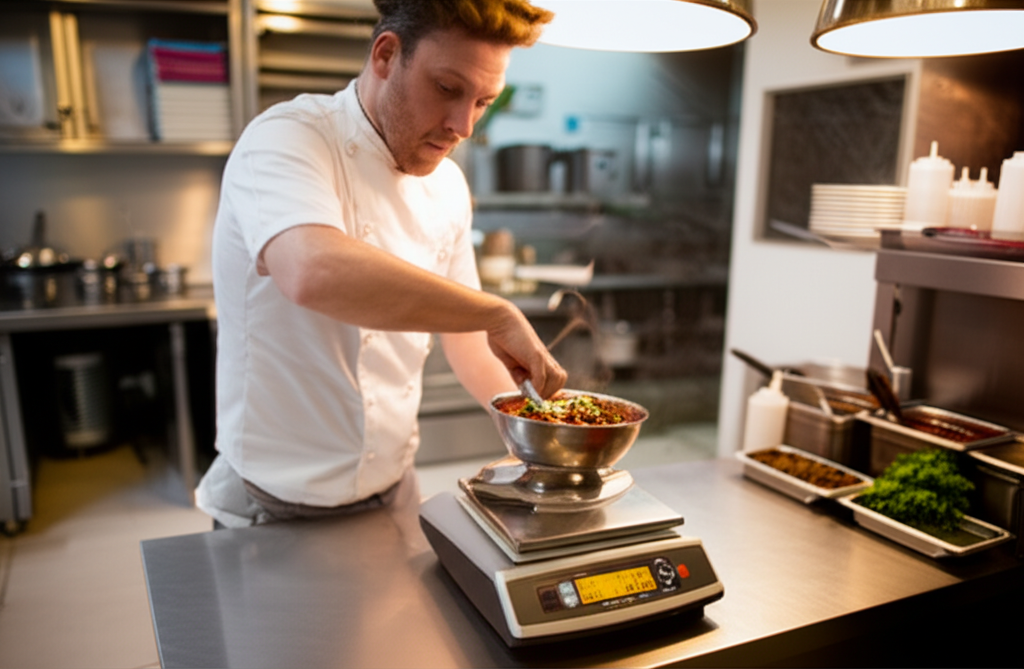
Step 3: Audit portion compliance. Weigh proteins randomly during service — not just during training. Even 2 audits per service significantly improves compliance.
Step 4: Record everything. Every comp, void, family meal, and spillage should be logged in your POS.
Step 5: Investigate by category. Look at variance by protein, by category, by station. If beef variance is high and everything else is normal, you've narrowed the problem.
FAQ
What's a normal variance between actual and theoretical food cost?
Under 2% is healthy. 2–3% warrants investigation. Above 3% indicates a systematic problem — portioning, waste, theft, or counting errors.
How do I calculate theoretical food cost?
Multiply your recipe cost per portion by the number of portions sold for each menu item. Sum across all items and divide by total food revenue.
What's the fastest way to reduce food cost variance?
Start with portion control audits (especially proteins) and inventory count accuracy. These two areas account for the majority of variance in most kitchens.
Conclusion
The gap between theoretical and actual food cost isn't random — it's telling you something specific. The restaurants that close this gap have systems: accurate recipe costs, consistent inventory counting, portion audits, and full recording of comps and waste.
Calculate your variance this week. If it's above 2%, you have a recoverable problem with a clear fix.
Ready to take control of your food costs? Try CostLab free for 14 days →
Track Food Cost on Every Dish — Automatically
CostLab.AI calculates food cost percentage in real time. Update one ingredient price and see the impact across your entire menu instantly.
Start Free Trial →