Alcohol Pour Cost Calculator: Bar Targets & Formulas
Learn how to calculate alcohol pour cost percentage, use the formula correctly, and hit your bar's target pour cost to maximize profit.
Alcohol Pour Cost Calculator: Bar Targets & Formulas
Pour cost is the single most important number your bar tracks. Understanding your alcohol pour cost tells you instantly whether your bar operation is profitable — or quietly bleeding money. This guide gives you the formula, benchmarks, and a step-by-step process to calculate and control your pour cost.
What Is Pour Cost?
Pour cost (also called liquor cost or beverage cost percentage) is the ratio of what you paid for the alcohol versus what you sold it for.
Pour Cost % = (Cost of Drink Ingredients ÷ Selling Price) × 100
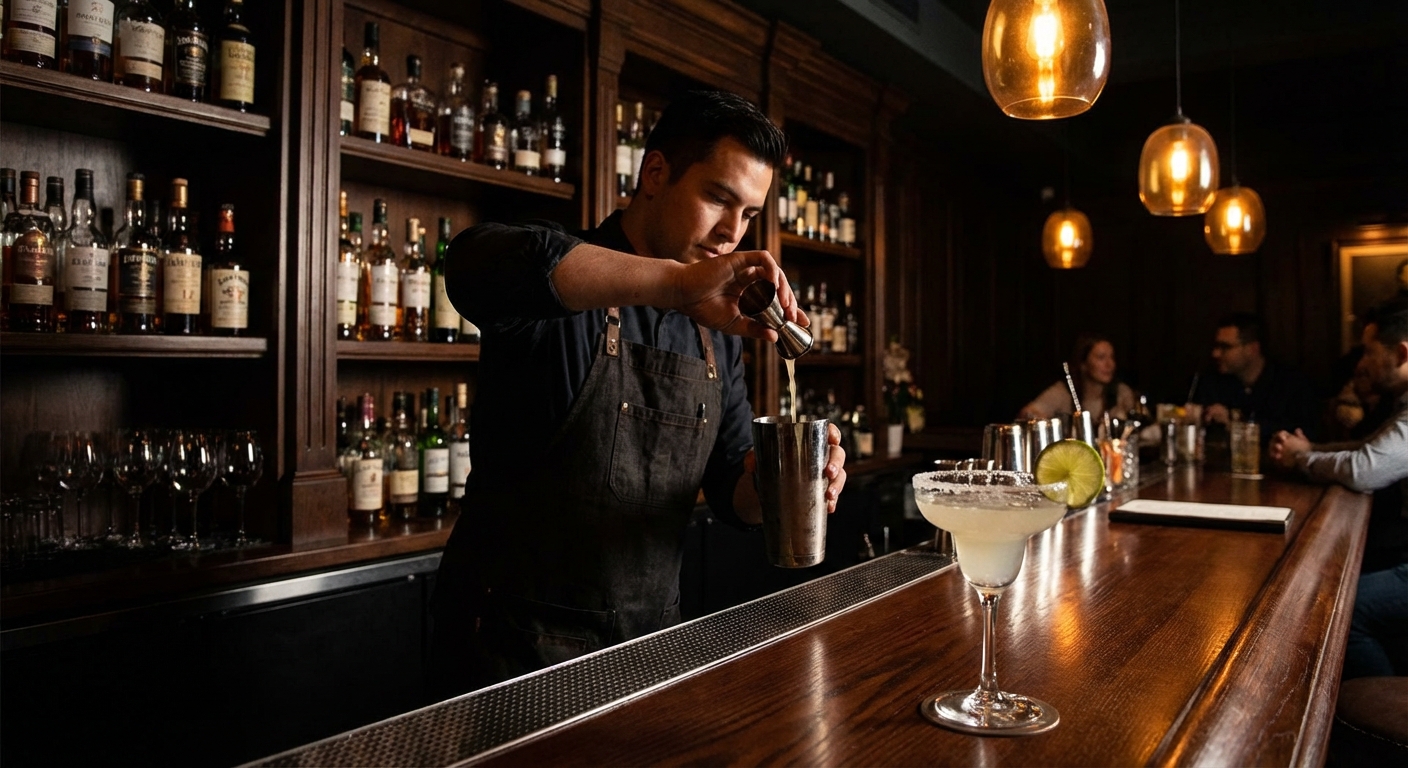
If a margarita costs you $2.80 to make and you sell it for $13, your pour cost is 21.5%. That's good. If your pour cost creeps to 30%, you have a problem — and a leak somewhere.
Target Pour Cost by Drink Type
| Drink Category | Target Pour Cost | Why |
|---|---|---|
| Well spirits / house cocktails | 18–22% | Cheap base spirits, high markup room |
| Call spirits (named brands) | 20–25% | Mid-tier cost, standard cocktail pricing |
| Premium / top-shelf spirits | 22–28% | Higher cost, guests expect higher prices |
| Beer (draft) | 20–25% | Keg cost varies; draft more profitable than bottle |
| Beer (bottle/can) | 24–28% | Less markup room than draft |
| Wine by the glass | 30–35% | Higher ingredient cost relative to markup |
| Wine by the bottle | 25–35% | Depends on your markup policy |
Wine runs higher than spirits because wine has a shorter shelf life after opening, and guests are price-sensitive on bottles they can buy retail. Spirits run lower because a $25 bottle of tequila pours 17 shots you can sell for $7–12 each.
Full Worked Example: The Classic Margarita
Recipe: 1.5 oz silver tequila (well), 0.5 oz Cointreau, 0.75 oz fresh lime juice, salt for rim
| Ingredient | Amount Used | Bottle Size | Bottle Cost | Cost Per oz | Cost in Drink |
|---|---|---|---|---|---|
| Silver tequila (well) | 1.5 oz | 750ml (25.4 oz) | $15.00 | $0.59/oz | $0.89 |
| Cointreau | 0.5 oz | 750ml (25.4 oz) | $28.00 | $1.10/oz | $0.55 |
| Fresh lime juice | 0.75 oz | ~16 oz per lb | $2.50/lb | $0.16/oz | $0.12 |
| Kosher salt (rim) | pinch | negligible | — | — | $0.02 |
| Total drink cost | $1.58 |
Selling price: $12.00 → Pour Cost = $1.58 ÷ $12.00 × 100 = 13.2%
That's excellent — well below the 18–22% target for well cocktails.
The Over-Pour Problem: $21,900 a Year Out the Door
Your bartender free-pours and consistently puts 1 extra ounce of tequila in every margarita:
1 extra oz × $0.59/oz = $0.59 wasted per drink 100 margaritas/night × $0.59 = $59/night $59 × 365 nights = $21,535/year
That's not a rounding error. That's a part-time employee's salary evaporated through an overly generous pour. Use call spirits at $1.10/oz and it jumps to $40,150/year.
The Liquor Cost Formula (Full Version)
For monthly accounting, calculate actual pour cost:
Actual Pour Cost % = (Opening Inventory + Purchases − Closing Inventory) ÷ Bar Revenue × 100
Example:
- Opening inventory: $4,200 | Purchases: $6,800 | Closing inventory: $3,900
- Bar revenue: $32,000
- Actual Pour Cost = ($4,200 + $6,800 − $3,900) ÷ $32,000 × 100 = 22.2%
Compare to your theoretical pour cost (what it should be based on recipes sold). If actual is 5+ points higher, you have over-pouring, spillage, untracked comps, or theft.
How to Audit Your Bar Pour Cost Monthly
Set aside 30 minutes at month-end:
- Do a physical inventory count — every bottle, every keg
- Pull purchasing records from distributor invoices
- Run the actual pour cost formula
- Compare to theoretical using POS drink sales data
- Investigate any gap greater than 3 points
A 3-point pour cost gap on $30,000/month bar revenue is $900 — every month you let it slide.
FAQ: Alcohol Pour Cost
What is a good pour cost for a bar?
A good pour cost for spirits and cocktails is 18–22%. Beer draft runs 20–25%, and wine by the glass typically runs 30–35%. Lower is better, but unrealistically low pour costs may indicate under-pouring or incorrect pricing.
How do I calculate pour cost per drink?
Divide the total ingredient cost by the selling price, then multiply by 100. Example: $2.00 cost ÷ $11.00 price × 100 = 18.2% pour cost.
What causes high pour cost in a bar?
The most common causes are free-pouring without jiggers (15–25% over-pour), untracked comps, theft, spillage, and over-ordering that leads to waste. Monthly inventory counts catch these gaps quickly.
Should I use jiggers or free pour?
Use jiggers. Free pouring consistently runs 15–25% over the intended amount. Jiggers add 5 seconds per drink and can save tens of thousands of dollars annually in a busy bar.
Ready to take control of your food costs? Try CostLab free for 14 days →
Track Food Cost on Every Dish — Automatically
CostLab.AI calculates food cost percentage in real time. Update one ingredient price and see the impact across your entire menu instantly.
Start Free Trial →