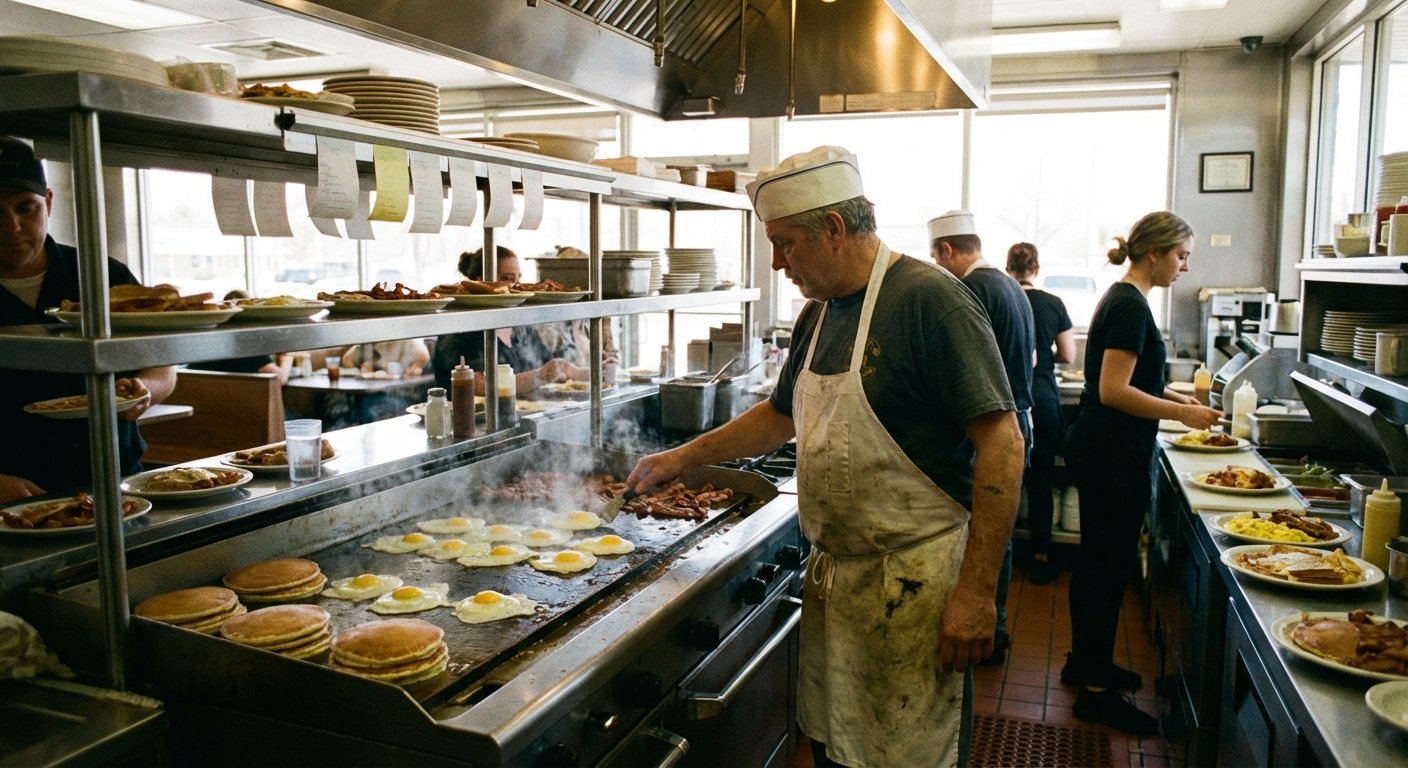
Breakfast Restaurant Food Cost: Eggs, Protein, and Weekend Labor
Breakfast food cost can hit 24–28% when managed well, but egg price spikes in 2025 have added $74,000/year in cost for a typical busy breakfast restaurant. Here's how to respond.
Breakfast Restaurant Food Cost: Eggs, Protein, and Weekend Labor
Breakfast restaurant food cost has structural advantages: eggs, bread, and produce are cheap relative to dinner proteins. A well-run breakfast concept can hit 24–28% food cost while a dinner restaurant runs 30–34%. But 2025 changed the calculation significantly. Egg prices doubled due to the largest avian flu outbreak in US history — and for a busy breakfast restaurant using 40–50 dozen eggs per day, that's a $200–350/day cost increase that didn't exist a year ago.
Egg Cost: Managing the New Reality
In early 2024, large Grade A eggs ran $2.50–3.00/dozen wholesale. By early 2025, the same eggs hit $6.00–8.50/dozen in many markets.
Daily impact for a restaurant using 45 dozen eggs:
- Old cost: 45 × $2.75 = $123.75/day
- New cost: 45 × $7.25 = $326.25/day
- Daily increase: $202.50
- Monthly increase: ~$6,075
- Annual increase: ~$73,980
That's a $74,000 annual cost increase on a single ingredient — without any menu price adjustment.
How to respond:
Adjust menu prices. A $1–2 increase on egg-based dishes is defensible and expected. Customers understand — it's been in the news. Don't apologize; just reprice.
Reduce egg content where it's not the star. French toast using 1.5 eggs instead of 2 saves $0.30/serving. At 150 covers/day, that's $45/day — $1,350/month.
Switch to liquid eggs for high-volume applications. Liquid whole eggs run 15–25% cheaper per equivalent volume than shell eggs, with better portion consistency and no shell labor. For scrambled eggs, omelets, and batters, most guests can't tell the difference.
Use egg alternatives in baked goods. For pancake batter, French toast mix, and other baked applications, commercial egg replacers can reduce cost 30–40% with minimal quality impact.
Breakfast Protein Costs and Portion Control
Breakfast proteins have their own cost dynamics:
Bacon ($4.50–7.50/lb): The most-requested breakfast protein. A 3-strip portion uses ~2 oz raw weight, yielding 1.2–1.4 oz cooked. Cost per portion: $0.56–0.94. Pre-sliced consistent packs (16/18 count per lb) prevent portion drift better than hand-weighing.
Sausage links/patties ($3.00–4.50/lb): Lower cost than bacon with similar perceived value. Featuring sausage in combo plates reduces protein food cost 15–20% vs. all-bacon combos.
Smoked salmon ($12–18/lb): The highest-cost breakfast protein. At 2 oz per serving and $15/lb, that's $1.88/portion. Price it at a $4–6 premium over standard protein options to maintain margin.
Weekend Labor: The Breakfast Cost Trap
Breakfast restaurants are typically busiest on weekends — Saturday and Sunday brunch generates 40–60% of weekly revenue in just two days. But weekend labor costs more and demands more precision.
In many markets, kitchen staff run 1.1–1.2x weekday rates on weekends. More critically, understaffing the weekend rush creates a cascade of problems:
- Longer ticket times → tables stay occupied → lower RevPASH
- Errors and remakes → direct food waste cost
- Server crowding at the pass → wasted labor
The math on adding one cook: One extra line cook at $20/hour for a 4-hour peak shift = $80. If that helps you serve 15 more covers at $18 average check = $270 in incremental revenue. Net gain: $190.
Staff the weekend rush for throughput, not for the slow period that follows.
Breakfast Restaurant Benchmarks
| Metric | Target Range |
|---|---|
| Food cost | 24–30% |
| Labor cost | 30–35% |
| Prime cost | 58–65% |
| Average check | $14–22 |
| Covers per server per hour | 15–20 |
Breakfast labor runs higher as a percentage than dinner because service windows are shorter — you're compressing the same staffing cost into fewer hours of revenue generation.
FAQ: Breakfast Restaurant Food Cost
What is a good food cost percentage for a breakfast restaurant?
A well-managed breakfast restaurant should target 24–30% food cost. The structural advantage of egg and grain-based menus vs. dinner proteins allows for lower food cost — but only if egg and protein prices are actively managed.
How can I lower my breakfast food cost when egg prices are high?
Switch high-volume egg applications (scrambled eggs, omelets) to liquid eggs; reduce per-serving egg counts in dishes where eggs aren't the feature; add a $1–2 surcharge on egg-based dishes; and audit portion weights on proteins like bacon to prevent drift.
Why is breakfast labor cost higher than dinner as a percentage?
Breakfast service windows are shorter but staffing requirements are similar. You're paying prep cooks, line cooks, and FOH staff for a 3–4 hour rush instead of spreading those costs across a longer service. The result is a higher labor-to-revenue ratio.
Ready to take control of your food costs? Try CostLab free for 14 days →
Track Food Cost on Every Dish — Automatically
CostLab.AI calculates food cost percentage in real time. Update one ingredient price and see the impact across your entire menu instantly.
Start Free Trial →