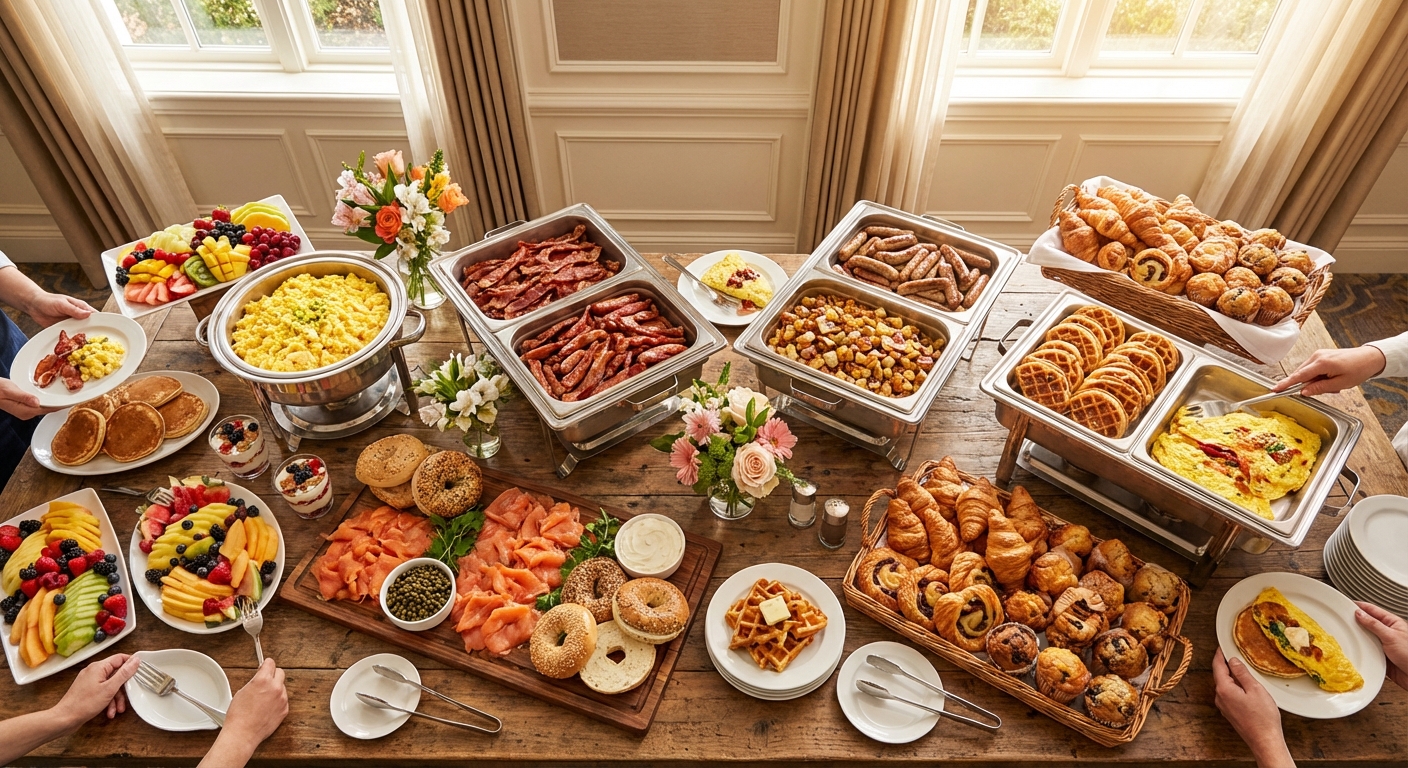
Buffet Food Cost Per Person: How to Price Fixed-Format Dining
Learn how to calculate buffet food cost per person, set per-head targets, and price your fixed-format dining to stay profitable without running short.
Buffet Food Cost Per Person: How to Price Fixed-Format Dining
Buffet food cost per person is harder to control than a la carte pricing because guests choose their own portions — and some will take far more than you planned. Understanding how to model consumption, set per-head targets, and price your buffet to stay profitable is essential for fixed-price dining formats.
Why Buffets Are Harder to Cost
In a traditional restaurant, you cost each dish individually and price it with a target margin. In a buffet:
- Consumption varies wildly — one guest eats $8 of food, another $22
- You must pre-produce everything — unsold food is waste
- High-cost items get cherry-picked — guests load up on proteins, skip the pasta
- Over-production is required — running out damages guest experience
The result: buffets regularly run 5–10% higher food cost than a la carte equivalents without careful planning.
How to Calculate Buffet Food Cost Per Person
Step 1: Cost every dish per serving. Include all items — protein, starch, vegetable, salad, bread, dessert.
Step 2: Estimate consumption per guest:
- Proteins: 5–6 oz/person
- Starches: 3–4 oz/person
- Vegetables: 3 oz/person
- Salad: 2–3 oz/person
- Dessert: 3–4 oz/person
Step 3: Apply 20% overage buffer.
Step 4:
Total cost per head = Sum of (dish cost × est. oz/person) × 1.20
Buffet Pricing Benchmarks
| Format | Food Cost/Person | Typical Markup | Menu Price Range |
|---|---|---|---|
| Breakfast buffet | $4–$7 | 3–3.5x | $12–$22 |
| Lunch buffet | $6–$10 | 3–3.5x | $18–$30 |
| Dinner buffet | $9–$16 | 3–4x | $28–$55 |
| Brunch buffet | $8–$14 | 3–3.5x | $25–$45 |
Strategies to Control Buffet Food Cost
Use Strategic Dish Placement
Place low-cost items (salads, breads, starches) at the front of the line. Proteins at the back. Guests who are partially full take smaller portions of expensive items.
Set Portion Guides for Staff
Train servers replenishing the line to use consistent spoon sizes. A 4 oz scoop vs. a 6 oz scoop on protein changes your per-head cost significantly.
Adjust High-Cost Items
If beef is running food cost too high, supplement with a lower-cost protein option alongside it.
FAQ
What is a good food cost percentage for a buffet?
Target 28–32% for a full-service buffet dinner. Breakfast and lunch buffets can push 25–28% due to lower-cost ingredients.
How do I stop guests from over-consuming expensive items?
Use an action station model — plate high-cost items in smaller portions rather than large self-serve pans. You control consumption while guests still feel they have variety.
Should I include labor in my per-person buffet price?
Yes. Labor is typically 30–35% of revenue in buffet operations. Build it into your per-person price or charge as a service fee.
How do I handle a buffet that's running short?
Build in your 20% buffer and pre-produce backup ready to reheat. Never let a buffet line go empty — the experience damage is worse than the extra food cost.
Ready to take control of your food costs? Try CostLab free for 14 days →
Track Food Cost on Every Dish — Automatically
CostLab.AI calculates food cost percentage in real time. Update one ingredient price and see the impact across your entire menu instantly.
Start Free Trial →