How to Calculate Plate Cost for Any Restaurant Dish
Plate cost is the total ingredient cost to produce one serving. Learn the step-by-step method including yield adjustments and why getting it right matters for every pricing decision.
How to Calculate Plate Cost for Any Restaurant Dish
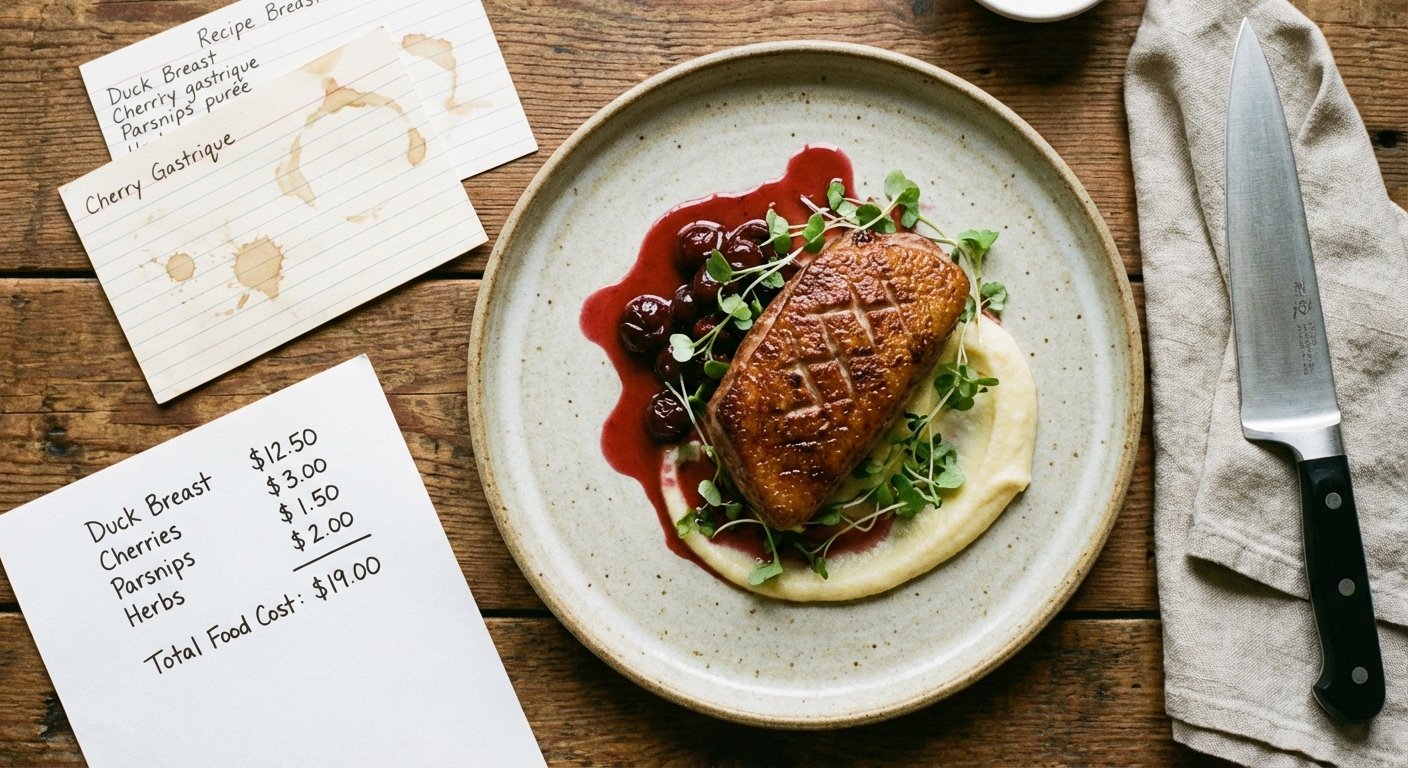
Plate cost -- also called recipe cost or portion cost -- is the total ingredient cost to produce one serving of a dish. It is the number you divide by your menu price to get food cost percentage, and the foundation of every smart pricing decision. Get this wrong and every dish on your menu is built on a false foundation.
The Plate Cost Formula
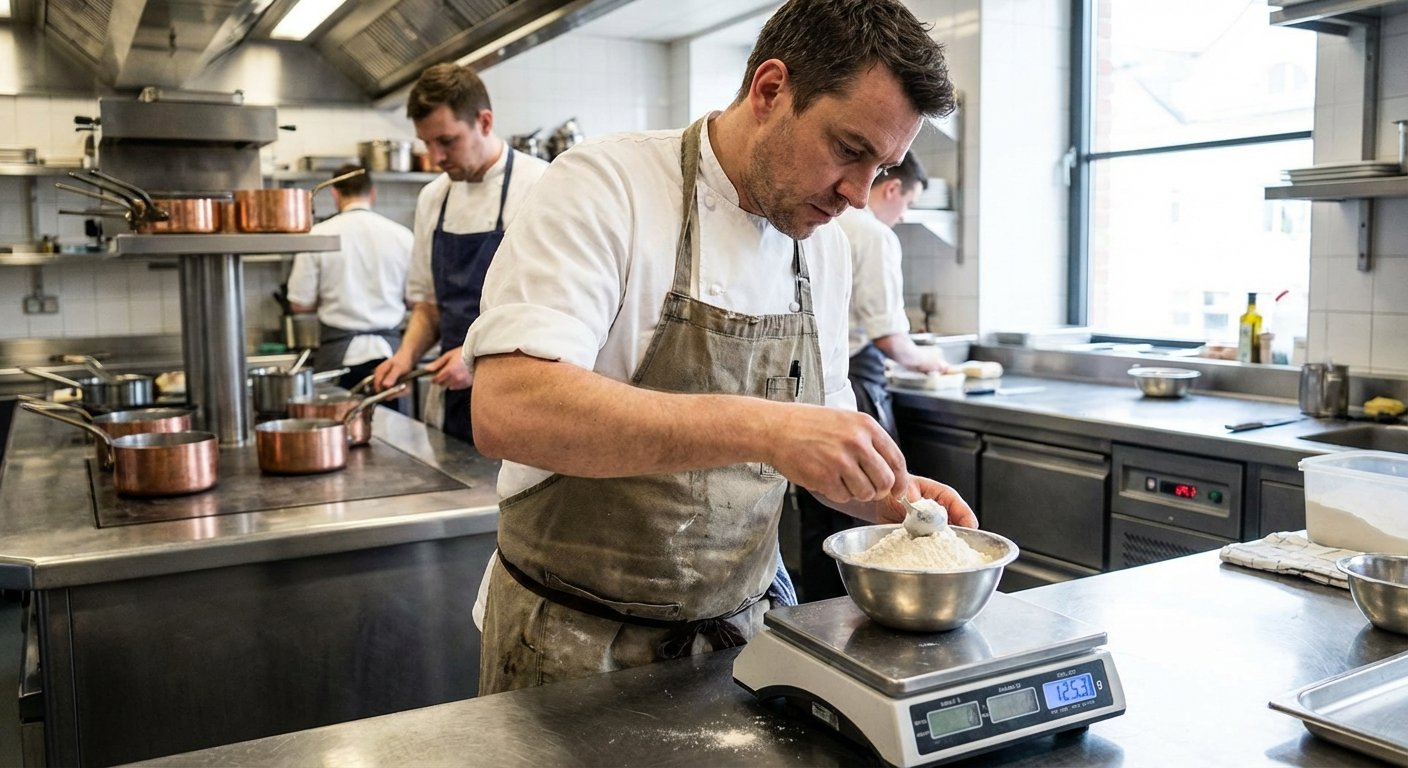
Plate Cost = Sum of (Ingredient Quantity per Portion x Cost per Unit)
Simple in principle. The complications and the mistakes live in the execution.
Step 1: Break Down Every Ingredient
List every component that goes on the plate:
- Primary protein
- All sides and accompaniments
- Sauces and garnishes
- Cooking fat, seasonings, salt
- Bread, butter, condiments if included
Do not skip the garnish. A sprig of microgreens at $0.30 per portion x 80 covers equals $24 per day. It is not free.
Step 2: Convert Units
Your invoices are in cases, pounds, or gallons. Your recipes are in ounces, cups, or pieces. You must convert.
Example: Olive oil at $28.00 for a 3-liter container
- 3L = 101.4 fl oz
- Cost per fl oz = $28.00 / 101.4 = $0.276 per fl oz
- Recipe uses 0.5 fl oz per portion = $0.14 per plate
Step 3: Apply Yield Loss -- Where Most Operators Go Wrong
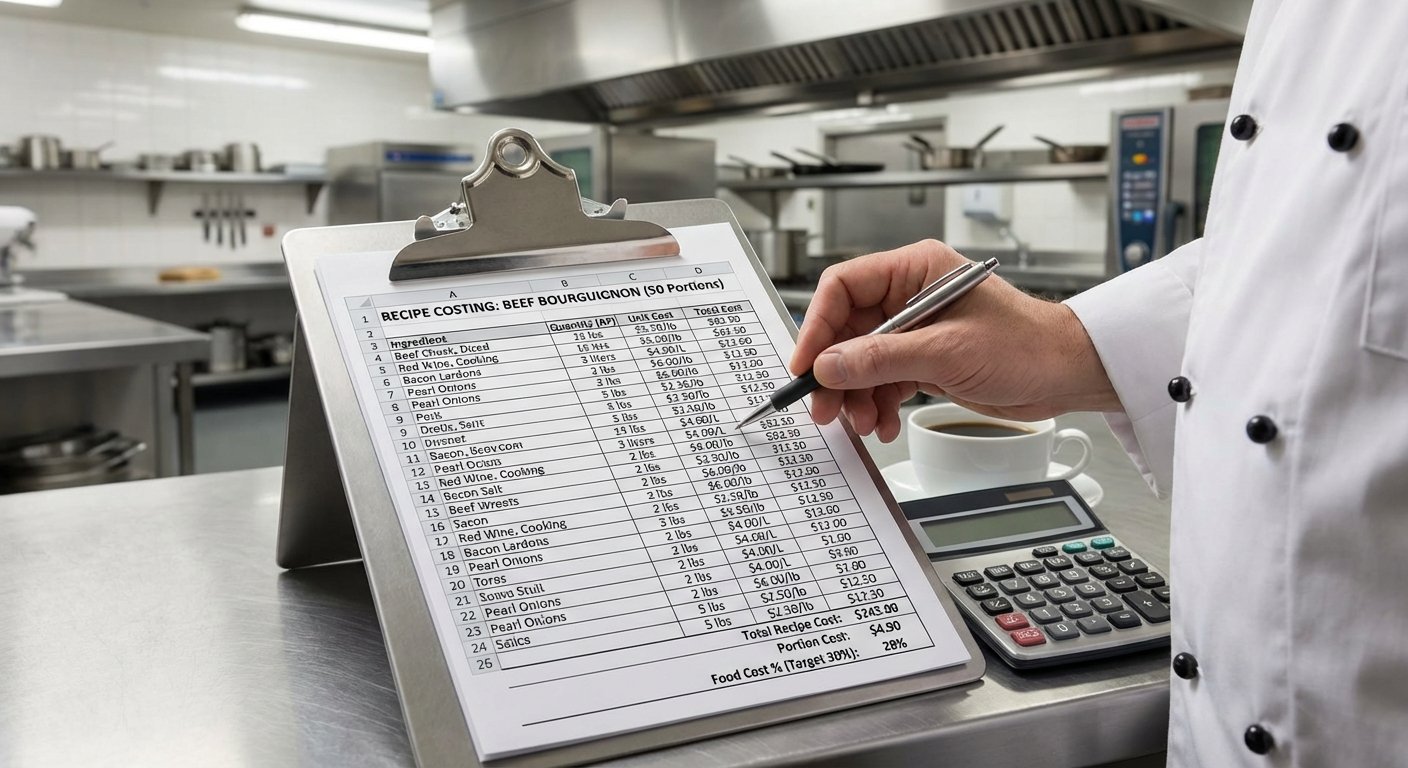
Raw purchase weight is not the same as served weight. Skipping yield adjustments is the most common costing mistake.
Trim loss examples:
- Beef tenderloin: roughly 25% trim loss (buy 1lb, serve 12oz)
- Broccoli: roughly 35% trim loss (buy 1lb, serve about 10.5oz)
- Salmon fillet: roughly 10% trim loss
Cooking loss examples:
- Ground beef: roughly 25% shrinkage when cooked
- Chicken breast: roughly 20% shrinkage
Apply yield factor to get true ingredient cost:
True Cost per Served Oz = Invoice Cost per Raw Oz / Yield %
If chicken costs $0.30 per oz raw and yields 80% after cooking:
$0.30 / 0.80 = $0.375 per served oz
Step 4: Sum Everything
Add up all components. That total is your plate cost. Build a cost card that lists every ingredient with its unit cost, quantity, and yield-adjusted cost.
Step 5: Sanity Check Your Result
- A $45 entree with a $6.80 plate cost = 15% food cost -- suspiciously low
- A $12 lunch with a $5.40 plate cost = 45% food cost -- that is a problem
If the number looks wrong, it probably is. Check your unit conversions and yield assumptions first.
Keeping Plate Costs Current
Plate costs expire every time a supplier raises prices. Build a review schedule:
- Monthly: Update your top 10 most-used ingredients
- Quarterly: Full recipe review across the menu
- Immediately: Any time a key supplier increases prices more than 5%
Frequently Asked Questions
What is the difference between plate cost and food cost percentage?
Plate cost is a dollar amount -- the total ingredient cost for one serving. Food cost percentage is plate cost divided by menu price. Plate cost tells you what a dish costs; food cost percentage tells you how it fits your pricing targets.
Should I include salt, pepper, and other low-cost seasonings in plate cost?
Yes -- use a miscellaneous line for spices, salt, and cooking fats. Even $0.10-0.20 per plate adds up significantly across hundreds of daily covers.
How do I account for batch-cooked components like sauces?
Calculate the total cost of the batch (all ingredients), then divide by the number of portions the batch yields. Use that per-portion figure in your plate cost calculation.
What yield percentage should I use for chicken breast?
A boneless chicken breast typically yields 80-90% after trimming, with additional cooking shrinkage of 15-20%. Track your actual yields by weighing before and after prep for the most accurate costing.
Ready to take control of your food costs? Try CostLab free for 14 days
Track Food Cost on Every Dish — Automatically
CostLab.AI calculates food cost percentage in real time. Update one ingredient price and see the impact across your entire menu instantly.
Start Free Trial →