How to Track Food Costs in a Restaurant (Without Losing Your Mind)
Build a simple, sustainable system for tracking restaurant food costs. Includes the two-level approach, weekly schedule, tight count method, and how to read variance by category.
How to Track Food Costs in a Restaurant (Without Losing Your Mind)
Tracking food costs is the single most high-impact operational habit a restaurant owner can build. But most tracking systems fail — not because they're wrong, but because they're too complicated to survive a busy week. This guide gives you a simple, sustainable system that works in the real world.
Why Food Cost Tracking Breaks Down
Most restaurants start with good intentions. They do a full inventory count. They reconcile purchases. They calculate food cost. And then life gets busy. The count slips to monthly. Then quarterly. Then never.
The system has to be simple enough to survive a Friday night and a short-staffed Tuesday.
The Two Levels of Food Cost Tracking
Level 1: Theoretical Food Cost (Recipe-Based)
This is what should be happening. Multiply the plate cost of every dish by portions sold. This is your baseline — your best possible number under perfect conditions.
Theoretical Food Cost % = Sum of (Recipe Cost × Portions Sold) ÷ Total Food Revenue
This requires accurate recipe costs (with yield percentages applied) and POS data on portions sold.
Level 2: Actual Food Cost (Inventory-Based)
(Opening Inventory + Purchases) − Closing Inventory = Cost of Goods Used COGS ÷ Food Sales = Actual Food Cost %
The gap between theoretical and actual is your variance. Every percentage point of variance is money disappearing somewhere — portioning, waste, theft, or counting errors.
A Weekly System That Works
Split the work across the week so no single day is overwhelming.
Monday: Pull POS data — portions sold by dish for the past week. Calculate theoretical food cost from your recipe costs. Takes 15–20 minutes if recipe cards are current.
Wednesday: Do a quick count of your top 10 most expensive items (proteins, seafood, dairy). Compare to what you should have based on sales. This is your "tight count" — it catches 80% of problems with 20% of the effort.
Friday: Pull all purchase invoices for the week. Add to your running purchase total.
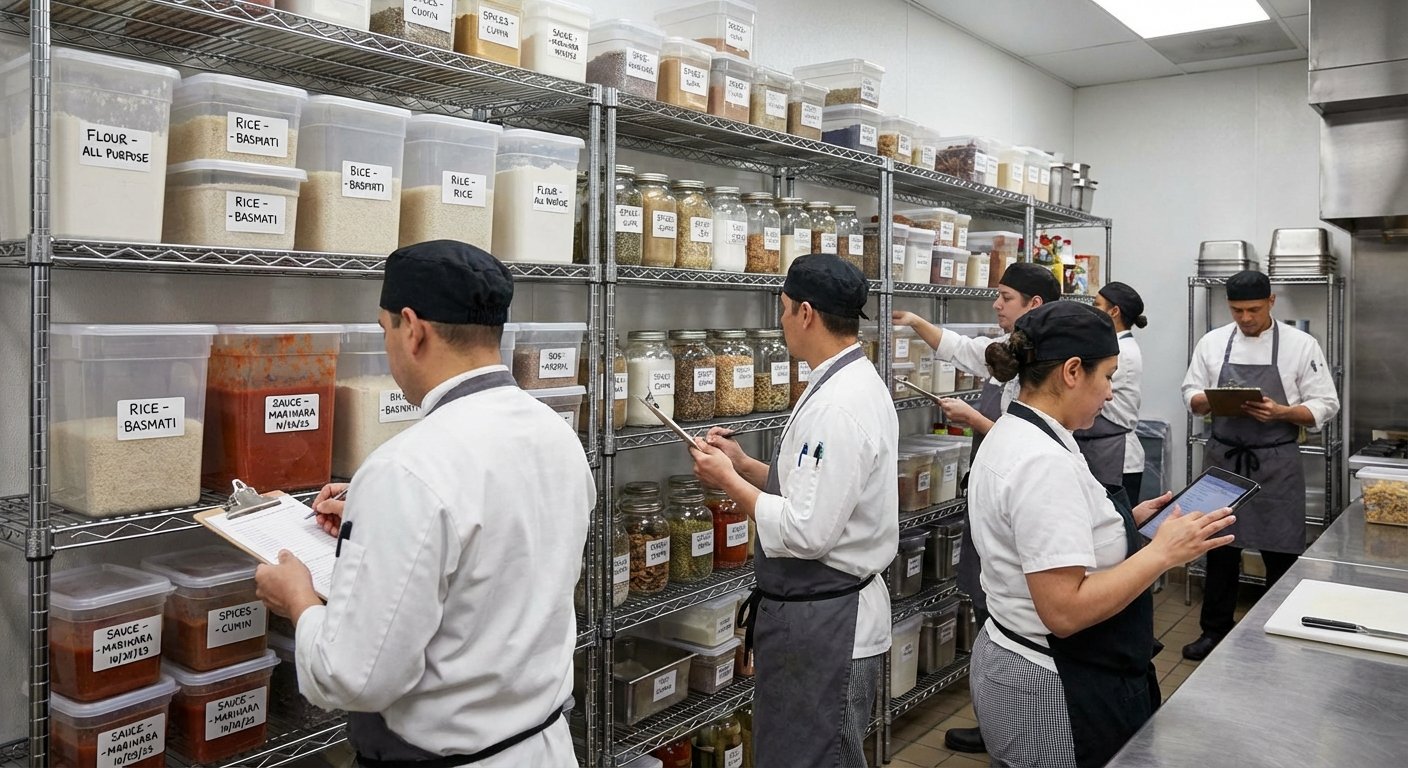
Monthly: Full inventory count. Calculate actual vs. theoretical. Investigate any gap above 2%.
The Tight Count: Your Early Warning System
A tight count focuses only on your highest-cost, highest-risk items:
- All proteins (beef, chicken, fish, pork)
- Seafood
- Dairy (cheese, butter, cream)
- Any item with a history of theft or waste
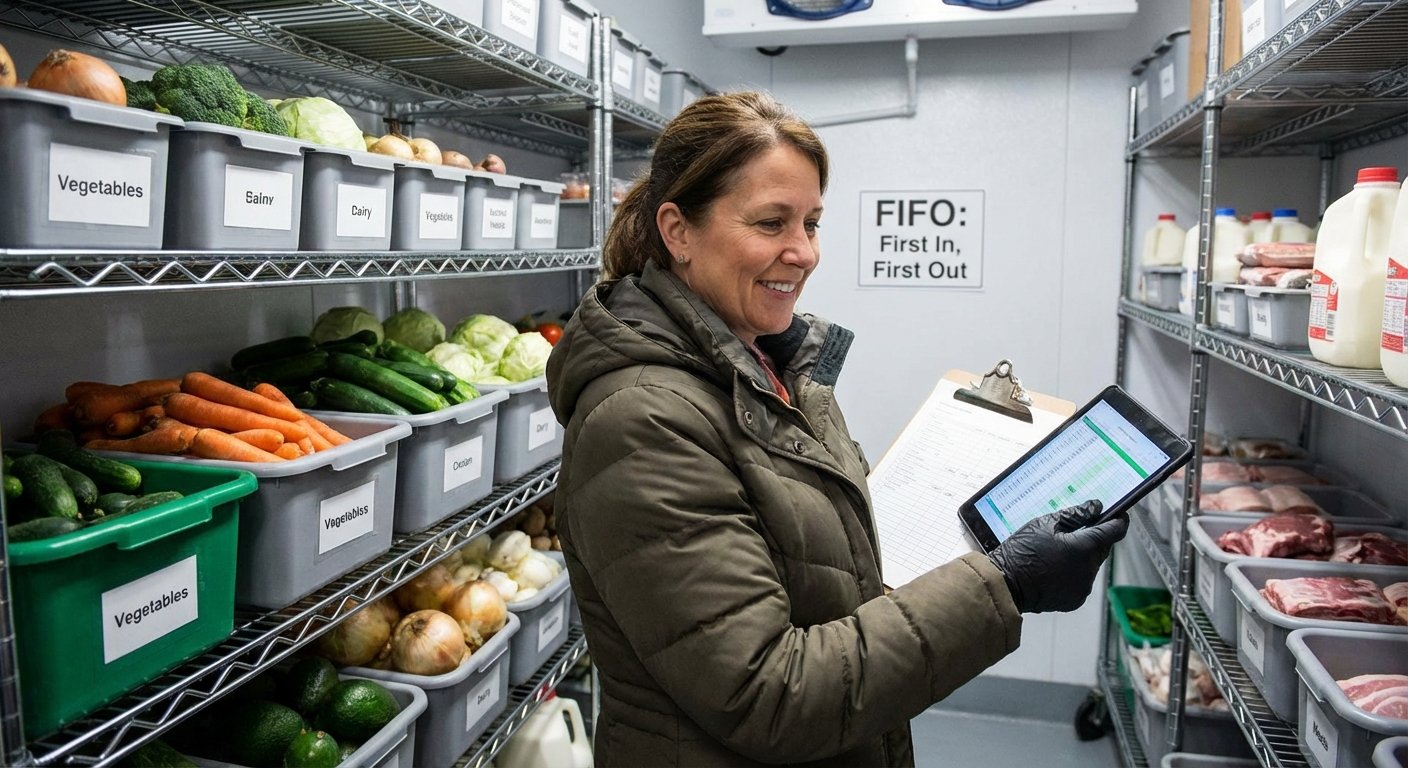
Count these 10–15 items mid-week. Compare actual on-hand to what you should have based on theoretical usage since your last count. Discrepancies show up before they compound.
This single habit catches most portioning and theft issues before the monthly full inventory.

What Variances Tell You
When actual food cost is higher than theoretical, the gap points to something specific:
| Variance Location | Likely Cause |
|---|---|
| Proteins | Portioning errors or theft |
| Alcohol/bar items | Overpouring, theft, unrecorded staff drinks |
| Prep items (soups, sauces) | Over-production and waste |
| Produce | Spoilage, over-ordering |
| No variance at all | Counts may not be accurate |
If your actual and theoretical always match perfectly, you probably have counting errors rather than a tight kitchen. Some variance is normal and expected.
Tools for Easier Tracking
Minimum viable setup:
- POS system that tracks items sold by menu item
- Spreadsheet with recipe costs and portions sold
- Consistent weekly counting process
Upgraded setup:
- Recipe costing software that integrates with your POS (MarketMan, CostLab, BlueCart)
- Automated purchase invoice import
- Real-time variance alerts
For most independent restaurants under $2M in sales, a good spreadsheet and disciplined weekly process beats expensive software you'll underutilize.
FAQ
How often should I take food cost inventory in a restaurant?
Full inventory monthly at minimum; tight counts (top 10–15 expensive items) weekly. High-volume restaurants with known theft issues may want tight counts twice weekly.
What's a good food cost percentage for a restaurant?
28–34% is normal for most full-service restaurants. QSR can run 28–32%. Fine dining can be lower (25–30%) due to higher menu prices. The number that matters is how yours compares to your theoretical.
What should I do if my actual food cost is much higher than theoretical?
Investigate by category: which proteins, which prep items, which sections show variance? A full audit of portion compliance, inventory counting accuracy, and comp/void recording will identify the source within 2 weeks.
Conclusion
Food cost tracking doesn't need to be a massive weekly project. It needs to be a simple, consistent habit — a 15-minute Monday theoretical calculation, a 20-minute Wednesday tight count, and a monthly full reckoning.
Build the habit this week. Consistency over months is what closes the variance gap permanently.
Ready to take control of your food costs? Try CostLab free for 14 days →
Track Food Cost on Every Dish — Automatically
CostLab.AI calculates food cost percentage in real time. Update one ingredient price and see the impact across your entire menu instantly.
Start Free Trial →