Restaurant Portion Control: The Cheapest Profit Improvement Available
Restaurant portion control is the easiest way to reduce food costs without changing your menu. Learn how to build a system, train your team, and audit portions correctly.
Restaurant Portion Control: The Cheapest Profit Improvement Available
Restaurant portion control is one of the fastest, cheapest ways to reduce food costs — no supplier negotiations, no menu changes, no staff cuts required. Just consistent, measurable portions on every plate. Here's what inconsistent portioning actually costs you and how to build a system that holds.
What Portion Control Actually Costs You
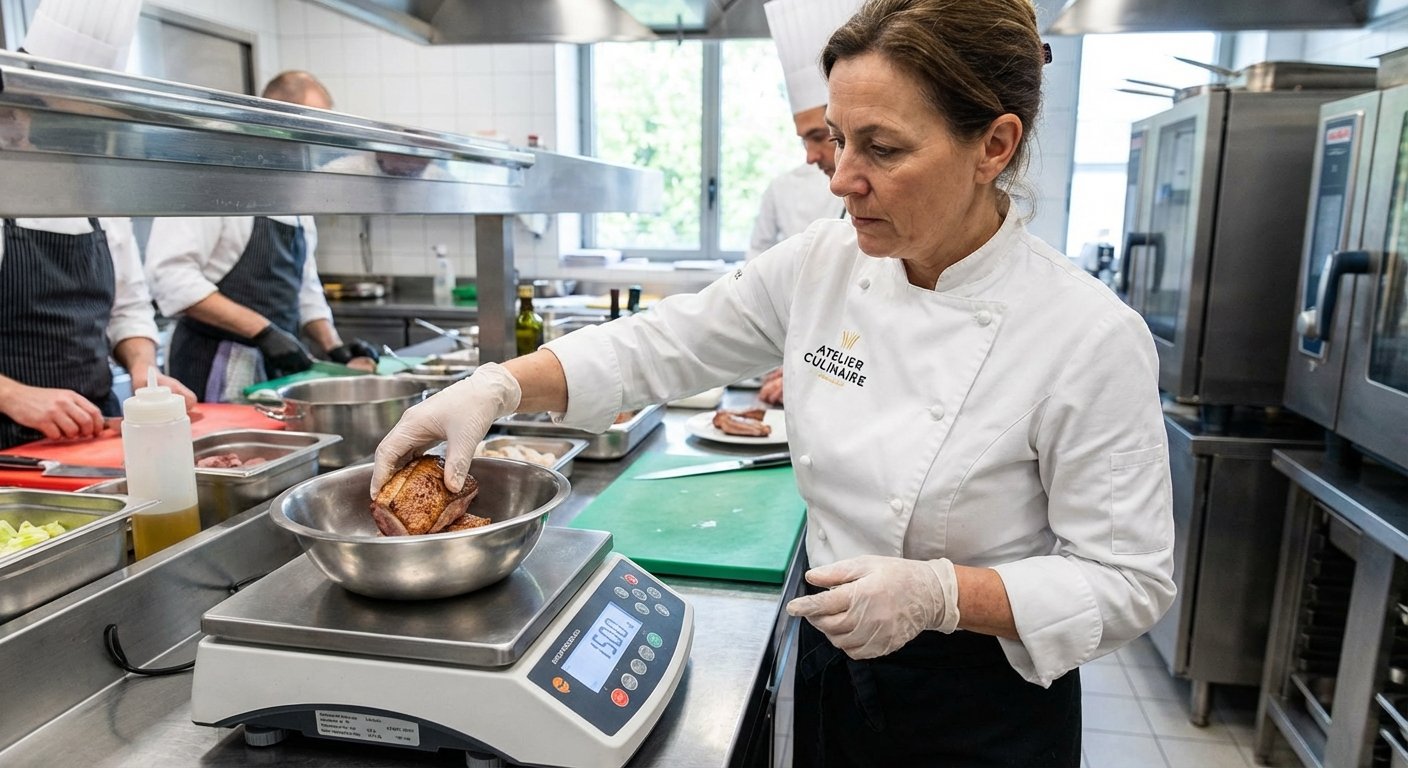
An 8oz steak portioned at 8.5oz consistently costs you 6.25% more per plate than planned. If you sell 50 steaks a night at $12/lb protein cost, that's an extra $1.88 per plate × 50 = $94/day. Over a year: $34,000.
That's one station. One protein. One consistent half-ounce error.
The Standard Portions Problem
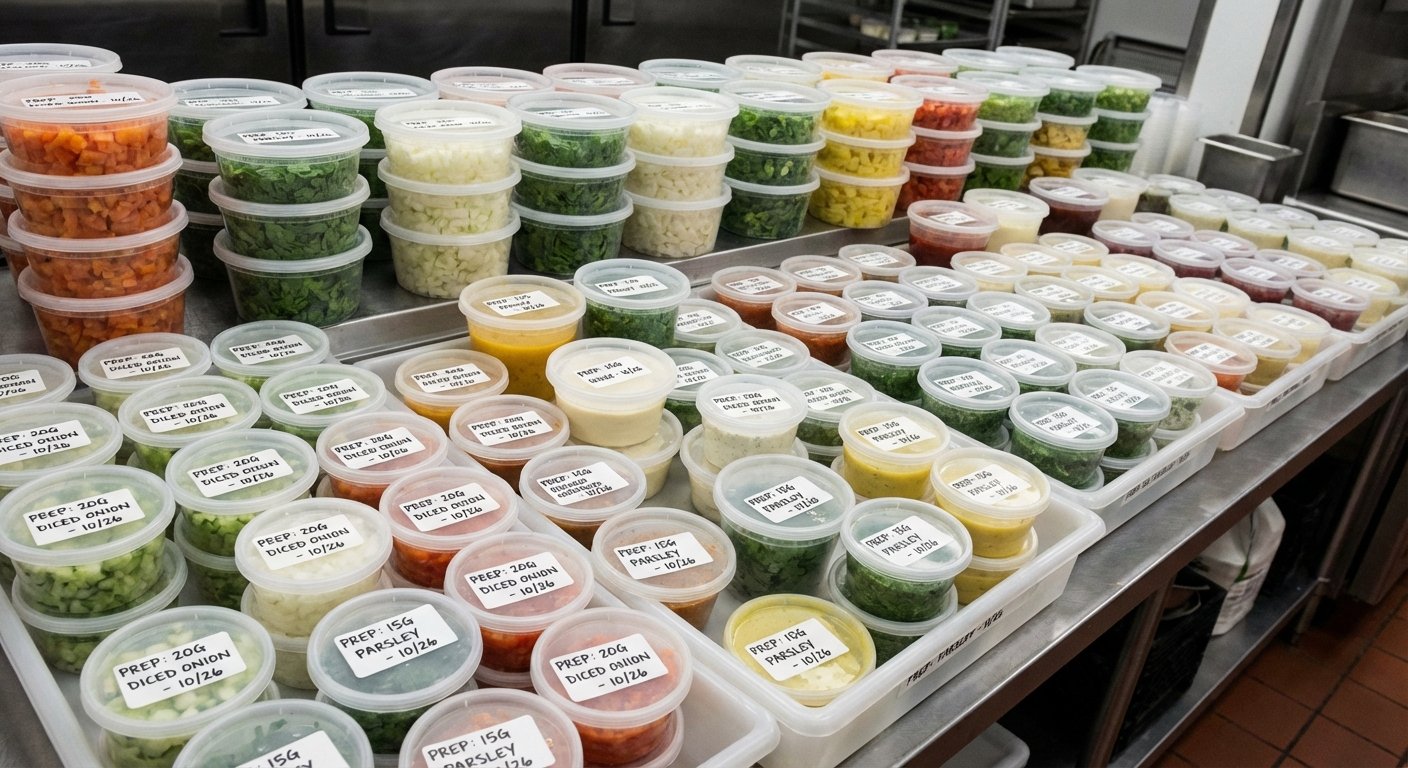
Most kitchens have portion standards written somewhere — in a recipe binder, on a laminated card, or in someone's head. The problem isn't that standards don't exist. The problem is that they're not enforced consistently under service pressure.
A line cook six hours into a Friday night is not carefully weighing every portion. That's when drift happens. Your portion control system has to be built for that reality.
Building a Portion Control System That Holds
Step 1: Document Every Portion Standard
Every item that goes on a plate needs a documented weight or measure. Not "a handful" — 2oz. Not "a ladle" — 4 fl oz. Write them in your recipe cards with weights, not just volumes.
This documentation becomes the training baseline and the audit standard.
Step 2: Put Scales on Every Station That Needs Them
Proteins: always weighed. Proteins are your highest-cost ingredient and the most common source of portioning drift. A scale at the grill station is non-negotiable.
Salads and vegetables: use portioning cups or scoops. Same size every time.
Sauces and dressings: use ladles with known volumes. Mark your ladles if you have multiple sizes.
Step 3: Train to Standard, Not to Feel
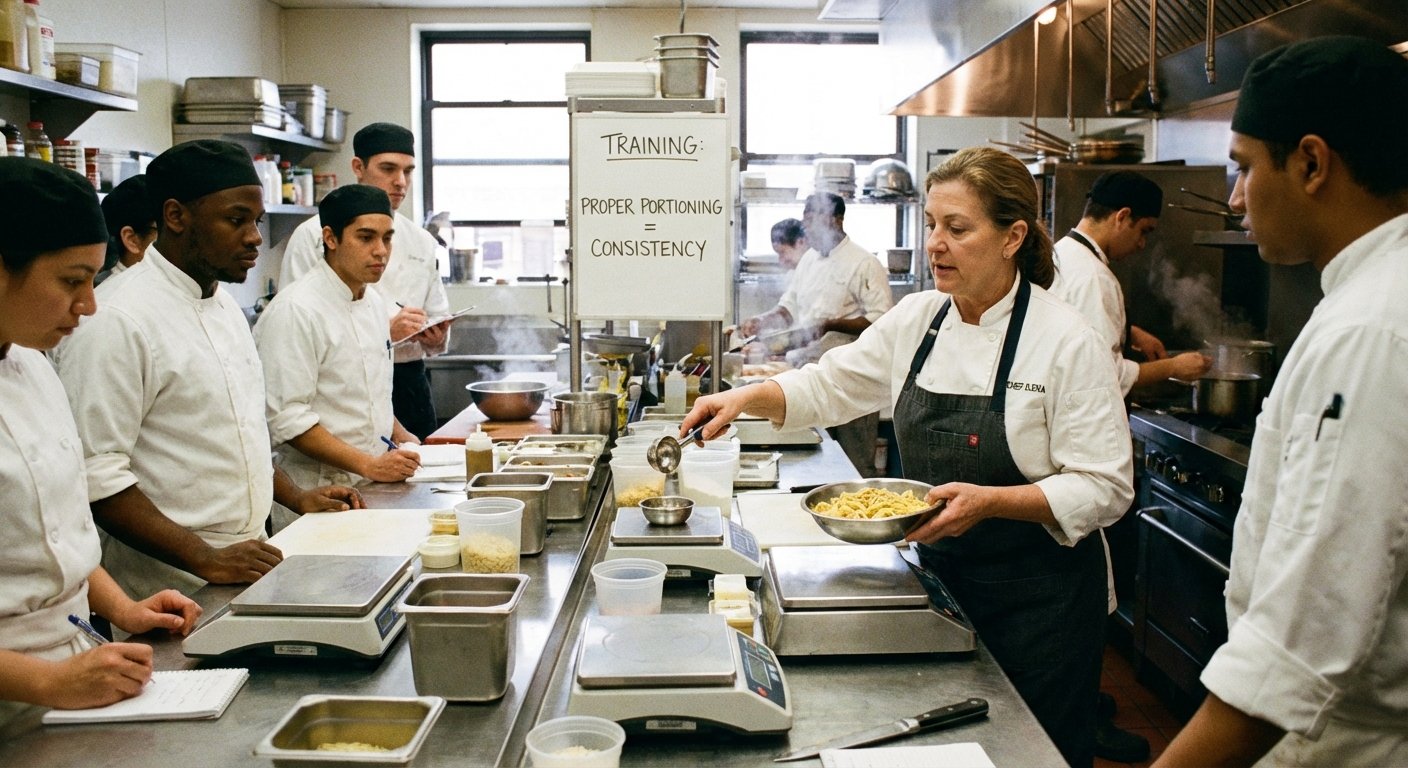
New hires need to learn portions by weight, not by eye. Run the first two weeks of training with scales for everything — even items that will eventually be portioned by eye. By the time they're working independently, standard portions should be muscle memory.
Step 4: Audit Randomly, Not by Announcement
Spot-check portions during service, not before. Announce that random portion checks happen and follow through. Even 2–3 random audits per service per station significantly improves compliance.
How to audit: Ask the cook to plate an item before it goes out. Weigh it. If it's more than 5% over standard, address it immediately, calmly, and specifically.
Portion Control Tools That Pay for Themselves
| Tool | Cost | Best For |
|---|---|---|
| Digital portion scale (2 kg capacity) | $40–80 | Proteins, produce |
| Ladles (color-coded by volume) | $5–15 each | Soups, sauces, dressings |
| Portion scoops (color-coded) | $8–20 each | Grains, salads, sides |
| Squeeze bottles (oz-marked) | $3–8 each | Sauces, dressings |
For a 50-seat restaurant, fully equipping 3–4 stations costs $200–400. Against $34,000/year in portioning variance on a single protein, the ROI is immediate.
Portion Control and Your Theoretical Food Cost
Consistent portioning is what makes your theoretical food cost meaningful. When portions vary by 10–15%, your theoretical cost (from recipe cards) and actual cost (from inventory) will always diverge — and you'll never know if variance is a portioning problem or a waste/theft problem.
Lock down portions first. Once consistent, your actual-vs-theoretical variance becomes a meaningful signal instead of noise.
FAQ
What is the best way to enforce portion control in a restaurant?
The most effective approach combines: (1) documented portion standards with weights in every recipe card, (2) proper tools at every station (scales, portion scoops, marked ladles), and (3) random spot-checks during service — not pre-announced audits.
How much does portion control affect food cost?
A consistent 5–10% over-portioning on proteins can add 1–3 percentage points to your food cost percentage. On $500,000 in annual food revenue, that's $5,000–$15,000/year.
Should servers be trained on portion control?
Yes — particularly for shared plates, desserts, and portioned items assembled in the dining room. Servers should know standard portions and flag when something looks off before it reaches the table.
Conclusion
Portion control isn't glamorous, but it's one of the most reliable ways to improve food cost without touching menu prices or ingredient quality. Consistent portions mean predictable costs.
Start this week: audit the two highest-cost proteins on your menu. Weigh 10 plates over two services. See how far you are from standard. The answer will be motivating.
Ready to take control of your food costs? Try CostLab free for 14 days →
Track Food Cost on Every Dish — Automatically
CostLab.AI calculates food cost percentage in real time. Update one ingredient price and see the impact across your entire menu instantly.
Start Free Trial →