Restaurant Receiving Process: Catch Short-Weights & Invoice Fraud
A proper restaurant receiving process catches short-weights, invoice errors, and substituted products before they hit your food cost. Here's a step-by-step guide.
Restaurant Receiving Process: Catch Short-Weights & Invoice Fraud
The restaurant receiving process is where your food cost either gets protected or eroded. Short-weights, invoice discrepancies, substituted products, and outright fraud happen at the loading dock — and they're almost always invisible unless you have a structured receiving routine. A good process takes 15–20 minutes per delivery and can save thousands per year.
Why Receiving Is Where Food Cost Leaks
Most operators focus on recipe costing and waste reduction. Few focus on receiving — even though it's the first point at which money leaves the business.
Common problems caught during proper receiving:
- Short weights: A case listed as 30 lbs arrives at 27 lbs. At $3.50/lb, that's $10.50 lost per case.
- Substituted items: You ordered Grade A; a lower grade was delivered.
- Invoice inflation: Prices on the invoice differ from what was quoted.
- Damaged goods: Items in unusable condition charged at full price.
- Short counts: 11 units in a case invoiced for 12.
The 5-Step Restaurant Receiving Process
Step 1: Check the Delivery Against the Purchase Order
Before accepting anything, compare the delivery invoice to your purchase order. Flag any items on the invoice that weren't ordered.
Step 2: Count Every Case and Unit
Count cases as they're unloaded. For items sold by unit (whole fish, portioned proteins), count individual units.
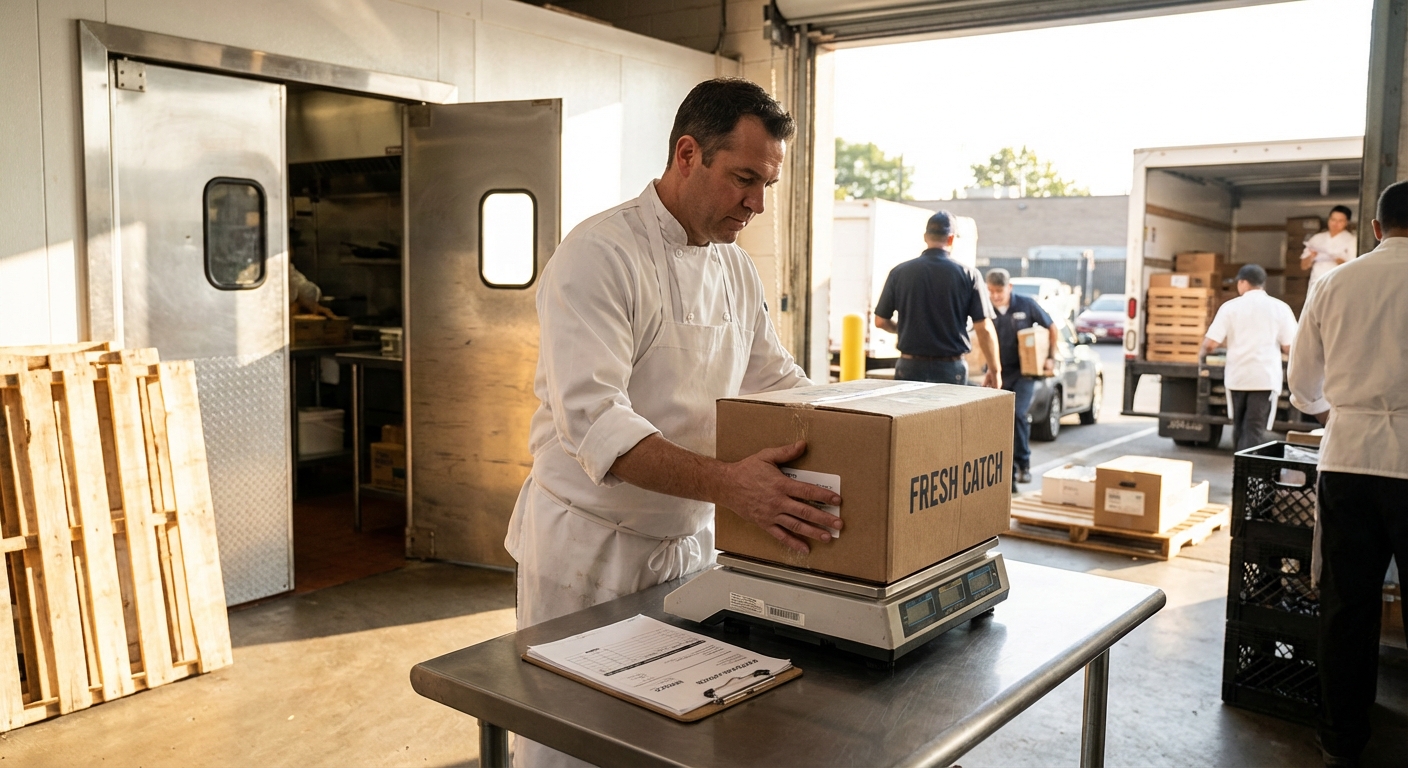
Step 3: Weigh High-Cost Items
Use a calibrated receiving scale. Weigh a sample — 3 out of every 10 cases is reasonable.
Document variances:
- Expected weight from invoice vs. actual weight
- Percentage short
- Dollar value of discrepancy
Step 4: Check Quality and Temperature
- Temperature: Proteins at 41°F or below; frozen at 0°F or below
- Quality: Off smells, bruising, packaging damage, ice crystals in "fresh" items
- Date codes: Verify use-by dates are adequate for your usage window
Step 5: Reconcile the Invoice Before Signing
Sign only for what you received in acceptable condition. Mark the invoice before signing for any short weights or substituted items. Get the driver's signature acknowledging corrections.
Never let a driver pressure you into signing a clean invoice for a problem delivery.
Common Receiving Fraud Patterns
Weight fraud: Drivers list standard case weights without actually weighing. A "30 lb case" consistently arrives at 28–29 lbs. Small per-case, enormous over a year.
Invoice price creep: Prices gradually drift above what was negotiated. A protein that should be $3.40/lb appears at $3.55/lb. Easy to miss unless you're comparing to your price sheet each delivery.
Building Your Receiving Documentation System
Keep a receiving log for every delivery:
| Date | Vendor | Item | Ordered | Received | Variance | Action |
|---|---|---|---|---|---|---|
| 3/5 | US Foods | Ground beef | 40 lbs | 38.2 lbs | -1.8 lbs / -$6.30 | Credit requested |
Review this log monthly. Patterns of small variances from the same vendor warrant a conversation.
FAQ
What should I do if I receive short-weight deliveries?
Document the variance on the delivery invoice, note it in your receiving log, and contact your rep for a credit. Most distributors issue credits for documented short-weights without dispute.
How do I know if my delivery invoices are accurate?
Compare invoice prices to your negotiated price sheet on every delivery. Use your receiving scale for weights. Any variance above 1–2% should be documented and credited.
Should I refuse a delivery for quality issues?
Yes — refuse any product that doesn't meet your quality or temperature standards. Mark refused items on the invoice before signing and notify your rep immediately.
How many staff should be trained on receiving?
At least 2–3 staff — kitchen manager, executive chef, and a backup. Never allow drivers to unload without a trained staff member present.
Ready to take control of your food costs? Try CostLab free for 14 days →
Track Food Cost on Every Dish — Automatically
CostLab.AI calculates food cost percentage in real time. Update one ingredient price and see the impact across your entire menu instantly.
Start Free Trial →