
What Is a Good Food Cost Percentage for a Restaurant?
A good food cost percentage for most restaurants is 28-35%, but the right target depends on your concept, labor model, and P&L. Here is how to find your actual number.
What Is a Good Food Cost Percentage for a Restaurant?
A good food cost percentage for most restaurants is 28-35%. But that range is almost meaningless without context. The right target for your restaurant depends on your concept type, labor model, rent structure, and whether you are beverage-heavy. Here is how to find your actual number -- and what to do when you are above it.
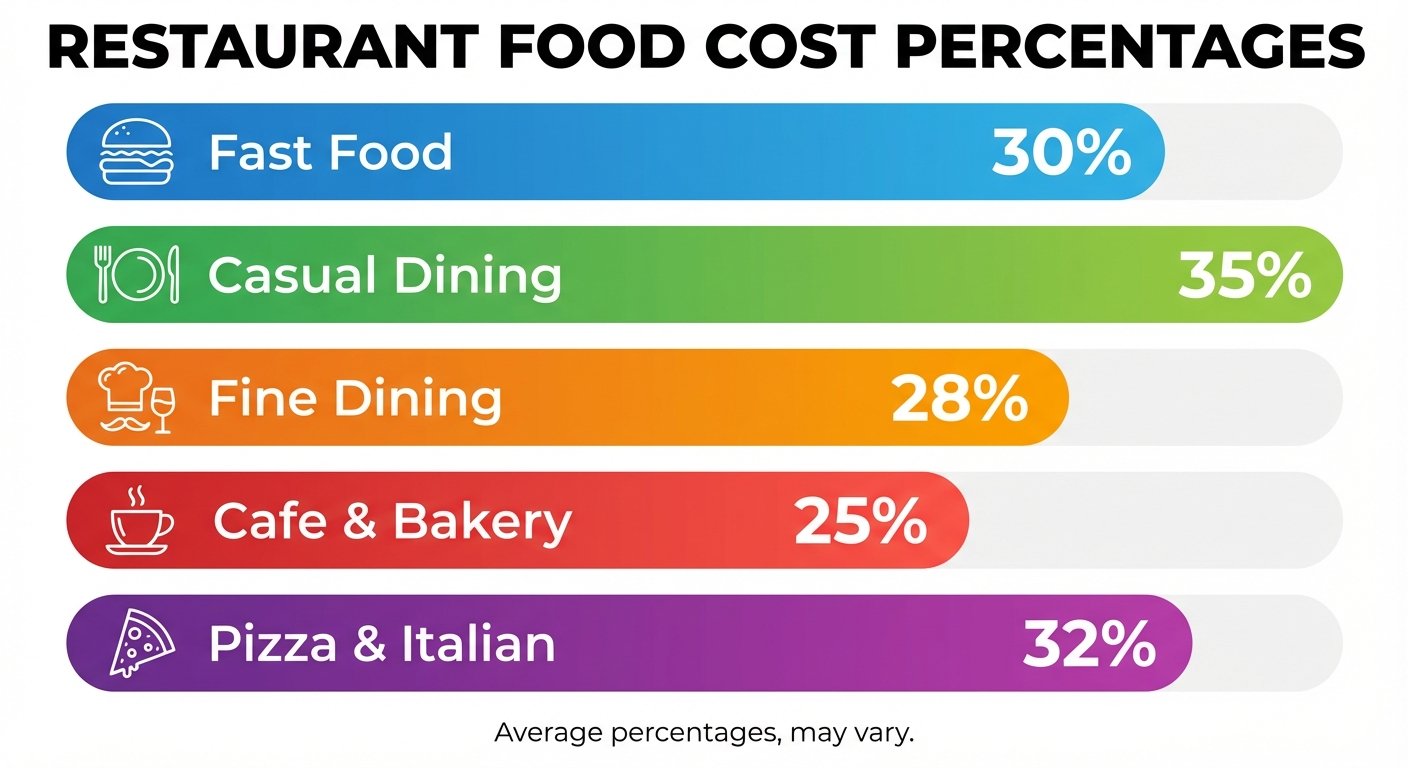
Food Cost Percentage Benchmarks by Restaurant Type
| Restaurant Type | Target Food Cost % |
|---|---|
| Fine dining | 28-32% |
| Casual / polished casual | 30-35% |
| Fast casual | 25-30% |
| Bar / gastropub | 20-28% |
| Seafood / steakhouse | 35-42% |
| Pizza / pasta focused | 22-28% |
| Coffee shop / cafe | 25-35% |
Seafood and steakhouses routinely run 38-42% food cost because premium protein is expensive and guests expect quality. They compensate by keeping labor lean and volume high.
Bar-forward concepts run low food cost percentages because alcohol margins are exceptional -- typical beverage cost is 18-24% -- which pulls the blended average down significantly.
Why Your Target Matters More Than the Industry Average
Your food cost target is not an industry stat -- it is a number derived from your own P&L.
Start from the bottom: what net margin do you need to survive and grow? Work backwards through labor, rent, and other overhead. Whatever is left is what you can spend on food.
A restaurant with 38% labor costs needs roughly a 22-26% food cost target to survive. A lean food truck with 20% labor has much more flexibility. The math has to work for your operation specifically.
What Happens When Food Cost Is Too High
- Margins disappear even at full capacity -- you are working harder for less profit
- Volume increases amplify the problem rather than solving it
- Prime cost exceeds 65-70%, leaving insufficient margin for overhead and profit
What Happens When Food Cost Is Too Low
- Usually signals under-portioning -- and guests notice and do not come back
- Or ingredient quality cuts that damage repeat visits and reviews
- Technically possible to run 18% food cost, but it often means a worse product
The Right Process to Hit Your Target
- Calculate your actual food cost % on every dish (not just overall)
- Identify which dishes are above your target -- and by how much
- Decide: reprice, re-engineer (reduce portion or swap ingredient), or remove
- Recalculate after every significant ingredient price change
- Track weekly so drift gets caught early
Frequently Asked Questions
Is 30% a good food cost percentage?
30% is a healthy food cost percentage for most casual and polished casual dining concepts. Whether it is "good" depends on your labor costs -- if labor is at 35%, a 30% food cost gives you a 65% prime cost, which is at the high end of sustainable for full-service restaurants.
Why do some restaurants run higher food cost percentages than others?
Concept type is the primary driver. Steakhouses and seafood restaurants run 35-42% food cost because premium protein is expensive and expected. Pizza and pasta concepts can run 22-28% because grain-based ingredients are inherently lower cost.
How do I lower my food cost percentage without raising prices?
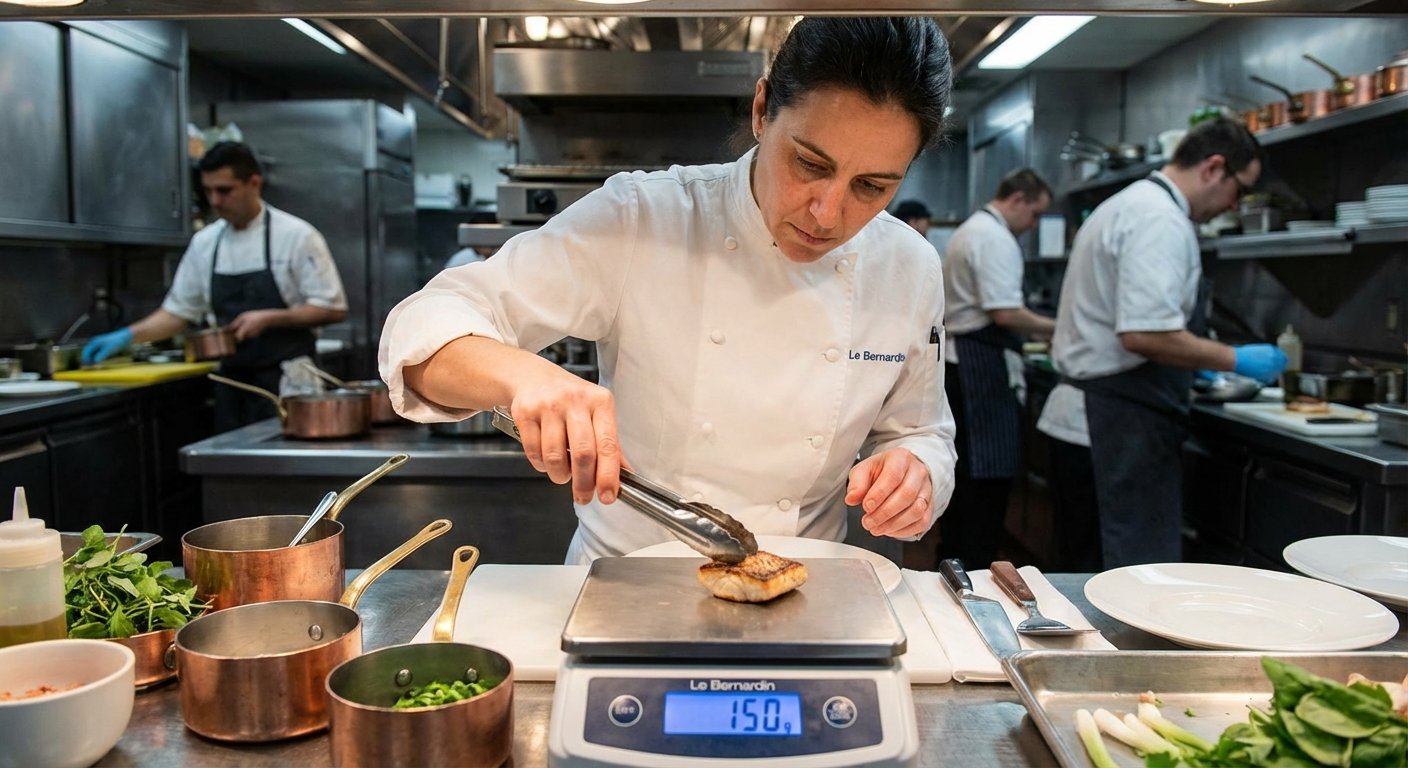
Focus on operational improvements first: tighten portion control with scales, reduce prep waste, update recipe costs to reflect current prices, and cross-utilize ingredients to minimize spoilage. These changes often recover 2-3 percentage points without touching your menu prices.
What should I do if my food cost is above 40%?
First, identify which specific dishes are driving it -- your overall food cost is the average, but some items may be at 50%+ while others are well-controlled. Address the worst offenders through repricing or reformulation. Also check for operational issues: over-portioning, spoilage, or supplier price increases you have not caught.
Ready to take control of your food costs? Try CostLab free for 14 days
Track Food Cost on Every Dish — Automatically
CostLab.AI calculates food cost percentage in real time. Update one ingredient price and see the impact across your entire menu instantly.
Start Free Trial →